

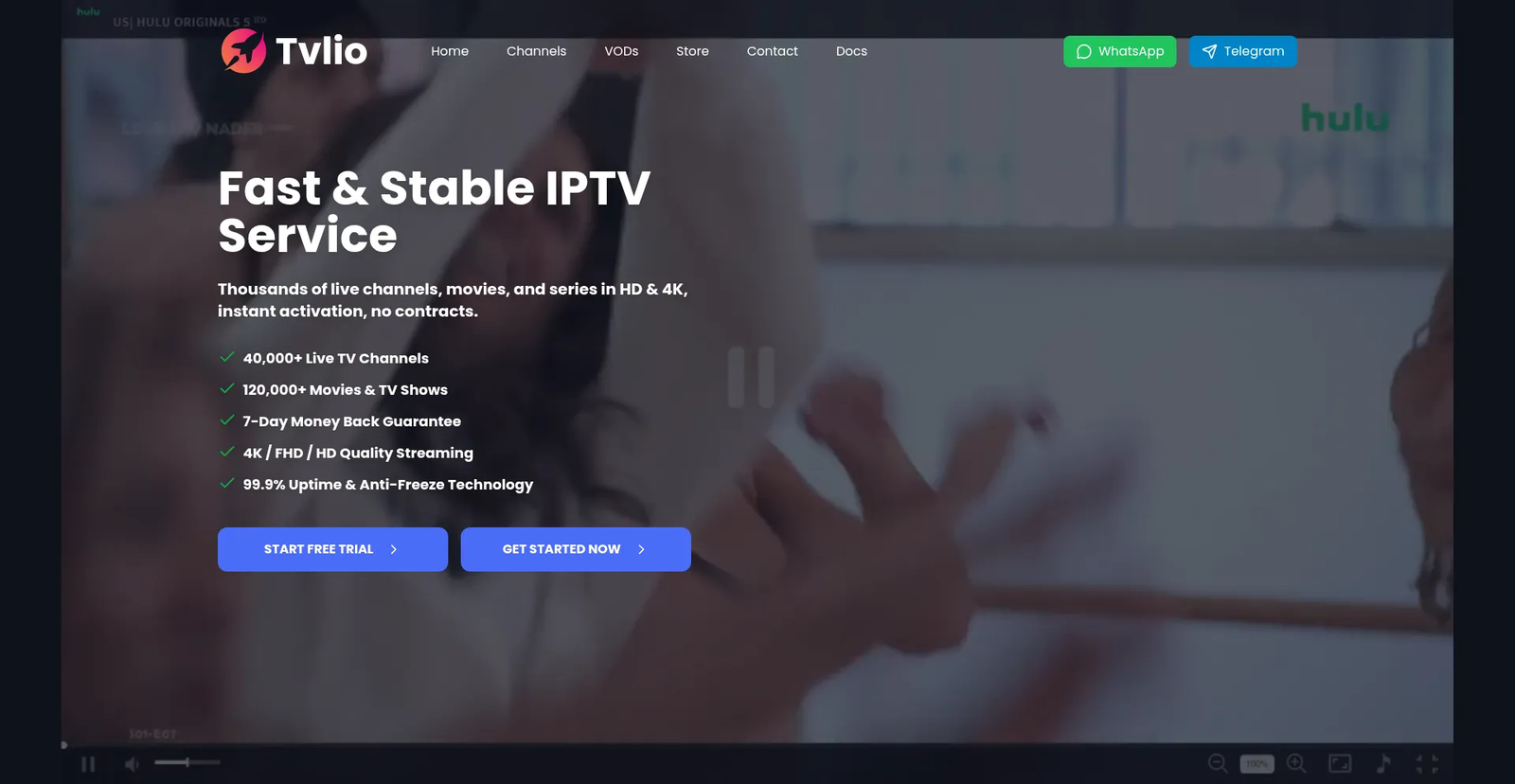
Online streaming has become crowded. Every few months, a new IPTV service appears promising thousands of channels, endless movies, and a cable-free entertainment experience.
One platform that has recently gained attention is tvlio.
At first glance, it looks like another IPTV provider offering live television, sports, movies, and video-on-demand content through an internet connection. But that’s exactly why many people are searching for answers. Is it legitimate? Is it safe? Does it actually work well in everyday use? Or is it just another service making big promises that don’t hold up over time?
The truth is a little more nuanced.
After reviewing available information, IPTV industry practices, and user expectations, there are several things potential subscribers should understand before making a decision.
This guide breaks everything down in plain language.
Quick Answer
TVLIO appears to be an IPTV service that delivers live television channels, sports content, movies, and on-demand entertainment over the internet instead of traditional cable or satellite infrastructure. Publicly available information suggests access to tens of thousands of channels and a large video library across multiple devices. However, users should carefully verify content licensing, privacy practices, service reliability, and legal compliance before subscribing.
Featured Snippet Answer
What is TVLIO?
TVLIO is an IPTV (Internet Protocol Television) service that streams live TV channels and on-demand content through an internet connection. It is marketed as an alternative to traditional cable television and claims compatibility with Smart TVs, streaming devices, smartphones, tablets, and computers.
Is TVLIO safe to use?
The technical safety of any IPTV service depends on factors such as payment security, privacy policies, account protection, and content licensing. Users should research these areas carefully because not all IPTV services operate under the same standards or regulatory frameworks.
What Is TVLIO?
At its core, this platform belongs to the IPTV category.
IPTV stands for Internet Protocol Television. Instead of receiving television broadcasts through satellite dishes or cable infrastructure, content is delivered over an internet connection.
Think of it this way:
Traditional cable sends television signals through physical infrastructure installed in your home.
IPTV sends those same types of channels through internet servers.
The result is similar from the viewer’s perspective. You open an app, browse channels, select content, and watch.
According to promotional material associated with the service, users can access:
- Live television channels
- Sports broadcasts
- News networks
- Entertainment channels
- International programming
- Movies
- TV series
- Video-on-demand libraries
The service is marketed toward viewers seeking a large amount of content without maintaining a traditional cable subscription.
How IPTV Services Like This Work
Many people assume IPTV is complicated.
In reality, most modern services follow a simple process.
Step 1: Purchase a Subscription
Users typically choose a monthly, quarterly, or annual plan.
Step 2: Receive Login Credentials
The provider sends account credentials or playlist details.
Step 3: Install a Compatible Player
Many IPTV services work through applications such as:
- IPTV Smarters
- TiviMate
- XCIPTV
- OTT Navigator
- Smart IPTV players
These apps act as the viewing interface.
Step 4: Stream Content
Once configured, users can browse channels, view program guides, and watch available content directly through the app.
This model has become increasingly popular because it works across numerous devices without requiring special hardware.
Main Features
While feature lists can change over time, publicly available information highlights several capabilities commonly promoted by the service.
Large Channel Selection
Marketing materials mention access to thousands of live channels across multiple countries and languages.
For households with diverse viewing preferences, this can be attractive because international channels are often difficult to obtain through standard cable packages.
Video-On-Demand Library
Many IPTV users aren’t interested only in live television.
They want:
- Movies
- TV shows
- Documentaries
- Recently released content
The service advertises a substantial VOD library alongside live channels.
Multi-Device Support
Compatibility reportedly includes:
- Android phones
- Android TV
- Smart TVs
- Fire TV devices
- Tablets
- Windows PCs
- Mac computers
Device flexibility is one reason IPTV adoption continues growing globally.
HD and 4K Streaming
High-definition viewing is now expected.
Several IPTV providers, including this one, advertise support for HD, Full HD, and 4K streams when internet speeds allow.
Electronic Program Guide (EPG)
An EPG functions similarly to a traditional television guide.
Users can see:
- Current programs
- Upcoming shows
- Channel schedules
This makes navigation significantly easier.
Pros
No streaming platform is perfect, but several potential advantages stand out.
Huge Content Variety
The biggest appeal is obvious.
Instead of subscribing to multiple entertainment services, viewers can potentially access a broad range of content from one location.
Works on Existing Devices
Most people already own compatible hardware.
There’s usually no need for expensive equipment installation.
International Content Access
Many IPTV subscribers specifically seek foreign-language channels, international sports coverage, and regional programming unavailable through local providers.
Flexible Viewing
Content can often be watched:
- At home
- While traveling
- Across multiple devices
This convenience is a major reason IPTV continues expanding.
Lower Cost Than Traditional Cable
For some households, IPTV subscriptions can be considerably cheaper than large cable bundles.
Cost savings are often one of the primary reasons users explore these services.
Cons
The advantages are only part of the story.
There are also meaningful drawbacks.
Reliability Can Vary
One of the biggest frustrations with IPTV services is inconsistency.
A service may work perfectly for weeks and then experience:
- Buffering
- Server outages
- Missing channels
- Playback errors
This issue affects many IPTV providers, not just one specific platform.
Internet Dependency
If your internet connection struggles, your viewing experience will likely suffer.
Even the best IPTV provider cannot compensate for a poor connection.
Industry guidance generally recommends stable broadband speeds for reliable streaming.
Limited Transparency
Many IPTV services provide less company information than established streaming brands.
This can make it harder to evaluate long-term reliability.
Customer Support Quality Can Differ
Some users report excellent support experiences with IPTV providers.
Others experience slow responses or unresolved issues.
Results often vary significantly between providers.
Follow Us For More Informational Blogs About: Sharemyideaz
Real-World Use Cases
Who would realistically benefit from a service like this?
Let’s look at a few examples.
Sports Fans
Imagine someone following:
- Premier League
- NFL
- NBA
- UFC
- International football
Finding all those broadcasts across multiple subscriptions can become expensive.
An IPTV solution may appeal to viewers seeking consolidated access.
International Families
A family living abroad may want channels from their home country.
International programming is one of IPTV’s strongest attractions.
Cord Cutters
Many people have abandoned traditional cable entirely.
They want internet-based viewing options without long-term contracts.
Frequent Travelers
Some users appreciate accessing familiar channels while traveling between countries.
Device portability can make this easier than traditional television packages.
Safety, Privacy, and Legitimacy Analysis
This is where things become more important.
Many reviews online focus only on channel counts and pricing.
That misses the bigger question.
Is the service legitimate?
Determining legitimacy requires evaluating:
- Licensing agreements
- Ownership transparency
- Terms of service
- Content distribution rights
- Business registration details
Unfortunately, consumers often have limited visibility into these areas.
Because IPTV providers vary significantly, users should conduct independent research before subscribing.
Is personal information safe?
When evaluating any streaming platform, consider:
- Payment security
- Privacy policies
- Data collection practices
- Account protection
Privacy remains an important concern within IPTV ecosystems and streaming services generally.
Should you use a VPN?
Many IPTV users choose VPN services for privacy purposes or while traveling.
Whether one is necessary depends on individual circumstances, local laws, and provider requirements.
Common Problems Users May Experience
After years of observing IPTV discussions, several recurring complaints appear repeatedly across the industry.
Buffering
Even services advertising anti-freeze technology can experience buffering during peak usage periods.
Channel Availability Changes
Channels sometimes disappear, move, or stop functioning.
This can frustrate viewers expecting consistency.
Login Issues
Account configuration problems occasionally occur during setup.
Regional Restrictions
Certain content may not function identically in every country.
Device Compatibility Challenges
Although many providers support multiple devices, setup quality can vary depending on the hardware being used.
Comparison With Alternatives
People researching IPTV usually compare multiple options before purchasing.
Here is a practical comparison framework.
| Factor | IPTV Services | Traditional Cable | Major Streaming Platforms |
| Live Channels | Usually Extensive | Extensive | Limited |
| Installation | Simple | Often Requires Setup | Simple |
| Device Flexibility | High | Moderate | High |
| International Content | Often Strong | Limited | Varies |
| Reliability | Varies | Generally Stable | Generally Stable |
| Licensing Transparency | Varies | High | High |
| Monthly Cost | Often Lower | Usually Higher | Moderate |
Traditional providers still win on transparency and regulatory compliance.
IPTV often wins on flexibility and content variety.
Streaming platforms like Netflix, Disney+, Hulu, and similar services typically provide stronger legal certainty and customer support.
The right choice depends on viewing habits.
My Practical Opinion
After reviewing IPTV services for years, one observation keeps resurfacing.
People often focus too heavily on channel numbers.
A provider advertising 40,000 channels sounds impressive. The reality is that most viewers regularly watch fewer than 30.
What matters more is:
- Stream stability
- Consistent uptime
- Responsive support
- Easy navigation
- Reliable content availability
If a service delivers those things consistently, it can be valuable.
If it doesn’t, huge channel counts become largely irrelevant.
For anyone considering an IPTV subscription, I would recommend treating trial periods as essential. Test performance on your own internet connection and devices before committing to a long-term plan.
That approach usually reveals far more than marketing claims ever will.
Final Verdict
TVLIO appears to be a feature-rich IPTV service designed for viewers who want live television, sports programming, international channels, and on-demand entertainment without relying on traditional cable infrastructure. Publicly available information highlights extensive channel offerings, multi-device compatibility, and large content libraries.
At the same time, potential subscribers should approach any IPTV service with realistic expectations.
Content availability, stream reliability, licensing transparency, customer support quality, and privacy practices matter just as much as channel counts.
For viewers seeking flexibility and broad content access, it may be worth investigating further. For users prioritizing maximum legal clarity, established streaming services and traditional providers remain the safer option.
The best decision ultimately depends on your viewing habits, risk tolerance, and expectations.
Read More Expert Articles on: Sharemyideaz
FAQs
Q: What is TVLIO used for?
A: It is used for streaming live television channels, sports broadcasts, movies, and on-demand content through an internet connection rather than cable or satellite services.
Q: Does TVLIO work on Smart TVs?
A: Publicly available information indicates compatibility with Smart TVs, Android devices, Fire TV products, computers, and mobile devices.
Q: Is TVLIO legal?
A: Legality depends on content licensing, regional regulations, and how programming rights are obtained. Users should independently verify compliance before subscribing.
Q: Do I need a fast internet connection?
A: Yes. IPTV services generally perform best on stable broadband connections. Higher resolutions such as HD and 4K require stronger internet speeds.
Q: Can I watch sports through TVLIO?
A: Marketing materials suggest access to sports programming alongside entertainment and news channels. Availability can change over time.
Q: Does TVLIO offer movies and TV shows?
A: Available information indicates access to a video-on-demand library containing movies and television content in addition to live channels.
Q: Is IPTV better than cable?
A: IPTV often offers greater flexibility and device compatibility, while cable providers typically provide stronger regulatory oversight and more predictable reliability.
Q: Should I try an IPTV service before purchasing a long subscription?
A: Yes. Testing performance on your own devices and internet connection is one of the best ways to determine whether a service meets your expectations.
