

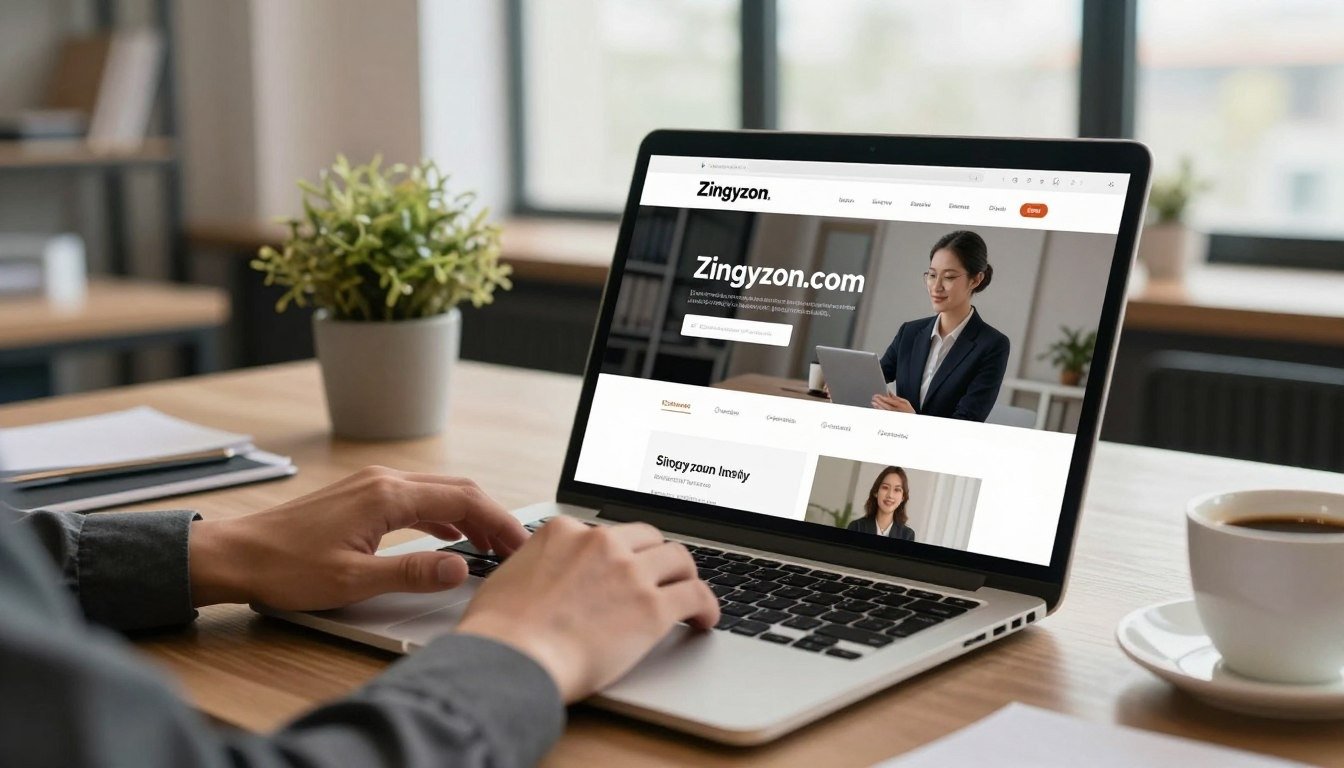
I’ll be honest about how this article started. A friend sent me a screenshot of zingyzon.com asking, “Have you heard of this? Is it safe to use?” My first instinct was to do a quick search and give her a one-line answer. That didn’t happen. The more I dug, the messier the picture got and that messiness is actually the most useful thing I can tell you.
Quick Answer
Zingyzon.com is best described as a content-and-affiliate-style website that publishes broad, generalist articles on topics like digital marketing, online earning, lifestyle, and (depending on which version of the site you land on) online shopping. There isn’t a single, consistent description of what it does different pages and mirror sites describe it as a “content hub,” an “online marketplace,” and an “SEO branding term,” sometimes within the same week. That inconsistency, plus a thin trust footprint (no clear company info, no verifiable reviews, no consistent “About Us”), means it’s worth treating with caution rather than treating it as an established brand.
What Is Zingyzon.com, Really?
Here’s where things get a little strange. When you search for “zingyzon.com,” you don’t land on one clear site with a consistent identity. Instead, you find a cluster of similarly named domains and articles, each pitching a different version of the same name.
Some pages frame Zingyzon as a “growing online platform” for readers interested in lifestyle, technology, business, and digital growth content basically a blog. Other articles call it an emerging e-commerce platform aimed at U.S. shoppers, talking about product listings, checkout flows, and “exclusive deals.” A separate piece on a tech-notes site even argues that Zingyzon isn’t a product at all, but a brand keyword being used deliberately for SEO and content marketing purposes.
That’s three different identities for one name. In my experience reviewing websites for a living, that’s rarely a good sign. Legitimate, established brands tend to have one consistent story about what they are. When a name is being used across multiple loosely connected domains with shifting descriptions, it usually means the “brand” is less of a real company and more of a content strategy — pages built to rank for a keyword, not necessarily to serve one specific product or service.
None of this automatically means something sinister is going on. It could simply be a newer site still figuring out its niche, or a name that multiple unrelated parties have started using. But it does mean you shouldn’t assume zingyzon.com is a single, unified, trustworthy entity just because the name shows up in search results a lot.
How Zingyzon.com Reportedly Works
Based on the available descriptions, here’s the general flow people describe when interacting with sites under the Zingyzon name:
- Browsing by category — visitors are encouraged to pick a topic (digital marketing, lifestyle, tech, online earning) and read through guide-style articles.
- Following internal links — the content is structured to push readers from one article to another, which is a pretty standard content-site strategy for keeping people on the page longer.
- Shopping-style browsing (on versions framed as e-commerce) — search bar, product categories, and a checkout process are mentioned, similar to a generic online store template.
- Earning-related content — several pages reference “how to earn money with Zingyzon,” pointing toward affiliate or income-opportunity content rather than a defined paid service.
What’s missing from all of this is anything concrete. I couldn’t find specifics about pricing, a clear product catalog, verified seller information, or a documented company behind the site. That’s a meaningful gap if you’re trying to figure out whether to trust it with your time, data, or money.
Main Features (As Described)
Stripping out the marketing language, here’s what the various Zingyzon pages claim to offer:
- A blog-style content library covering business, health, tech, home, and travel topics
- Guides aimed at beginners on SEO and digital marketing
- Region-specific content for Australian and U.S. audiences
- Articles related to “online earning opportunities”
- On some versions, product browsing and a shopping cart/checkout system
Worth noting: a couple of these site variants look templated — generic stock phrasing about “clarity, usefulness, and long-term value” repeated almost word-for-word across unrelated domains. That’s a pattern you see with mass-produced content sites, not usually with a single well-resourced brand.
Pros and Cons
Potential upsides:
- If you just want surface-level beginner content on SEO or digital marketing, the articles are reportedly easy to read and not overly technical
- Free to browse, no obvious paywall
- Covers a wide range of topics, so there’s a reasonable chance you’ll find something tangentially relevant to your search
Real drawbacks:
- No single, verifiable identity — the “what is this site” answer changes depending on which version you land on
- No clear company information, contact details, or ownership transparency that I could confirm
- Content reads as generic and repetitive across multiple domains, a common sign of low-effort, SEO-first publishing rather than genuine expertise
- “Reviews” of the shopping version read like first-person testimonials with no verifiable detail (no order numbers, no specific products, no dates) — the kind of language that’s easy to generate without any actual transaction happening
- Mentions of “online earning opportunities” are a category that attracts a lot of low-quality or misleading offers, so extra skepticism is warranted
Real-World Scenarios
Imagine you’re searching late at night for “how to make extra income online” and you land on a Zingyzon article. The piece reads smoothly enough, nods along to your concerns, and links you to another Zingyzon page. Nothing technically false is said — but you also walk away without a concrete next step, a real platform to sign up for, or a specific number to evaluate. That’s the actual experience several of these pages seem designed to produce: keep you reading and clicking internally, without delivering a verifiable outcome.
Or picture the e-commerce angle: you’re comparing online stores before a purchase and stumble onto a “zingyzon com in USA” article praising fast shipping, secure checkout, and a great mobile app. If you try to verify any of that — actual seller details, return policy specifics, customer service contact — it’s hard to confirm independently. That gap between confident-sounding praise and verifiable detail is exactly the pattern you want to notice before entering payment information anywhere.
Safety, Privacy, and Legitimacy
This is the section I’d want a friend to read carefully.
I could not find independent verification of who owns or operates zingyzon.com, no registered business information, and no third-party reviews on established platforms (Trustpilot, BBB, or similar) that would normally exist for a real, operating e-commerce business. The “About Us” language across different mirror domains is near-identical, generic boilerplate — which suggests templated content rather than a genuine, distinct organization writing about itself.
If you’re considering the content-only version of the site (reading articles), the practical risk is low — you’re mainly risking time, not money. Treat the advice the way you’d treat any unverified blog: useful as a starting point, not as your only source.
If you’re considering the shopping version, I’d be considerably more cautious. Before entering any payment details on a site like this, look for:
- A real, verifiable business name and address
- Clear, working contact information (not just a contact form)
- Independent reviews outside the site itself
- Secure checkout indicators and a sane refund/return policy you can actually locate
If those things aren’t easy to find in under a couple of minutes, that’s a reasonable signal to slow down or shop elsewhere.
Common Problems and Limitations
- Multiple lookalike domains using the same name make it genuinely hard to know which “version” of Zingyzon you’re even dealing with
- Generic, repeated phrasing across sites reduces the credibility of any individual claim
- No clear way to verify earning claims or shopping claims independently
- Content depth on specific topics (SEO, digital marketing) is shallow compared to established, well-known resources in those fields
How It Compares to Alternatives
If you’re after genuine SEO or digital marketing education, established resources — Moz, Search Engine Journal, Ahrefs’ blog, or Google’s own Search Central documentation — have verifiable authorship, long publishing histories, and real case studies behind them. If you’re after online shopping, sticking with marketplaces that have transparent ownership, established reviews, and clear buyer protection (Amazon, eBay, or known regional retailers) gives you recourse if something goes wrong. Zingyzon, in either form, doesn’t currently offer that same layer of verifiable trust.
My Honest Take
I don’t think zingyzon.com is necessarily a scam in the dramatic sense — I found no evidence of stolen payment info or anything like that. What I found is something more mundane and, frankly, more common: a cluster of SEO-driven content sites built around a catchy, brandable name, with inconsistent identities and very little verifiable substance behind the claims. That’s not malicious, but it’s also not the kind of source I’d rely on for a financial decision or treat as an authority on digital marketing.
If you came across zingyzon.com through a search and you’re just curious, reading an article or two costs you nothing but a few minutes. If you came across it because you’re about to buy something or sign up for an “earning opportunity,” slow down and look for the verification markers I mentioned above first.
Final Verdict
Zingyzon.com, in its various forms, looks like a low-trust-signal content network rather than an established brand with a clear identity. It’s not necessarily harmful to browse, but the inconsistency across its different versions and the lack of verifiable company information mean it shouldn’t be your only — or primary — source for digital marketing education or online shopping decisions. Approach it the way you’d approach any unfamiliar site: read critically, verify independently, and don’t enter payment details without doing your own due diligence first.
Learn More About Blogs On Sharemyideaz
FAQs
Q: Is zingyzon.com a real company?
A: There’s no clear, verifiable company information tied to the name. Different versions of the site describe themselves differently, which makes it hard to confirm a single, established business behind it.
Q: Is zingyzon.com safe to use?
A: Reading content on the site carries low risk beyond your time. If you’re considering making a purchase through a shopping version of the site, be cautious — independent reviews and verifiable business details are difficult to find.
Q: What kind of content does zingyzon.com publish?
A: Mostly broad, beginner-level articles on digital marketing, SEO, lifestyle, and online earning, plus region-specific pages for Australia and the U.S.
Q: Why are there multiple versions of zingyzon.com with different descriptions?
A: This pattern usually points to SEO-driven content publishing across multiple domains rather than one unified brand, where the same name gets reused with shifting framing depending on the target keyword.
Q: Can you actually earn money through zingyzon.com?
A: The site references “online earning opportunities,” but I found no verifiable details, case studies, or concrete numbers backing those claims. Treat any earning-related content with the same skepticism you’d apply to similar generic claims elsewhere online.
Q: Is zingyzon.com an online store or a blog?
A: Depending on which version of the site you find, it’s described as either. There isn’t a single consistent answer, which is itself worth noting before you treat it as a typical online retailer.
