

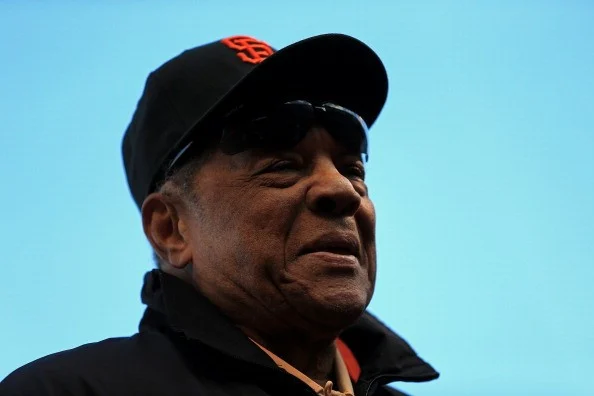
There’s something almost unbelievable about looking at old baseball salaries. Willie Mays could hit for power, steal bases, cover center field like it belonged to him, and change the mood of an entire stadium. Yet his annual pay was nowhere close to what an average Major League star earns today.
At the time of his death on June 18, 2024, Willie Mays net worth was widely estimated at around $8 million. That number was never confirmed through public financial records, so it should be treated as an informed estimate rather than an exact account of his estate.
Still, the figure opens up an interesting conversation. How does one of the greatest players in baseball history finish with a fortune that seems relatively modest beside modern sports wealth? The answer has a lot to do with timing, old contract rules, limited endorsement opportunities, and a baseball economy that looked nothing like today’s game.
What Was Willie Mays Net Worth?
Several celebrity finance publications placed Mays’ wealth at approximately $8 million at the time of his death. The estimate likely considered his baseball earnings, endorsements, appearances, later work with the San Francisco Giants, real estate, and other personal assets.
But there’s an important point here: Mays and his family never released a complete financial statement. His true assets, debts, investments, and estate arrangements weren’t publicly disclosed. Any exact figure found online should therefore be read with a little caution.
What we do know is that Mays earned well for his era. He became one of baseball’s highest-paid players, accepted commercial partnerships, remained connected to the Giants for decades, and held enormous value as a public figure.
His fortune wasn’t built through a single massive contract. It accumulated across a very long life in and around baseball.
Willie Mays’ Financial Snapshot
| Income or Asset | Reported Details |
| Estimated net worth | Around $8 million |
| Main source of income | Professional baseball salary |
| Other earnings | Endorsements, appearances, promotional work and team roles |
| Record contract | $105,000 for the 1963 season |
| Final MLB team | New York Mets |
| Career length | 23 MLB seasons |
| Long-term affiliation | San Francisco Giants |
| Known charity | Say Hey Foundation |
These figures show the shape of his financial story, though they don’t reveal every private detail.
From Alabama to Professional Baseball
Willie Howard Mays Jr. was born on May 6, 1931, in Westfield, Alabama. His father, Cat Mays, played baseball for a local industrial team and helped develop his son’s athletic ability from a young age.
Willie wasn’t only a promising baseball player. He also played football and basketball, displaying the speed, balance, and natural coordination that would later make him such a complete center fielder.
His professional journey began while he was still a teenager. In 1948, Mays joined the Birmingham Black Barons of the Negro American League. He was only 17, facing experienced players and learning how professional baseball worked before most young men his age had even finished school.
The Black Barons reached the final Negro World Series that year. Mays didn’t earn anything close to a modern prospect’s signing package, but the experience placed him on the radar of Major League scouts.
After graduating from high school, he signed with the New York Giants organization. Reports say his early deal included a $4,000 signing bonus and a modest monthly salary. It was a meaningful opportunity, though hardly the kind of money that could guarantee lifelong security.
Becoming the “Say Hey Kid”
Mays made his Major League debut for the New York Giants in May 1951. His start wasn’t smooth. He struggled at the plate and reportedly worried that he wasn’t ready for the majors.
Then the hits began to come.
By the end of his rookie season, Mays had hit 20 home runs and earned National League Rookie of the Year honors. His combination of power, speed, defense, and pure energy made him impossible to overlook.
His career was briefly interrupted by military service during the Korean War. He missed most of the 1952 season and all of 1953 before returning in 1954.
And what a return it was.
Mays won the National League MVP Award, led the league with a .345 batting average, and helped the Giants win the World Series. That championship included his famous over-the-shoulder catch in deep center field, a play now known simply as “The Catch.”
It didn’t directly add millions to his bank account, of course. But it turned Willie Mays from a gifted young player into a lasting American sports figure.
How Much Did Willie Mays Earn in Baseball?
There are different estimates for Willie Mays’ total career earnings, partly because historical salary records aren’t always consistent. Available reports generally place his playing income somewhere between roughly $1 million and $2 million before taxes and other expenses.
That sounds small now. Even a role player in modern Major League Baseball may earn more in one season than Mays received throughout much of his career.
But salaries have to be viewed in their own time.
Mays reportedly earned about $25,000 annually during the middle of the 1950s. By 1959, the Giants gave him a $75,000 contract, making him the highest-paid player in baseball at that point.
The biggest milestone arrived in 1963.
His Record-Setting $105,000 Contract
The San Francisco Giants signed Mays to a salary of $105,000 for the 1963 season. Mickey Mantle had received a $100,000 deal from the New York Yankees only days earlier, and the Giants’ offer pushed Mays slightly ahead.
It was a huge baseball story. The salary placed him among the sport’s most valuable stars and reflected just how important he had become to the Giants.
According to an MLB account of Mays and Mantle’s careers, both players were part of the early group of Major Leaguers to cross the $100,000 salary line.
Mays deserved it. By then, he wasn’t merely hitting home runs. He was selling tickets, representing the franchise, and giving fans a reason to watch every inning because something special might happen.
What Would That Salary Be Worth Today?
A $105,000 salary in 1963 had far more purchasing power than the same amount does now. Adjusted for inflation, it would be worth more than $1 million in today’s money, depending on the year and inflation calculator used.
Even after that adjustment, the gap between Mays and current stars is enormous.
Modern baseball players benefit from free agency, powerful representation, stronger union protections, television revenue, international media deals, sponsorships, and a much larger sports business. Mays played before most of those opportunities reached their current form.
Why Didn’t Willie Mays Earn Modern Superstar Money?
It’s tempting to compare Mays’ salary with today’s contracts and assume he was underpaid. Honestly, by modern standards, he was.
The problem wasn’t his performance. It was the system.
For most of Mays’ career, MLB’s reserve clause prevented players from freely offering their services to other teams. A club largely controlled a player’s rights, leaving the athlete with limited negotiating power.
Free agency didn’t begin reshaping baseball salaries until the 1970s, when Mays was already near retirement. He played just a little too early to benefit from the explosion in player compensation.
There was also racial inequality.
Mays became a national star during an era when Black athletes faced discrimination both inside and outside professional sports. Commercial opportunities weren’t shared equally. MLB has noted that Mickey Mantle earned significantly more from endorsements, even though Mays’ playing salary eventually moved ahead of Mantle’s.
That difference matters. Endorsement income can continue long after an athlete’s playing days, especially when companies build a star into national advertising campaigns.
Read More Related Articles: Sharemyideaz
Endorsements and Commercial Work
Mays did earn money away from the field. His fame made him attractive to advertisers, and his commercial associations reportedly included well-known brands such as Wheaties, Coca-Cola, and Ford.
He and Mickey Mantle also appeared together in advertising campaigns. One memorable promotion featured both players on Zipee Wiffle Ball packaging, while another put them in a Blue Bonnet margarine advertisement.
Those partnerships helped expand his income, but endorsement deals in the 1950s and 1960s weren’t comparable to the global agreements available to athletes now. There was no social media audience to monetize, no personal digital platform, and no year-round international branding machine.
And Black players often received fewer commercial offers than white stars with similar fame.
Mays had the talent, personality, nickname, and public recognition required to become a marketing giant. The market around him simply wasn’t ready to reward those qualities fully.
His Move to the New York Mets
The Giants traded Mays to the New York Mets in May 1972. It was an emotional move, bringing him back to the city where his Major League career had begun.
Mays was no longer the breathtaking young center fielder who seemed able to run down every ball. Age and injuries had slowed him, but his name still carried real weight.
Reports place his salary at around $165,000 during his final seasons. The Mets also agreed to a post-retirement payment arrangement that was intended to keep him involved with the organization.
He retired after the 1973 season, ending a Major League career that had stretched across more than two decades.
How Willie Mays Made Money After Retirement
Retirement didn’t end Mays’ relationship with baseball. He stayed with the Mets as a hitting instructor for several years and continued making appearances connected to the game.
In 1979, he accepted a public relations position with an Atlantic City casino. Commissioner Bowie Kuhn later barred Mays from official baseball employment because of the sport’s concerns about gambling associations. Mickey Mantle faced a similar restriction.
The decision feels especially harsh when viewed now. Neither man was accused of betting on baseball. They had accepted promotional jobs after retirement. Both were reinstated in 1985 under Commissioner Peter Ueberroth.
Mays then returned to the Giants as a special assistant. That role gave him a lasting place within the organization and allowed new generations of players to spend time around one of the game’s greatest minds.
The Giants didn’t treat him like a forgotten former player. He remained a central part of the franchise’s identity.
Real Estate and Personal Assets
Public information about Mays’ investments is limited, which is another reason his financial value can’t be calculated with complete confidence.
He lived for many years in Atherton, California, one of the most expensive residential communities in the United States. Online reports have placed the value of his longtime home in the multimillion-dollar range, though property estimates can change and don’t show how much equity an owner actually holds.
Mays also possessed historically important baseball memorabilia, including awards, rings, uniforms, and personal items connected to his career. Such pieces can carry extraordinary auction value.
But memorabilia connected to a person’s life isn’t the same as cash sitting in an account. Some items may be donated, sold for charitable purposes, retained by family members, or handled through an estate.
That’s why adding up rumored property prices and auction estimates can produce a misleading total.
A Career Worth Far More Than His Salary
Mays finished his MLB career with 3,293 hits, 660 home runs, 1,909 RBIs, and a .301 batting average. He won two National League MVP Awards and 12 consecutive Gold Gloves.
He was also selected to 24 All-Star Games and helped the Giants win the 1954 World Series. The National Baseball Hall of Fame inducted him in 1979 after he received 94.7% of the vote on his first ballot.
Statistics tell part of the story. The feeling he created is harder to measure.
Mays played with a kind of controlled joy. His cap might fly off as he raced through the outfield. He used his famous basket catch even when a routine grab would’ve worked. And he could follow a towering home run with a stolen base or a throw that stopped a runner in his tracks.
There are richer players. There are players with bigger contracts. But very few have shaped how people imagine baseball itself.
The Say Hey Foundation and Giving Back
Mays used his name and influence to support younger people through the Say Hey Foundation. Its work has focused on youth opportunities, education, health, and community programs.
This side of his life often gets pushed behind the statistics and money talk, but it belongs in the story. Wealth isn’t only about what someone keeps. It can also be seen in what they choose to support.
In 2015, President Barack Obama awarded Mays the Presidential Medal of Freedom. The honor recognized more than athletic greatness. It acknowledged his place in American history and the example he set while succeeding through a deeply unequal period.
Willie Mays’ Death and Estate
Willie Mays died peacefully on June 18, 2024, at the age of 93. His family and the San Francisco Giants announced his passing, leading to tributes throughout baseball and far beyond it.
The timing was especially emotional. MLB was preparing to hold a game at Rickwood Field in Birmingham, where Mays had played for the Black Barons as a teenager. The event became a celebration of his life and the Negro Leagues history that helped shape him.
Details of his complete estate haven’t been publicly released. That means reports about its final value remain estimates unless supported by probate records or a statement from his representatives.
His most valuable inheritance, though, is already visible. It lives in the Giants’ retired number 24, the Willie Mays Plaza outside Oracle Park, his Hall of Fame plaque, and every center fielder who grew up trying to make an over-the-shoulder catch.
Why His Fortune Looks Modest Beside Today’s MLB Wealth
The reported Willie Mays net worth of $8 million may seem surprisingly low for an athlete of his stature. Yet that reaction says more about modern sports economics than it does about how Mays handled money.
He didn’t receive a $300 million contract. Such deals didn’t exist. He couldn’t test his value through modern free agency during his prime, and endorsement opportunities were restricted by both the era and racial discrimination.
Even so, he built long-term financial security from salaries that were tiny compared with the value he brought to baseball.
If Mays had entered the league under today’s economic system, his complete skill set, durability, popularity, and marketability would almost certainly have placed him among the highest-paid athletes in the world. That’s hypothetical, of course, but it isn’t a wild guess. Players of his level rarely appear in any generation.
A Legacy Money Can’t Properly Measure
Willie Mays’ financial success deserves attention, especially because it shows how dramatically professional sports have changed. He went from a modest signing bonus to a record-setting salary and eventually built an estate reportedly worth several million dollars.
But the number still feels like the smallest part of his story.
He helped carry baseball from the Negro Leagues into a new era. He played through military service, racial pressure, exhausting travel, and the expectations that followed him from New York to San Francisco. Then he remained an ambassador for the sport long after his final at-bat.
Eight million dollars is a meaningful fortune. Willie Mays’ place in baseball history is worth considerably more.
Discover More Tips & Insights on: Sharemyideaz
FAQs
Q: How much was Willie Mays worth when he died?
A: His wealth was widely estimated at around $8 million when he died in June 2024. The figure wasn’t officially confirmed by his family or estate representatives.
Q: What was Willie Mays’ highest baseball salary?
A: Mays signed a record-setting $105,000 contract for the 1963 season. Later reports indicate that his annual salary rose further near the end of his playing career.
Q: How much did Willie Mays earn during his MLB career?
A: Published estimates vary, but his total playing salary is generally placed between roughly $1 million and $2 million. Historical salary records aren’t entirely consistent, so no single total should be treated as certain.
Q: Did Willie Mays make money from endorsements?
A: Yes. Mays appeared in advertisements and was associated with major consumer brands. However, his endorsement income was limited compared with some white athletes of the same era, including Mickey Mantle.
Q: What teams did Willie Mays play for?
A: He played most of his Major League career with the New York and San Francisco Giants. He finished his career with the New York Mets in 1973.
Q: Why wasn’t Willie Mays as wealthy as today’s baseball stars?
A: He played before modern free agency, enormous television contracts, global sponsorships, and today’s stronger player bargaining rights. Racial discrimination also restricted the commercial opportunities available to Black athletes during his prime.
Q: What were Willie Mays’ greatest career achievements?
A: He recorded 3,293 hits and 660 home runs, won two National League MVP Awards, earned 12 Gold Gloves, and helped the Giants win the 1954 World Series. He entered the Baseball Hall of Fame in 1979.
Q: Did Willie Mays have a charity?
A: Yes. He founded the Say Hey Foundation, which has supported youth development, education, health, and community programs.
