

Breathing problems can become frightening very quickly. A person may be recovering from pneumonia, dealing with chronic lung disease, or experiencing a sudden drop in oxygen levels. In those situations, giving oxygen sounds simple enough, but the amount of oxygen delivered can make a significant difference.
That is where a Venturi mask often comes into the picture.
Unlike many standard oxygen delivery devices, this system is designed to provide a very precise concentration of oxygen. Healthcare professionals frequently rely on it when accuracy matters more than simply delivering the highest possible oxygen flow.
Many people encounter this device in hospitals and wonder why it is chosen over a regular oxygen mask or nasal cannula. The answer lies in its ability to deliver controlled oxygen therapy, especially for patients whose breathing conditions require careful monitoring.
Quick Answer
A venturi mask is a medical oxygen delivery device that provides a fixed and predictable concentration of oxygen. It uses specially designed adapters that mix oxygen with room air in precise amounts, making it particularly useful for patients who need controlled oxygen therapy rather than maximum oxygen delivery.
What Is a Venturi Mask?
A venturi mask is a specialized oxygen therapy device used to deliver a specific percentage of oxygen to a patient.
Unlike standard oxygen masks, which can provide varying oxygen concentrations depending on how a person breathes, this system is engineered to maintain a more consistent oxygen level.
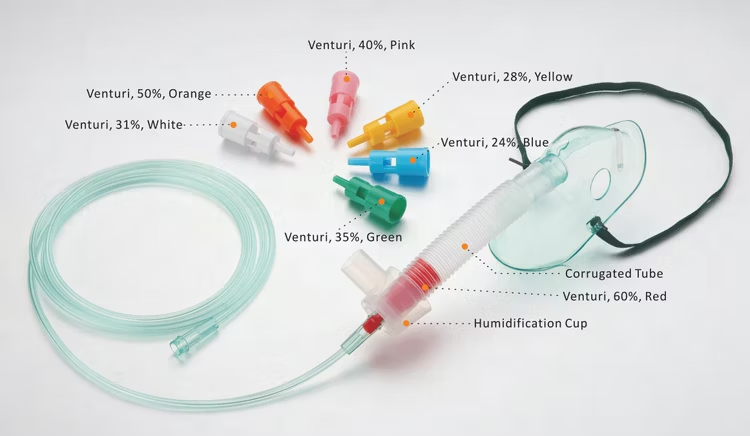
The device typically consists of:
- A face mask
- Oxygen tubing
- Color-coded adapters or valves
- Air entrainment ports
Each adapter is designed to deliver a different oxygen concentration. Medical staff can select the appropriate adapter based on the patient’s needs.
The design is based on the Venturi principle, a concept in fluid dynamics that allows precise mixing of oxygen and room air.
How Does It Work?
The operation is surprisingly clever.
Pressurized oxygen flows through a narrow opening inside the adapter. As the gas passes through this constricted area, its velocity increases and pressure decreases.
This pressure drop draws surrounding room air into the device through specially designed side ports.
The incoming room air mixes with the oxygen stream before reaching the patient.
Because the size of the openings is carefully controlled, the resulting oxygen concentration remains relatively stable.
For example, different adapters may deliver:
| Adapter Type | Approximate Oxygen Concentration |
| Blue | 24% |
| White | 28% |
| Yellow | 35% |
| Red | 40% |
| Green | 60% |
Actual colors and concentrations can vary depending on the manufacturer.
This controlled mixing process is what makes the device valuable in clinical settings.
Why Precise Oxygen Delivery Matters
Many people assume more oxygen is always better.
That is not necessarily true.
Some patients, particularly those with chronic obstructive pulmonary disease (COPD), may require carefully controlled oxygen levels. Excessive oxygen administration can sometimes worsen carbon dioxide retention in certain individuals.
In these situations, healthcare providers need a system capable of delivering predictable oxygen concentrations.
This is one of the primary reasons hospitals frequently use a Venturi mask instead of less precise oxygen delivery methods.
Who Uses This Type of Oxygen Therapy?
Several groups of patients may benefit from controlled oxygen administration.
COPD Patients
This is perhaps the most commonly cited group.
Individuals with severe COPD often need carefully regulated oxygen levels. Delivering too much oxygen may create complications in some cases.
Pneumonia Patients
Severe respiratory infections can reduce blood oxygen levels.
A controlled oxygen device allows clinicians to improve oxygenation while monitoring the patient’s response.
Hospitalized Respiratory Patients
People experiencing:
- Acute respiratory distress
- Pulmonary edema
- Chronic lung disease flare-ups
- Post-surgical breathing difficulties
may receive oxygen therapy through this system.
Emergency Department Patients
Emergency physicians often use controlled oxygen delivery when determining the underlying cause of breathing difficulties.
Main Features
Several design elements distinguish this device from other oxygen delivery systems.
Fixed Oxygen Concentrations
The most important feature is the ability to deliver predetermined oxygen percentages.
Color-Coded Adaptors
Different adapters make setup straightforward for healthcare professionals.
Air Entrainment Technology
The device automatically mixes room air with oxygen in specific ratios.
Wide Oxygen Range
Different settings allow clinicians to provide various oxygen concentrations depending on patient requirements.
Consistent Performance
Breathing patterns generally have less impact on delivered oxygen concentration compared with some alternative devices.
Benefits
There are several reasons healthcare providers continue to rely on this technology.
Precise Oxygen Control
The greatest advantage is predictable oxygen delivery.
This reduces uncertainty during treatment.
Useful for High-Risk Respiratory Conditions
Patients with COPD and similar conditions often require careful oxygen management.
Easy Clinical Monitoring
Knowing the intended oxygen concentration helps clinicians interpret oxygen saturation measurements more accurately.
Non-Invasive
The device delivers oxygen without invasive procedures such as intubation.
Widely Available
Most hospitals and healthcare facilities stock these masks as part of routine respiratory care equipment.
Read More Expert Articles on: Sharemyideaz
Potential Drawbacks
No medical device is perfect.
Several limitations should be considered.
Can Feel Uncomfortable
The mask covers the nose and mouth.
Some people find it restrictive, especially during prolonged use.
Talking Becomes Difficult
Patients may need to remove the mask temporarily to communicate clearly.
Dryness and Irritation
Oxygen therapy can contribute to:
- Dry mouth
- Nasal irritation
- Skin discomfort
particularly during extended treatment periods.
Not Ideal for Eating
Patients generally must remove the mask while eating or drinking.
Bulkier Than Nasal Cannulas
Some individuals prefer nasal prongs because they feel less intrusive.
Real-World Examples
Medical textbooks explain the science, but practical situations often make its value easier to understand.
Example 1: COPD Exacerbation
Imagine a patient arrives at the emergency department struggling to breathe due to a COPD flare-up.
Their oxygen levels are low, but clinicians do not want to provide excessive oxygen.
A controlled oxygen device allows staff to deliver a specific concentration while monitoring blood gases and oxygen saturation.
Example 2: Severe Pneumonia
A patient with pneumonia may require supplemental oxygen for several days.
Healthcare professionals can gradually adjust oxygen concentrations as recovery progresses.
Example 3: Postoperative Recovery
After surgery, some patients temporarily experience reduced oxygen levels.
Controlled oxygen delivery helps support recovery without unnecessary oxygen exposure.
Is It Actually Useful?
For the right patient, absolutely.
The usefulness comes from precision rather than power.
People sometimes assume advanced respiratory care always involves higher oxygen concentrations. In reality, the goal is often providing the correct amount of oxygen rather than the maximum amount.
Healthcare teams value devices that deliver predictable results.
This makes controlled oxygen systems particularly useful in hospital environments where treatment decisions depend on accurate respiratory management.
Safety Considerations
Oxygen therapy should never be treated casually.
Even though oxygen is essential for life, improper administration can create problems.
Professional Supervision Is Important
Oxygen therapy should generally be administered according to healthcare provider recommendations.
Monitor Oxygen Saturation
Pulse oximetry helps determine whether oxygen levels are improving appropriately.
Watch for Skin Irritation
Extended mask use can sometimes cause pressure marks around the nose and face.
Follow Prescribed Settings
Changing oxygen concentrations without medical guidance may affect treatment effectiveness.
Fire Risk
Oxygen supports combustion.
Patients receiving oxygen therapy should stay away from:
- Open flames
- Smoking materials
- Sparks
- Heat sources
This safety rule applies to all oxygen delivery systems.
Legitimacy and Medical Acceptance
Some medical devices become popular trends before strong evidence supports them.
That is not the case here.
The venturi mask is a well-established and widely accepted oxygen delivery device used throughout hospitals worldwide.
Its design is based on proven engineering principles and decades of clinical use.
Healthcare professionals, respiratory therapists, emergency physicians, and pulmonary specialists routinely utilize it when controlled oxygen administration is required.
There is nothing experimental or questionable about its role in modern respiratory care.
Common Problems Patients Experience
Patients occasionally report practical challenges while using these masks.
Feeling Claustrophobic
Some individuals dislike having a mask covering much of the face.
Noise From Airflow
The air entrainment system can create noticeable airflow sounds.
Mask Movement
Poor fit may reduce comfort and effectiveness.
Dry Mouth
This is especially common during prolonged therapy.
Communication Frustration
Talking through a mask is rarely convenient.
Most of these issues can be managed through proper fitting, monitoring, and supportive care.
Comparison With Other Oxygen Delivery Methods
Venturi Mask vs Nasal Cannula
| Feature | Venturi System | Nasal Cannula |
| Oxygen Precision | High | Moderate |
| Comfort | Moderate | High |
| Communication | More Difficult | Easier |
| Eating & Drinking | Less Convenient | Convenient |
| COPD Management | Often Preferred | Sometimes Used |
Venturi Mask vs Simple Face Mask
| Feature | Venturi System | Simple Face Mask |
| Oxygen Accuracy | High | Lower |
| Oxygen Control | Precise | Variable |
| Clinical Monitoring | Easier | Less Precise |
| COPD Patients | Frequently Preferred | Less Common |
Venturi Mask vs Non-Rebreather Mask
| Feature | Venturi System | Non-Rebreather |
| Goal | Controlled Oxygen | Maximum Oxygen |
| Precision | High | Lower |
| Emergency Use | Selective | Common |
| Severe Oxygen Deficiency | Limited | Often Preferred |
Each device serves a different clinical purpose.
Choosing the right option depends on the patient’s condition and treatment goals.
Practical Insights From Clinical Use
Respiratory therapists often emphasize that oxygen therapy is not simply about increasing oxygen levels as much as possible.
A patient with chronic lung disease may respond very differently than someone recovering from surgery.
In real hospital settings, clinicians frequently adjust oxygen concentrations based on:
- Oxygen saturation readings
- Blood gas results
- Respiratory rate
- Underlying medical condition
- Patient comfort
The ability to deliver predictable oxygen concentrations makes this device particularly valuable in those situations.
Many healthcare providers view it as one of the most reliable tools when precision matters.
Who Should Not Self-Use Oxygen Equipment?
People sometimes consider purchasing oxygen equipment without proper evaluation.
That is generally not recommended.
Low oxygen levels can result from many different conditions, including:
- Heart disease
- Lung disease
- Infections
- Blood disorders
- Sleep-related breathing disorders
Treating symptoms without identifying the underlying cause can delay necessary medical care.
Anyone experiencing persistent shortness of breath or suspected oxygen deficiency should seek professional medical evaluation.
Final Verdict
The venturi mask remains one of the most important tools in controlled oxygen therapy.
Its greatest strength is precision. Rather than delivering oxygen in an unpredictable manner, it provides a consistent and measurable concentration that healthcare professionals can adjust according to a patient’s needs.
For individuals with COPD, pneumonia, postoperative breathing difficulties, and various respiratory conditions, this level of control can be extremely valuable.
It is not the most comfortable oxygen delivery device, nor is it designed for every situation. Still, when accurate oxygen administration is required, few alternatives offer the same combination of reliability and clinical usefulness.
In modern respiratory care, it continues to serve an important role and remains a trusted option in hospitals around the world.
Read More Expert Articles on: Sharemyideaz
FAQs
Q: What is a venturi mask used for?
A: It is used to deliver a precise concentration of oxygen to patients who require controlled oxygen therapy, particularly those with respiratory conditions such as COPD.
Q: Why is it preferred for COPD patients?
A: Many COPD patients need carefully regulated oxygen levels. This device helps healthcare providers deliver a predictable oxygen concentration.
Q: Can patients eat while wearing it?
A: Usually, the mask must be removed temporarily for eating and drinking.
Q: Is it better than a nasal cannula?
A: Not necessarily. A nasal cannula is often more comfortable, while a controlled oxygen mask provides greater precision.
Q: Is it safe?
A: Yes, when used according to medical guidance. Oxygen therapy should always be monitored appropriately.
Q: Does it provide 100% oxygen?
A: No. It is specifically designed to deliver controlled oxygen concentrations by mixing oxygen with room air.
Q: Can it be used at home?
A: Most commonly it is used in hospitals and clinical settings, though home use may be recommended in certain cases under medical supervision.
Q: What makes it different from other oxygen masks?
A: Its ability to deliver a fixed and predictable oxygen concentration is the main difference and the primary reason healthcare professionals choose it for certain patients.
