

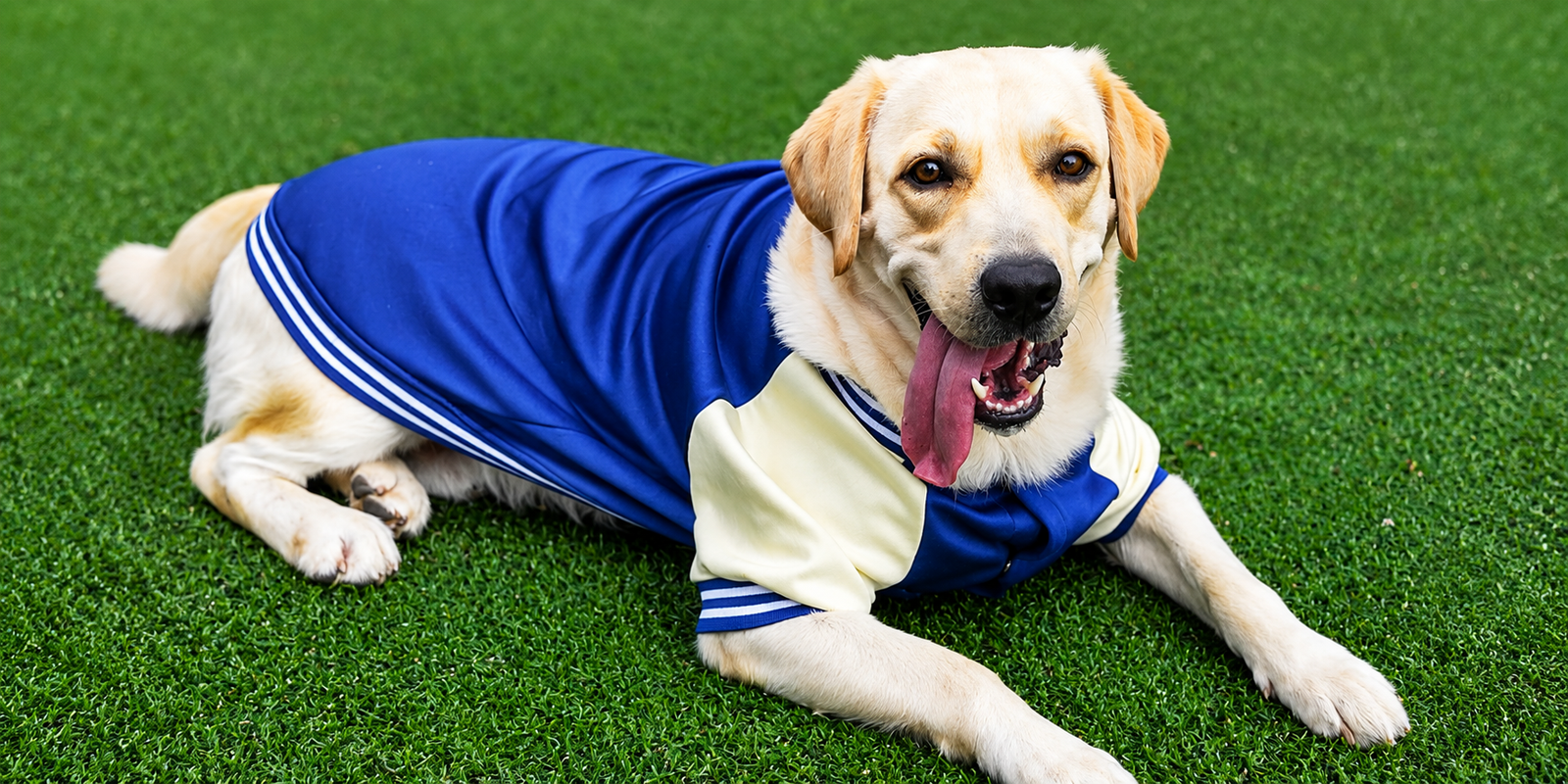
My neighbor has a 110-pound Bernese Mountain Dog named Biscuit, and every winter she goes through the same ritual: standing in a pet store aisle, holding up a coat clearly designed for a Labrador, and sighing. “Nothing ever fits him,” she told me once, half-laughing, half-defeated. That moment sums up the entire problem large dog fashion exists to solve.
If you own a big breed — a Great Dane, a Mastiff, a Rottweiler, a Newfoundland — you already know the frustration. Most pet clothing lines are built around small and medium dogs because, frankly, that’s where most of the market money is. Large dog fashion is the smaller, more specialized corner of the pet apparel industry that actually accounts for the bigger bodies, longer torsos, and heavier builds of giant breeds.
Quick Answer
Large dog fashion refers to clothing and wearable accessories — coats, harnesses, sweaters, boots, raincoats, bandanas, and costumes — specifically sized and structured for large and giant dog breeds (typically 50 lbs and up). It exists because standard pet apparel sizing rarely accounts for the proportions of big dogs, and it serves both functional purposes (warmth, protection, visibility) and aesthetic ones (style, personality, social media appeal). It’s a legitimate and growing niche, though quality and fit vary a lot between brands.
What Is Large Dog Fashion, Really?
Let’s clear something up first: large dog fashion isn’t just “regular dog clothes but bigger.” That’s a common misconception, and it’s actually why so many owners end up disappointed.
A Great Dane and a Golden Retriever might both be considered “large dogs,” but their body shapes are wildly different. A Dane has a deep chest, long legs, and a narrow waist. A Mastiff is broad and stocky. A Doberman is lean and athletic. Generic large-dog clothing brands that just scale up a small-dog pattern often end up with garments that bunch weirdly at the shoulders or ride up over the belly.
True large dog fashion, at least when done properly, takes breed-specific proportions into account. Some brands even offer separate sizing charts for “deep-chested” versus “barrel-chested” builds. That level of detail matters more than people expect until they’ve tried to squeeze a 130-pound dog into something that just doesn’t sit right.
The category spans a few subtypes:
- Functional wear — coats, boots, and raincoats meant to protect against cold, rain, or rough terrain
- Safety wear — reflective vests, high-vis harnesses, and LED collars for visibility during walks
- Medical or recovery wear — post-surgery suits, cone alternatives, joint-support wraps
- Fashion-forward apparel — sweaters, hoodies, bandanas, and costumes purely for style or fun
- Occasion wear — wedding attire, holiday outfits, matching owner-and-dog sets
How Large Dog Fashion Actually Works
The mechanics behind it are simpler than the marketing makes it sound. Most large dog apparel is built around three things: sizing accuracy, material stretch, and closure systems.
Because giant breeds vary so much in shape, good brands measure three points — neck, chest girth, and back length (from collar to tail base) — rather than relying on weight alone. Weight is honestly a pretty unreliable metric here. Two 90-pound dogs can have completely different chest measurements depending on breed.
Materials matter more too. Neoprene and fleece blends are common for winter coats because they stretch with movement instead of restricting it. Velcro and adjustable strap closures are used far more often than zippers, partly because they’re easier to fasten around a squirming 100-pound animal and partly because they allow a bit of size flexibility.
One thing I’ve noticed testing a few brands with a friend’s Cane Corso: the products that actually work well have underbelly coverage and leg straps to stop the coat from sliding sideways when the dog runs. Cheaper versions skip this and the coat ends up twisted around the dog’s neck within ten minutes.
Main Features to Look For
Not all large dog fashion products are created equal. Here’s what tends to separate the useful ones from the gimmicky ones.
- Adjustable chest and neck straps — critical for a proper fit across different builds
- Reinforced stitching at stress points — shoulders and leg openings take the most wear
- Water-resistant or waterproof outer shells — genuinely useful in wet climates, not just marketing language
- Reflective piping or patches — adds real visibility during early morning or evening walks
- Breathable inner lining — prevents overheating, especially important for double-coated breeds
- Harness-compatible design — some coats have a back slit so you can still clip a leash without removing the garment
If a product is missing most of these and is priced suspiciously low, that’s usually a sign it was designed for photos, not actual use.
Discover More Helpful Resources on: Sharemyideaz
Pros and Cons
Pros
- Solves a genuine sizing gap that many big-dog owners face
- Provides real functional benefits in cold or wet climates
- Can improve visibility and safety during low-light walks
- Helps some senior or short-haired large breeds regulate body temperature
- Post-surgical apparel can genuinely aid recovery by preventing wound licking
Cons
- Pricier than standard dog clothing due to more fabric and specialized sizing
- Sizing still varies wildly between brands, so returns are common
- Some large breeds simply don’t tolerate wearing clothes, no matter how well it fits
- Poorly designed items can restrict movement or cause chafing
- A lot of the market leans heavily into aesthetics over actual utility
Real-World Scenarios Where It Actually Helps
I think this is where a lot of articles on this topic fall flat — they talk in generalities instead of situations people actually deal with.
Take a short-haired large breed like a Doberman or Greyhound living somewhere with real winters. These dogs have very little body fat and almost no undercoat, so a proper insulated coat isn’t vanity, it’s a genuine comfort and even a mild safety issue during freezing walks.
Or consider a senior Labrador or Rottweiler with arthritis. Owners often report that a lightweight, well-fitted coat helps keep joints warmer, which can make morning walks a little less stiff. That’s not a guaranteed medical outcome, just something a lot of pet owners notice anecdotally.
Then there’s the recovery scenario — a dog coming out of ACL surgery or a spay/neuter procedure. A soft recovery suit that covers the incision site can be genuinely more comfortable than the plastic cone, and many vets now recommend them as an alternative.
On the flip side, plenty of large dog fashion purchases are just about the owner wanting their dog to look good for a holiday photo or a walk around the neighborhood. There’s nothing wrong with that either — it’s just a different motivation than function.
Safety, Legitimacy, and What to Watch Out For
Is large dog fashion “legit”? Broadly, yes. It’s a real and growing niche within the pet industry, not some scammy trend. Major pet brands, along with independent Etsy-style makers, produce genuinely well-made products for big dogs.
That said, a few safety concerns are worth flagging honestly:
- Overheating risk. Large, heavily-coated breeds (Huskies, Malamutes, Newfoundlands) usually don’t need extra layers and can overheat if dressed inappropriately for the weather.
- Restricted movement. Ill-fitting coats or harness-style outfits can chafe under the front legs or restrict the natural gait, especially during longer walks.
- Choking or entanglement. Costumes with dangling parts or loose accessories are a real hazard, particularly for dogs that chew or tug at their own clothing.
- Allergic reactions. Some synthetic fabrics can irritate sensitive skin, similar to how certain fabrics bother some humans.
None of this means large dog fashion is inherently unsafe. It means fit and material quality matter more than they get credit for, and “cute” shouldn’t override “functional” when you’re picking something for your dog to actually wear outside.
Common Problems and Limitations
The most common complaint, by far, is sizing inconsistency. A “large” label on one brand might fit a 70-pound dog, while another brand’s “large” is built for 100 pounds. There’s no industry-standard sizing chart across the pet apparel space, which makes online shopping a bit of a gamble.
Durability is another recurring issue. Big dogs are strong, and if a coat isn’t reinforced at the seams, it tends to rip within a few uses — especially around the front legs where movement is constant.
And then there’s the dog’s own opinion, which honestly matters more than any spec sheet. Some large breeds tolerate clothing just fine. Others will freeze in place, walk stiffly like a robot, or try to chew the thing off within thirty seconds. There’s no way to predict this reliably before trying it, which is part of why return policies matter so much when shopping in this category.
Large Dog Fashion vs. Standard Pet Clothing
| Factor | Large Dog Fashion | Standard/Generic Pet Clothing |
| Sizing accuracy | Built around big-breed proportions | Often just scaled-up small dog patterns |
| Material durability | Reinforced stitching, heavier fabric | Lighter fabric, less stress-tested |
| Price | Higher, due to fabric and niche production | Generally cheaper |
| Availability | Fewer brands, more specialty/online retailers | Widely available in most pet stores |
| Fit customization | Often multi-point adjustable | Usually one-size-fits-category |
If your dog is under 50 pounds, generic pet clothing will likely serve you fine. Once you’re dealing with a genuinely large or giant breed, specialty sizing starts to matter a lot more.
A Practical, Slightly Opinionated Take
Here’s my honest read after looking into this space for a while: large dog fashion is useful, but only when you buy it for the right reason. If you’re getting a coat because your dog genuinely struggles with cold weather, or because a harness-compatible design makes walks safer in low light, that’s money well spent.
If you’re buying a Halloween costume because it’ll look funny on Instagram — also fine, honestly, just don’t expect your dog to love wearing it, and keep it short and supervised.
Where I’d push back a little is on the assumption that every large dog needs a wardrobe. A lot of giant breeds have thick double coats and are perfectly comfortable without any additional layers, even in moderately cold weather. Dressing a Bernese Mountain Dog in a heavy coat for a 40-degree walk is probably unnecessary and could even make the dog uncomfortably warm.
Final Verdict
Large dog fashion is a legitimate, functional niche — not just a marketing trend riding on the broader pet apparel boom. For short-haired, senior, or cold-sensitive large breeds, well-made apparel can genuinely improve comfort and safety. For thick-coated giant breeds, it’s often more about style than necessity, and that’s okay too, as long as expectations are realistic.
The key takeaway is this: fit, material quality, and your specific dog’s tolerance matter far more than brand hype. Measure carefully, read return policies before buying, and pay attention to how your dog actually responds the first time they wear something — that reaction will tell you more than any product description will.
Discover More Tips & Insights on: Sharemyideaz
FAQs
Q: What size is considered a “large dog” for clothing purposes?
A: Most brands classify large dogs as those weighing between 50 and 90 pounds, with “giant breed” sizing starting around 90–100+ pounds. However, weight alone isn’t reliable — chest girth and back length matter more for an accurate fit.
Q: Do large dogs actually need coats in winter?
A: It depends on the breed. Short-haired or lean large breeds (Dobermans, Greyhounds, Vizslas) often benefit from a coat in cold weather. Thick double-coated breeds (Huskies, Malamutes, Newfoundlands) usually don’t need one and can overheat if overdressed.
Q: How do I measure my dog for large dog fashion items?
A: Measure the neck circumference, chest girth (widest part behind the front legs), and back length (from the base of the neck to the base of the tail). Most reputable brands provide a sizing chart based on these three measurements rather than weight alone.
Q: Is dog clothing safe, or can it cause harm?
A: Well-fitted, breathable clothing is generally safe. Risks arise from poor fit (chafing, restricted movement), overheating in unsuitable weather, or loose accessories that pose a choking hazard. Supervision during the first few wears is a good habit regardless of the product.
Q: Why is large dog clothing more expensive than regular dog clothing?
A: It requires more fabric, reinforced stitching for durability, and specialized sizing patterns that account for big-breed proportions — all of which add to production cost compared to standard, one-size pet apparel.
Q: Will my dog even tolerate wearing clothes?
A: It varies dog to dog. Some adapt within minutes; others resist indefinitely. There’s no reliable way to predict this in advance, so starting with a low-cost item and a flexible return policy is a practical approach before investing in a full wardrobe.
Q: Are there specific brands that specialize in large dog fashion?
A: Yes, several pet apparel brands and independent makers focus specifically on big and giant breed sizing, often offering separate charts for deep-chested versus barrel-chested builds. It’s worth checking recent reviews before buying, since quality and availability shift over time.
