

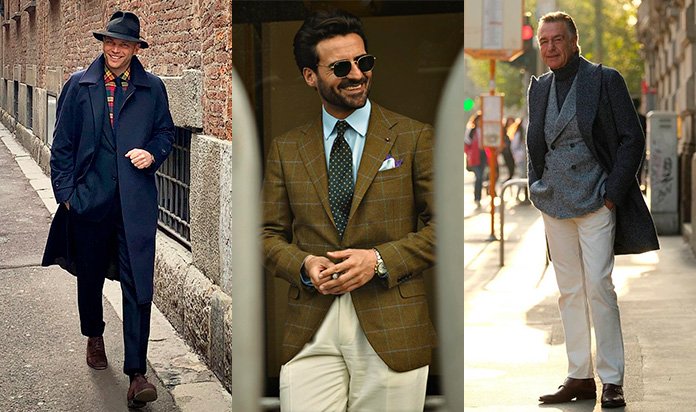
I still remember the first time I tried on a properly cut Neapolitan jacket. It wasn’t stiff like the off-the-rack suits I’d worn for years. It moved with my shoulders instead of fighting them. The salesman barely said anything — he just watched my reaction and smiled like he already knew what I’d think. That moment is basically the whole pitch for Italian men’s fashion in one sentence: it’s clothing built around how a body actually moves, not just how a garment looks on a hanger.
This article breaks down what the term actually means, how the style works in practice, who benefits most from it, and where it falls short — because no fashion tradition, however celebrated, is perfect for everyone.
Quick Answer
Italian mens fashion refers to a clothing tradition rooted in regional Italian tailoring — soft-shouldered jackets, lighter fabrics, close-but-comfortable fits, and an emphasis on personal expression through color, texture, and proportion rather than rigid uniformity. It’s known for craftsmanship-driven brands (Brioni, Zegna, Kiton), relaxed formalwear (sprezzatura), and an overall philosophy that clothes should look effortless even when they’re meticulously made. It works well for people who want refined, lighter, more personality-driven menswear, but it can be expensive and isn’t always practical for colder climates or strict corporate dress codes.
What Is Italian Men’s Fashion, Exactly?
It helps to separate the marketing version from the real one. The marketing version is Pitti Uomo street-style photos: pastel suits, no socks, a scarf thrown on with studied carelessness. That’s part of it, sure, but it’s the surface.
The deeper version is a set of construction and styling principles that developed across different Italian cities, each with its own dialect of tailoring:
- Neapolitan tailoring — soft, almost unstructured shoulders, minimal canvas, designed to drape rather than hold a rigid shape
- Milanese tailoring — sharper, more structured, closer to British influence but still lighter than a typical American suit
- Roman tailoring — somewhere in between, often associated with a slightly more conservative silhouette
What ties these together isn’t a single look — it’s a shared belief that clothing should flatter the individual body rather than force the body into a standardized shape. That’s genuinely different from, say, classic American tailoring, which historically prioritized boxier, more uniform cuts.
How It Works in Practice
This isn’t just a style you buy off a rack and put on. The “how” matters as much as the “what.”
Fit comes first. Italian tailoring traditionally starts with measurements taken for the individual, even on ready-to-wear lines that try to replicate a bespoke feel through slimmer cuts and shorter jackets. The goal is for the garment to follow the natural shoulder line rather than padding it out.
Fabric choice does a lot of the work. Lighter wools, linen blends, and unlined or half-lined jackets are common, partly because of the Mediterranean climate. A jacket that works in Milan in October might feel underbuilt in a Chicago winter — which is a real practical consideration, not a minor detail.
Color and texture replace logos. Where some menswear traditions lean on brand visibility, Italian style tends to lean on subtle pattern-mixing, unexpected color pairings (think burnt orange with navy), and texture contrast — knit ties, raw-edge pocket squares, suede loafers with a wool suit.
Sprezzatura is the philosophy underneath it all. It’s a hard word to translate cleanly, but it roughly means “studied carelessness” — looking put-together without looking like you tried too hard. A loosened tie, an unbuttoned cuff, a jacket sleeve pushed up slightly. It’s intentional imperfection, which, frankly, takes more effort to pull off than it looks like it does.
Main Features
- Soft, natural shoulder construction (especially Neapolitan-style jackets)
- Shorter jacket lengths and higher armholes compared to British or American cuts
- Heavy use of lighter, breathable fabrics — linen, lightweight wool, cotton-silk blends
- Confident color combinations rather than safe monochrome
- Accessory-driven personalization: pocket squares, knit ties, woven belts
- A general preference for “worn-in” elegance over stiff formality
- Strong presence of regional artisan brands alongside global luxury houses
Pros and Cons
Pros
- Genuinely more comfortable than heavily structured tailoring, especially for warmer climates
- Encourages personal style rather than uniform dressing
- High-end pieces are often built with real craftsmanship and longevity in mind
- Works across both casual and semi-formal settings with small adjustments
- Aging well — a lot of these pieces aren’t trend-dependent, so they don’t look dated in five years
Cons
- Authentic, well-made pieces are genuinely expensive; quality tailoring isn’t a budget category
- Lighter construction means some jackets won’t hold up as well in cold, wet climates
- The “effortless” look takes real practice — done badly, it just looks sloppy
- Sizing on Italian cuts often runs slimmer, which can be frustrating for people outside a narrow body-type range
- Some retailers slap “Italian-inspired” labels on products with none of the actual construction quality
Real-World Examples
A friend of mine who works in finance in Milan wears a soft-shoulder navy blazer almost every day, paired with different trousers and no tie half the time. It reads as polished but not stiff — which matters in a culture where looking overly formal can sometimes come across as trying too hard.
Compare that to a wedding I attended where the groom wore a lightly structured cream linen suit with brown suede loafers, no socks. It would’ve looked out of place at a more conservative American wedding, but in the context it was dressed exactly right — relaxed, warm-weather, intentional.
On the more accessible end, plenty of guys build an “Italian-leaning” wardrobe without ever buying a true Neapolitan jacket — just by favoring slimmer-but-not-tight fits, warmer color palettes, and a couple of well-chosen accessories. That’s a realistic, lower-cost entry point most people actually use.
Is It Legitimate? Safety and Authenticity Concerns
There’s no inherent “safety” risk here — it’s clothing, not a supplement or a gadget — but legitimacy is a real concern worth addressing, since this is a heavily marketed category online.
A few things worth knowing:
- Counterfeit risk is real for big-name Italian luxury brands. If you’re buying secondhand or through third-party marketplaces, verify authentication, especially for items like Zegna or Brioni at suspiciously low prices.
- “Made in Italy” labeling can be murky. Some products are designed in Italy but manufactured elsewhere, or only partially assembled there. EU labeling rules require disclosure, but it’s worth checking country-of-origin specifics if authenticity matters to you.
- Fast-fashion brands often borrow the aesthetic without the construction quality — slim Italian-style cuts using stiff, low-grade fabric. It’ll look the part in a photo and feel completely different in person.
None of this makes the category illegitimate — the tailoring tradition itself is centuries old and well documented — but it does mean buyers should be specific about what they’re actually paying for.
Common Problems and Limitations
The most common complaint I hear, and have experienced myself, is sizing inconsistency. A 50R from one Italian brand can fit completely differently from a 50R at another, partly because so many smaller ateliers still essentially hand-grade their patterns rather than using standardized industrial sizing.
The second issue is climate mismatch. People in colder regions sometimes buy lighter Italian-style pieces expecting them to perform like heavier traditional suiting, and end up disappointed when a half-lined jacket doesn’t cut the wind in January.
Third, there’s a learning curve to styling it well. The relaxed, “didn’t try too hard” look genuinely requires some practice in proportion and color — it’s not paint-by-numbers the way a navy suit with a white shirt and red tie is.
How It Compares to Other Menswear Traditions
| Aspect | Italian | British | American |
| Shoulder structure | Soft, natural | Structured, padded | Structured, boxier |
| Fit philosophy | Body-hugging, fluid | Sharp, architectural | Roomier, conservative |
| Fabric weight | Lighter | Heavier | Mid-weight |
| Styling approach | Expressive, color-forward | Understated, traditional | Practical, standardized |
| Best suited for | Warm climates, personal flair | Formal/corporate settings | Everyday comfort, durability |
None of these is objectively “better” — it really comes down to climate, occasion, and personal taste. A lot of well-dressed men actually blend elements: a British-cut overcoat over an Italian-style suit, for instance, isn’t unusual at all.
A Practical, Honest Opinion
If I’m being straightforward about it: Italian men’s fashion earns its reputation, but the internet oversells how easy it is to replicate. The construction techniques behind a great Neapolitan jacket took artisans years to master, and no amount of styling tips fully substitutes for that.
That said, you don’t need a $4,000 jacket to borrow the underlying principles. Fit matters more than brand. A well-fitted, lighter-structured jacket from a mid-range retailer will read as more “Italian” than an ill-fitting designer piece. Start with fit and proportion before chasing specific labels — that’s where most of the visual payoff actually comes from.
Final Verdict
Italian men’s fashion isn’t a gimmick or a marketing fiction — it’s a genuinely distinct tailoring philosophy with centuries of technique behind it, and it offers real comfort and styling advantages for the right context. It’s best suited to people who want lighter, more expressive formalwear and who live in or dress for warmer climates. It’s less practical for strict corporate environments with rigid dress codes, or for cold-weather regions where heavier construction matters more than drape. Like most fashion traditions, its value comes down to fit, context, and how thoughtfully it’s applied — not the label sewn into the collar.
Learn More About Blogs On Sharemyideaz
FAQs
Q: What makes Italian men’s fashion different from other styles?
A: It’s mainly the construction — soft shoulders, lighter fabrics, and a closer fit — combined with a styling philosophy (sprezzatura) that favors relaxed, individualized dressing over rigid formality.
Q: Is Italian men’s fashion only for formal occasions?
A: No. While it’s strongly associated with tailoring, the same principles — lighter fabrics, fitted silhouettes, confident color choices — show up in casual menswear too, from knitwear to chinos.
Q: Why are Italian suits so expensive?
A: A lot of it comes down to labor-intensive construction methods (some still partly hand-sewn), higher-grade fabrics, and smaller production runs from regional ateliers rather than mass manufacturing.
Q: Can I get the Italian look without spending a fortune?
A: Yes. Focus on fit first — slimmer through the body without being tight, shorter jacket length, lighter color palette — rather than chasing specific designer labels.
Q: Does “Made in Italy” always mean high quality?
A: Not necessarily. Labeling rules vary, and some pieces are only partially produced in Italy. It’s worth checking the brand’s actual manufacturing transparency if authenticity is a priority for you.
Q: Is Italian tailoring practical for cold climates?
A: It can be, but many traditional pieces use lighter fabric and less structure, which means they may not perform as well in harsh winters compared to heavier British or American tailoring.
