

I still remember standing in a cramped apartment bedroom years ago, trying to get ready for a job interview with nothing but my phone’s front camera to check if my shirt was tucked in right. It wasn’t until I moved a secondhand dresser mirror into the corner that I realized how much of a difference a proper reflective surface makes in a small room. That one piece of furniture changed how the whole space felt — brighter, bigger, and honestly a lot more functional.
If you’ve landed here because you’re wondering whether a dresser mirror is the right addition to your bedroom, or you’re just trying to understand what the term even means, you’re in the right place. This guide breaks down everything from the basics to the real-world quirks nobody mentions in furniture store brochures.
Quick Answer
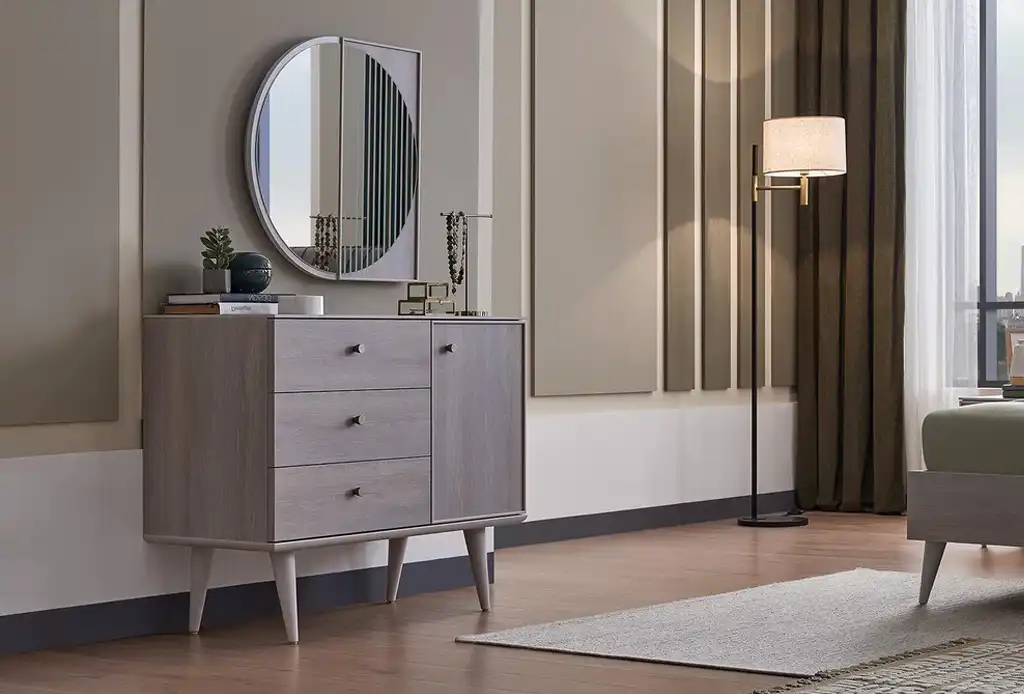
A dresser mirror is a mirror designed to sit on top of, attach to, or lean against a dresser (a chest of drawers used for clothing storage). It can be fixed, detachable, tilting, or freestanding, and its main job is to combine storage with a full or partial reflective surface for dressing, grooming, and adding visual depth to a room. Most people choose one to save space, add natural light bounce, or complete a bedroom set aesthetically — but not every dresser needs one, and not every mirror style suits every dresser.
What Is a Dresser Mirror, Exactly?
At its simplest, a dresser mirror is exactly what it sounds like — a mirror paired with a dresser. But the pairing comes in more forms than people expect.
Some are permanently attached with brackets or hardware, becoming a single unit with the dresser base. Others are detachable, meaning you can remove the mirror entirely and use the dresser as a standalone piece. There are also freestanding versions that simply rest on top of the dresser surface without any hardware connection at all, and swing or tilt mirrors that pivot on a frame so you can angle the reflection.
This distinction matters more than people think when shopping. A fixed mirror often looks more polished and matches furniture sets perfectly, but it limits flexibility if you ever want to rearrange your room or sell the dresser separately.
How Does a Dresser Mirror Actually Work?
Mechanically, it’s not complicated — but the engineering behind a good one is more thoughtful than it looks.
Most attached dresser mirrors use a wood or metal frame that’s either bolted, glued, or slotted into the back edge of the dresser top. Some use a swivel bracket system, letting the mirror tilt forward or backward a few degrees so you can adjust the angle depending on your height or lighting.
Freestanding versions rely purely on a stable base or an easel-style stand, and these are usually the easiest to move around or remove without tools. Tabletop or vanity-style dresser mirrors sometimes include a small stand with felt padding on the bottom to avoid scratching the dresser surface, which is a small detail that actually matters a lot if you care about your furniture’s finish.
The glass itself is usually either standard silvered glass (the classic mirror type) or, in higher-end builds, beveled glass with a slightly angled edge for a more decorative look.
Main Features to Look For
Not all dresser mirrors are created equal, and the differences show up fast once you’re actually using one daily. Here’s what tends to matter most:
- Frame material — wood frames blend with traditional furniture, while metal or minimalist frames suit modern setups.
- Mounting type — fixed, detachable, or freestanding, depending on how much flexibility you want.
- Tilt function — useful for taller or shorter users, and for controlling glare from windows or lamps.
- Glass thickness and coating — thicker glass with proper backing resists distortion and lasts longer.
- Size ratio to dresser — a mirror that’s too large can look top-heavy, while one too small feels like an afterthought.
- Anti-tip hardware — an often overlooked safety feature, especially in homes with kids or pets.
Pros and Cons of a Dresser Mirror
Every furniture choice comes with trade-offs, and dresser mirrors are no exception.
Pros:
- Saves floor space compared to a separate standing mirror
- Adds natural light reflection, making small rooms feel airier
- Doubles as a quick styling or grooming check before heading out
- Often completes a matching bedroom furniture set visually
- Can increase resale value slightly if the set is sold together
Cons:
- Fixed versions limit how you can rearrange or repurpose the dresser later
- Larger mirrors add weight, which can be a tipping hazard if not anchored
- Glass can be a safety concern in homes with small children or during earthquakes
- Style may become outdated faster than the dresser itself
- Repairs or replacements for attached mirrors are sometimes harder to source
Real-World Use Cases
A friend of mine furnishing her first studio apartment picked a dresser with an attached mirror specifically because she didn’t have room for a separate vanity or wall mirror. It worked — but she later admitted the mirror’s fixed angle didn’t suit her height, and she ended up propping a small stand-alone mirror on a shelf anyway.
On the other hand, in guest bedrooms or rental properties, a detachable dresser mirror tends to be the smarter pick. It gives flexibility if the next tenant or family member wants a different look, without needing to replace the whole dresser.
Parents of toddlers often lean toward either skipping the mirror altogether or choosing models with secure anti-tip anchoring, since dresser tip-overs are a documented safety issue independent of whether a mirror is attached.
Safety, Legitimacy, and Practical Concerns
This is where a lot of buying guides go quiet, but it’s worth addressing directly.
Dresser tip-over incidents are a real and well-documented safety issue, and adding a mirror on top increases the center of gravity, which can make tipping more likely if the dresser isn’t anchored to the wall. The U.S. Consumer Product Safety Commission has issued repeated warnings about unanchored furniture and TV tip-overs involving young children, and while mirrors aren’t always the direct cause, the added top-heavy weight is a factor worth taking seriously.
As for “legitimacy” — a dresser mirror isn’t a product category prone to scams or fake reviews the way some viral gadgets are. It’s a straightforward furniture item. The bigger concern isn’t whether it’s a legitimate product, but whether a specific listing or seller is reputable, especially with online furniture marketplaces where photos don’t always match delivered quality.
A few practical safety steps if you’re buying or already own one:
- Anchor the dresser to the wall using an anti-tip kit, regardless of whether the mirror is attached
- Avoid placing dressers with mirrors directly above where a child might climb
- Check mounting hardware periodically, since wood expands and contracts with humidity
- If buying secondhand, inspect the mirror backing for cracks that aren’t visible from the front
Common Problems and Limitations
Even well-reviewed dresser mirrors run into a few recurring complaints. Distortion at the edges is common in cheaper glass, especially with beveled styles where the angle isn’t cut evenly. Tilt mechanisms can loosen over time, leading to a mirror that slowly droops forward.
Another limitation is that fixed mirrors restrict how the dresser top can be used. If you like a clear surface for a jewelry tray or a lamp, a mirror behind it can feel visually cluttered rather than clean.
Weight distribution is another issue people underestimate. A heavy mirror on a lightweight dresser frame can cause long-term structural strain, particularly on particleboard or MDF constructions that weren’t built with that added load in mind.
Dresser Mirror vs Wall Mirror vs Standing Mirror
If you’re torn between options, here’s a quick contextual comparison rather than a generic checklist.
A wall-mounted mirror is generally the safer option from a tip-over standpoint since the weight is anchored directly into the wall studs. It also frees up the dresser top completely, but it requires drilling and isn’t ideal for renters.
A standing or floor mirror offers the most flexibility and often shows a fuller reflection, which matters if you’re checking outfits head to toe. It takes up floor space, though, which isn’t ideal in tighter rooms.
A dresser mirror sits in the middle — space-efficient and functional, but with the trade-offs already covered above regarding weight and fixed positioning.
An Honest, Practical Opinion
Having lived with both attached and detached versions, my honest take is that a detachable dresser mirror tends to offer the best balance for most people. It gives you the compact convenience without locking you into one furniture arrangement forever. Fixed mirrors look great in showroom photos, but daily life is messier than a showroom — kids grow, apartments change, and furniture gets rearranged more often than we expect when we buy it.
If your priority is aesthetics and you’re furnishing a permanent space, a matched fixed-mirror dresser set can look genuinely elegant and cohesive. If your priority is practicality and future flexibility, go detachable or freestanding.
Final Verdict
A dresser mirror isn’t a flashy or trending product — it’s a practical, well-established furniture choice that solves a real space and function problem for a lot of bedrooms. It’s worth it if you’re short on space, want a cohesive furniture look, or need a quick daily mirror without adding a separate piece. It’s less worth it if you have young children in the home and can’t commit to proper anchoring, or if you expect to rearrange your furniture frequently.
Like most furniture decisions, there’s no universal right answer — just the right fit for your specific room, lifestyle, and safety priorities.
Keep Reading with: Sharemyideaz
FAQs
Q: Is a dresser mirror the same as a vanity mirror?
A: Not exactly. A vanity mirror is typically paired with a dedicated makeup or grooming table, often with lighting built in, while a dresser mirror is attached to or placed on a general clothing storage dresser.
Q: Can I remove the mirror from a dresser if I don’t want it anymore?
A: It depends on the mounting type. Detachable and freestanding mirrors can usually be removed easily, but fixed or bolted mirrors may leave visible mounting marks or require professional removal.
Q: Are dresser mirrors safe for homes with small children?
A: They can be, as long as the entire dresser unit is anchored to the wall using an anti-tip kit and the mirror’s glass is properly backed and secured to the frame.
Q: Do dresser mirrors make a room look bigger?
A: Yes, generally. Mirrors reflect light and visually extend a room’s depth, which is one reason they’re popular in smaller bedrooms and studio apartments.
Q: How much weight can a typical dresser mirror frame hold?
A: This varies by material and construction, but most standard dresser mirrors are designed for their specific glass weight only — adding extra decor or hooks to the frame isn’t recommended unless the manufacturer specifies it can handle additional load.
Q: Is it better to buy a dresser with a mirror included or add one separately?
A: If you want a matched aesthetic and don’t plan to move often, a set with an included mirror is convenient. If you value flexibility or already own a dresser you like, a separately purchased standing or wall mirror often makes more sense.
