

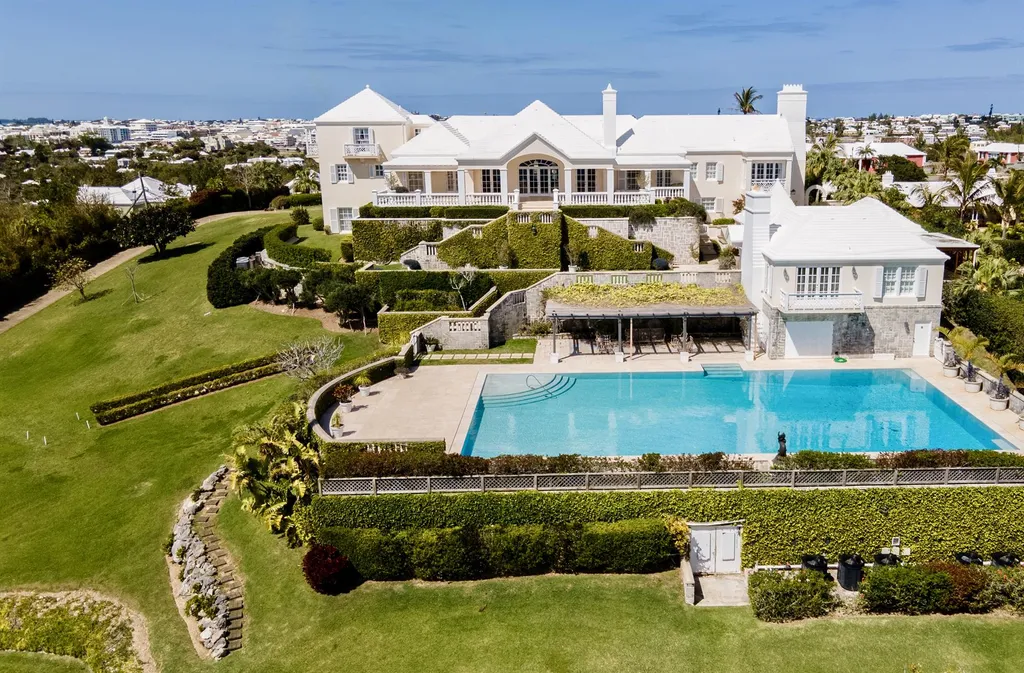
A friend of mine spent three days on Bermuda’s south shore a few years back, fell in love with the pink sand and the turquoise water, and came home convinced she was going to buy a little cottage near Warwick. She called a local agent the next week, full of excitement. The agent’s first question wasn’t about budget or bedrooms — it was “Are you Bermudian?” That one question changed everything about her plan, and it’s the question almost every foreign buyer underestimates.
Bermuda real estate isn’t like shopping for a beach house in Florida or a flat in Lisbon. It’s a small, tightly regulated, almost gated market, and understanding how it actually works — not the glossy version, the real version — matters before you fall for a listing photo.
Quick Answer
Bermuda real estate refers to the island’s residential and commercial property market, which is split between properties open to all Bermudians and a much smaller slice — roughly the top 5 to 10 percent by value — that non-Bermudians are legally permitted to buy. Foreign buyers must obtain a government-issued licence, pay substantial fees (often 8–12% of the purchase price), and stick to homes above a minimum Annual Rental Value (ARV) threshold. It’s a legitimate, well-regulated market with no capital gains or income tax, but it’s expensive, slow to transact, and not accessible to casual buyers.
What Is Bermuda Real Estate, Really
When people search “bermuda real estate,” they’re usually picturing one of two things: a vacation home on a postcard island, or an offshore investment play tied to Bermuda’s reputation as a tax-friendly jurisdiction for insurance and reinsurance companies. Both pictures are partly true.
The island itself is tiny — about 21 square miles, with a population hovering around 64,000. Land simply doesn’t exist in abundance, and the government has built an entire legal framework around protecting what little there is for Bermudians first. That framework is the single most important thing to understand about this market. It’s not a free-for-all luxury bazaar; it’s a deliberately restricted system layered on top of a normal residential property market.
For Bermudians and Permanent Resident Certificate (PRC) holders, the experience is fairly conventional: browse listings, make an offer, get a mortgage, close. For everyone else, it’s a different process entirely.
How Bermuda Real Estate Actually Works
Here’s the mechanism, stripped of marketing language.
Step one — eligibility check. Non-Bermudians can only buy property that meets a minimum Annual Rental Value, a government-assessed figure used for land tax purposes, not market price. As of 2026, houses generally need an ARV of at least $126,000, which in practice means purchase prices starting around $2 million to $3 million. Condominiums have a lower ARV threshold near $25,800, with entry prices commonly in the $500,000–$900,000 range depending on the development.
Step two — the licence. Every non-Bermudian buyer needs an Acquisition Licence (sometimes called an Alien Landholding Licence) tied to a specific property. You can’t get a general “permission to buy” — it has to match the exact house or condo you’re under contract on. A local attorney prepares and submits this on your behalf, along with bank references and character references.
Step three — the wait. Government review typically takes anywhere from six weeks to nine months, depending on the property type and how complete the application is. This is the part that catches buyers off guard. Sellers know it, too, and some use the delay as leverage during negotiations.
Step four — closing. Once approved, you pay stamp duty (which can run as high as 7–12% depending on value), legal fees, survey costs, and the licence fee itself. There’s no title insurance industry in Bermuda the way there is in North America, so a thorough title search by a local lawyer isn’t optional — it’s the only protection you’ve got.
A non-Bermudian can generally own up to two residential properties, can’t buy vacant land, and can’t touch government-subsidized or affordable housing stock. That’s the system, full stop.
Main Features of the Bermuda Market
A few things define this market and separate it from almost anywhere else you might be comparing it to:
- Extreme scarcity by design. Only a small fraction of listings — often cited around 5–10% — qualify for foreign purchase at any given time.
- No income tax, no capital gains tax, no inheritance tax. This is genuinely rare and is a real draw for high-net-worth buyers and corporate executives relocating for work.
- High transaction costs. Stamp duty and licence fees together can eat well into double digits as a percentage of price, which is steep compared to most U.S. or European markets.
- Strong rental demand, but restricted supply of rentable units. Long-term rentals to expats and professionals on work permits are common in Hamilton, Paget, Warwick, and Southampton; short-term holiday rentals are mostly off-limits unless the property sits in a designated tourism development.
- Climate-driven maintenance costs. Salt air and hurricane exposure are not small details — roofs need repainting every 2–3 years, exteriors every 5 years or so, and many homes rely on rainwater collection via roof-fed cisterns rather than municipal water.
Pros and Cons
Pros
- Political and legal stability, with a British-based legal system that gives buyers real recourse
- Zero capital gains and income tax, which matters a lot for wealth preservation
- Limited new supply tends to support long-term price stability — values rose roughly 8% annually between 2020 and 2025
- Proximity to New York and London (around two and six hours respectively) makes it workable for executives who still need to be near major financial centers
- A genuinely beautiful, safe place to live, not just an investment line item
Cons
- High barrier to entry — most non-Bermudians are realistically looking at $2 million-plus for a house
- Slow approval timelines that can blow up a moving or relocation schedule
- Heavy transaction costs on both buying and, often, renting
- Limited inventory means less negotiating leverage and fewer choices
- Maintenance is genuinely more expensive than buyers expect, hurricanes aren’t theoretical here
- Rental income isn’t automatic — you need separate permission, and short-term rentals are largely off the table outside specific developments
Real-World Scenarios
Picture a Toronto-based reinsurance executive transferred to Bermuda for a multi-year posting. He’s not trying to flip property — he wants a comfortable long-term residence near Hamilton, knows the company will likely keep him there for years, and the tax environment sweetens an already attractive relocation package. That’s the most common non-Bermudian buyer profile, honestly: someone whose work already brought them to the island, who then decides ownership makes more sense than renting indefinitely.
Compare that to a retiree from the UK looking purely for a vacation property. She buys a condo in a tourism-designated development specifically because it allows short-term rental — meaning she can rent it out part of the year to offset costs while she’s not using it. That’s a narrower but real use case, and it only works because she picked the right category of property from the start.
Then there’s the buyer who gets it wrong: someone who falls for a charming cottage listing, assumes they can just wire money and close, and discovers two months in that the ARV doesn’t qualify, the licence application is going to take the better part of a year, and the seller has already moved on to a backup offer. This happens more than people admit.
Safety, Privacy, and Legitimacy
Is Bermuda real estate legitimate? Yes, unambiguously. It’s one of the more heavily regulated property markets in the world, not because something shady is happening, but because the government actively works to prevent foreign capital from squeezing out local homeownership. The licensing system, the ARV thresholds, the mandatory legal review — all of that exists to keep transactions clean and traceable, which actually makes fraud relatively rare compared to looser markets.
That said, “legitimate” doesn’t mean “risk-free.” Because there’s no title insurance industry, you’re entirely dependent on your attorney’s title search being thorough. Skipping that step, or using an inexperienced lawyer unfamiliar with non-Bermudian transactions, is where real financial risk creeps in. Buyers acquiring through a trust or an offshore company also need to disclose the Ultimate Beneficial Owner under current rules — there’s no anonymous shell-company workaround here, and trying to find one is a bad idea.
Common Problems and Limitations
A few recurring headaches show up again and again in conversations with agents and buyers:
- Underestimating the licence timeline and losing a property to a backup offer
- Assuming rental income is guaranteed once you own — it isn’t, permission is separate and short-term rentals are heavily restricted
- Skipping the property inspection, then discovering hurricane damage, cistern problems, or aging electrical systems after closing
- Mortgages for non-Bermudians are harder to secure and usually require a larger deposit than locals would need
- Misjudging maintenance costs, which run noticeably higher than mainland comparisons because of salt air and storm exposure
How It Compares to Other Offshore Markets
If you’re cross-shopping Bermuda against somewhere like the Cayman Islands or Barbados, the tax picture looks similar on paper — most offshore island markets dangle no capital gains tax as a headline feature. Where Bermuda differs is in how restrictive the buyer pool is. Cayman, for instance, allows foreigners to buy more broadly across price points, while Bermuda essentially reserves all but the luxury tier for non-Bermudians. That makes Bermuda a smaller, more exclusive, and arguably more stable market — fewer speculative flips, less volatility — but also a much higher floor to even participate.
If your goal is pure investment yield, there are probably more efficient offshore markets. If your goal is a secure, tax-advantaged residence tied to genuine lifestyle or career reasons, Bermuda holds up well against the alternatives.
An Honest, Practical Take
Having looked closely at how this market actually functions, here’s the blunt version: Bermuda real estate works extremely well for people who already have a strong reason to be there — a job transfer, a business interest, a long-term relationship with the island — and who have the capital and patience to absorb a slow, expensive entry process. It works much less well for someone chasing a romantic notion of owning a slice of paradise on a whim. The licensing system isn’t a paperwork formality you can rush past with a good lawyer and a fat checkbook; it’s a genuine filter, and it’s meant to be.
The people who end up happiest with their purchase tend to treat the nine-month approval window as part of the plan from day one, budget an extra 15–20% beyond the sticker price for fees and taxes, and pick an agent who specializes specifically in non-Bermudian transactions rather than a generalist. The people who end up frustrated almost always underestimated the timeline or the total cost.
Final Verdict
Bermuda real estate is real, well-regulated, and genuinely attractive for the right buyer — but it is not an easy or cheap market to enter, and it was never designed to be. If you have the capital, a real reason to be on the island, and the patience for a government approval process measured in months rather than days, it can be a smart, tax-efficient long-term hold. If you’re looking for a quick vacation-property purchase or a speculative flip, this is probably one of the worst markets in the world to try that in.
Explore more websites like Sharemyideaz
FAQs
Q: Can a foreigner just buy any house in Bermuda?
A: No. Non-Bermudians are restricted to properties above a government-set Annual Rental Value threshold, which generally limits options to the top 5–10% of the market by value, mostly luxury homes, certain condos, and tourism-development units.
Q: How long does it take to get approval to buy property as a non-Bermudian?
A: It varies, but most applications take somewhere between six weeks and nine months, depending on the property type and how complete the paperwork is when submitted.
Q: Is there capital gains tax on Bermuda real estate?
A: No. Bermuda has no capital gains tax, no income tax, and no inheritance tax, which is one of the market’s biggest draws for international buyers.
Q: Can I rent out my Bermuda property if I’m not a resident?
A: Only with separate permission from the Department of Immigration, and even then, short-term or holiday rentals are generally off-limits unless the property sits within a designated tourism development.
Q: How many properties can a non-Bermudian own?
A: Generally up to two residential properties, and vacant land cannot be purchased by non-Bermudians at all.
Q: Do I need a local lawyer to buy property in Bermuda?
A: Effectively, yes. There’s no title insurance industry on the island, so a thorough title search by an experienced local attorney is the main safeguard against ownership disputes or boundary issues.
Q: Is buying in Bermuda a good investment compared to other Caribbean or offshore markets?
A: It depends on your goal. Bermuda’s restricted buyer pool tends to support price stability rather than fast appreciation, making it better suited to long-term holders with a genuine connection to the island than to short-term investors chasing yield.
