

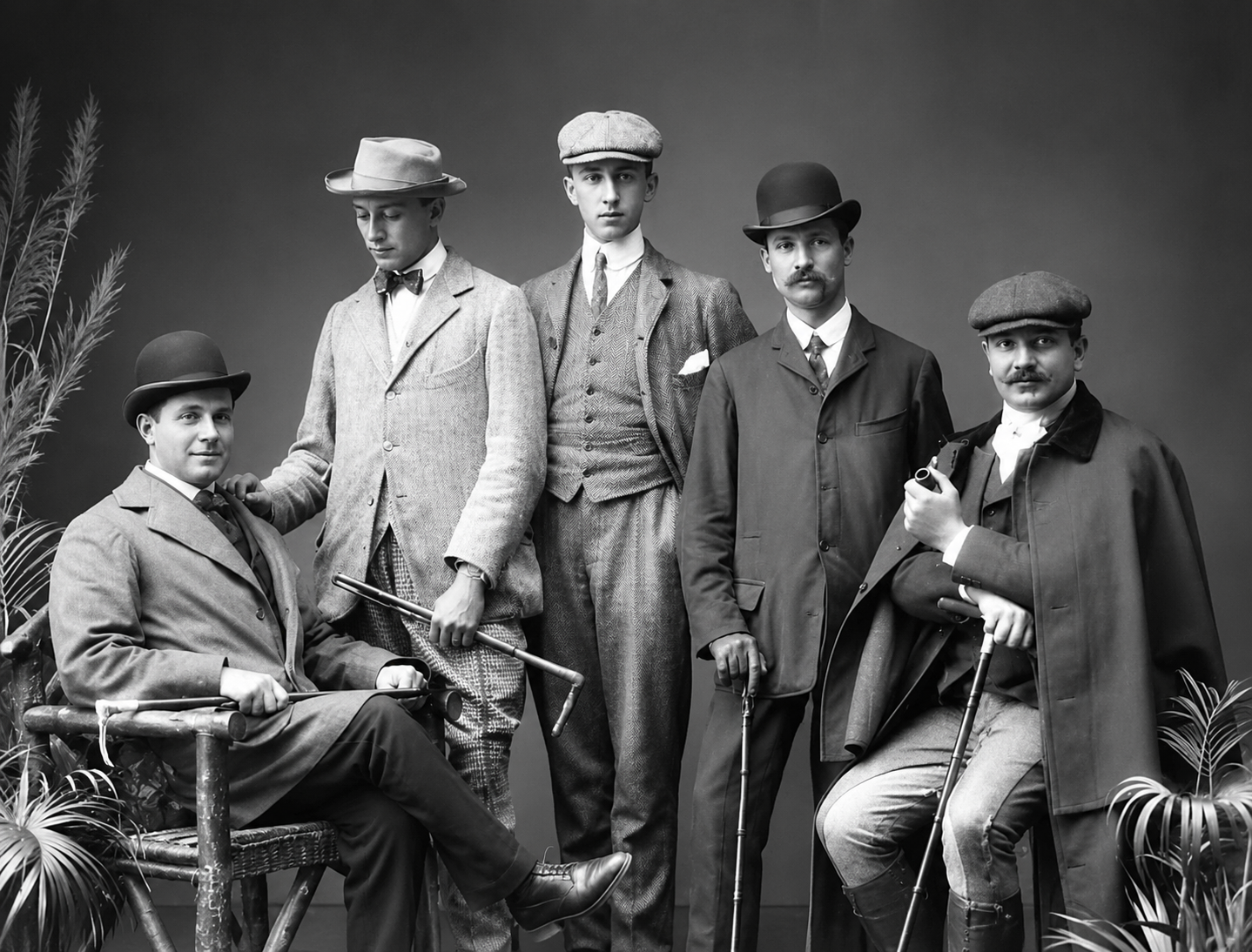
There’s something almost theatrical about the way men dressed in the 1920s. If you’ve ever flipped through old photographs from the era — maybe at an estate sale, or in a grandparent’s dusty album — you know what I mean. The sharp angles of a double-breasted suit. The confident tilt of a fedora. The gleam of two-toned Oxford shoes against a wooden dance floor. It’s a visual language that still speaks clearly, a century later.
Whether you’re dressing for a Great Gatsby party, building a vintage-inspired wardrobe, or just curious about sartorial history, understanding 1920s men fashion isn’t just about costumes. It’s about grasping a turning point in how men thought about themselves and how they chose to show up in the world.
Quick Answer: What Defined Men’s Fashion in the 1920s?
Men’s style in the 1920s was characterized by wide-leg trousers (Oxford bags), slim-fitting suits with high waists, two-button jackets, knit vests, and bold accessories like pocket squares, tie pins, and cufflinks. Silhouettes were longer and looser than the Edwardian era before them, while still maintaining a tailored, put-together appearance. Jazz culture, Prohibition-era nightlife, and post-WWI prosperity all shaped the aesthetic in significant ways.
What Was Actually Happening in the 1920s — And Why It Mattered for Clothes
The decade earned its “Roaring” nickname for a reason. After the devastation of World War I, there was a cultural exhale — a collective desire to celebrate, to move, to be seen. Jazz halls, speakeasies, tennis courts, and motor cars all became social arenas, and clothing had to keep pace.
Men were no longer dressing primarily to signal class or occupation. The rising middle class meant that factory workers’ sons could dress like gentlemen. Mass manufacturing made quality fabrics more accessible. And the influence of Hollywood — still in its silent film era — meant that ordinary men had actual style icons to emulate: Clark Gable, Rudolph Valentino, Cary Grant in his early years.
This is the social context you need to understand before diving into specific garments. Fashion doesn’t happen in a vacuum. The clothes of the 1920s were a direct response to the world men were living in.
The Core Wardrobe: Piece by Piece
Suits and Jackets
The lounge suit — what we’d call a business suit today — was the workhorse of the 1920s male wardrobe. But it looked quite different from modern cuts.
Key features:
- High-rise trousers that sat well above the natural waist
- Two-button jackets with wide lapels and suppressed waists
- Padded shoulders that created a broad, commanding silhouette
- Single-breasted styles for day wear; double-breasted for evening or more formal occasions
Fabrics ranged from wool flannel in winter to lighter linen or seersucker blends for summer. Pinstripes were enormously popular — a detail often associated with the Prohibition-era gangster look, though pinstripes were worn by law-abiding men too, from bank managers to college students.
The Norfolk jacket — a belted, box-pleated style originally designed for shooting — remained popular early in the decade for sporting occasions, though it gradually fell out of fashion by the late ’20s as sportswear and leisure wear became more distinct categories.
Trousers
This is where things get genuinely interesting. The 1920s gave us “Oxford bags” — comically wide trousers that ballooned out from the thigh, sometimes measuring 20 to 40 inches around the cuff. They originated at Oxford University, supposedly as a way for students to wear their sports shorts underneath while walking to the river without violating academic dress codes. True or not, the style caught on rapidly.
Even outside of the extreme Oxford bag trend, trousers of the era were significantly wider than what we’re used to today. They had a high waist, a generous break at the ankle, and often featured a single front crease pressed down the center. Turn-ups (cuffs) became standard. Belt loops were starting to replace braces (suspenders) as the default, though both were common.
Shirts and Neckwear
White dress shirts remained the baseline. But the 1920s saw an increasing variety of colored shirts and subtle patterns creeping in, particularly for informal or leisure wear. Collar styles shifted away from the stiff detachable collars of the Victorian era toward attached, softer collars — the soft-point collar became widespread.
Ties were generally narrower than Edwardian cravats but wider than what you’d see in the 1950s or ’60s. Knitted ties in wool or silk were fashionable and slightly more casual. Bow ties remained extremely popular — arguably more so than long ties in certain social circles.
The four-in-hand knot was standard. The Windsor knot didn’t appear until the late 1930s, a common misconception worth clearing up if you’re going for period accuracy.
Knitwear and Layering
Here’s something most people overlook when thinking about 1920s style: knitwear was everywhere. Fair Isle sweaters, argyle vests, and cricket jumpers were staples of the well-dressed man’s leisure wardrobe. The Prince of Wales (later Edward VIII) popularized Fair Isle knits to such an extent that his name is still associated with the pattern.
The knitted vest worn under a suit jacket was particularly fashionable — a practical and stylish way to add warmth without the bulk of an overcoat, while allowing a pop of pattern or color to show at the V-neck opening.
Shoes
Footwear in this era was genuinely distinctive. Two-toned Oxford shoes — most often in brown and white or black and white combinations — became iconic, closely linked to jazz musicians and the general festivity of the decade. The brogue pattern (decorative perforations and serrated edges) was popular, particularly in brown suede or leather for country wear.
Patent leather was the choice for evening events. And for more casual occasions — tennis, boating, summer parties — white canvas shoes or early rubber-soled leisure shoes made their appearance.
Hats: The Essential Finishing Touch
Men wore hats in the 1920s. Not occasionally. Every day. All the time. Outdoors without a hat was a social oddity in a way that’s hard to fully grasp now.
The fedora is the style most associated with the decade, though it had existed since the 1890s. In the ’20s it reached peak popularity — a soft felt hat with a center crease and wide brim, often in grey, brown, or black.
The flat cap (newsboy cap or baker boy) was more working-class and casual, but widely worn. The boater — a rigid straw hat with a flat crown — was summer wear, particularly associated with collegiate and leisure settings. The homburg and top hat remained for formal occasions.
Hat etiquette was elaborate and serious. Tipping your hat to a woman was expected. Removing it indoors was mandatory. The right hat for the right occasion mattered as much as the rest of your outfit.
Sportswear and Leisure Clothes: A New Category Emerges
The 1920s was genuinely the decade when leisure wear became a serious concept in men’s clothing. Before WWI, most men had essentially two modes: workwear and formal wear. The ’20s introduced a third category.
Tennis whites — flannel trousers and knit shirts — became fashionable enough to be worn beyond the court. Golfing outfits, bathing costumes, and motoring wear all developed distinct identities. René Lacoste hadn’t yet created his iconic polo shirt (that came in 1929, technically), but the cultural groundwork was being laid.
This matters if you’re trying to incorporate 1920s influence into actual modern dressing. The decade’s DNA is visible in contemporary sportswear and casualwear in ways that are genuinely useful to understand.
The Influence of Class and Geography
It’s worth being honest here: what most people picture when they think of 1920s men’s fashion is specifically the style of upper-middle-class and wealthy men in Britain and America. The working class dressed differently — simpler fabrics, fewer accessories, more functional garments.
There were also significant regional differences. New York jazz musicians had a distinct style compared to London businessmen or Chicago laborers. Hollywood had its own particular version of the aesthetic. The “Great Gatsby” image — white flannel suits, blazing pink ties, Art Deco accessories — represents a specific slice of the era, not the whole picture.
Pros and Cons of Incorporating 1920s Style Today
What works beautifully:
- High-waisted trousers with a wide leg look genuinely contemporary — this trend has cycled back several times
- Knit vests over dress shirts are having a full-scale revival right now
- Two-toned brogues add character to almost any outfit
- Pocket squares and tie bars bring old-school polish without looking costumey
- The overall emphasis on tailoring and fit translates well to modern dress codes
Where you need to be careful:
- Full period-accurate outfits can tip into costume territory, especially at the workplace
- Some silhouettes — extreme Oxford bags, very high waists — require confidence and a good tailor to pull off
- Vintage pieces from the actual era are genuinely fragile and often don’t fit modern bodies well
- Quality reproduction pieces can be expensive
Where to Actually Find 1920s-Inspired Menswear
For reproduction pieces, a few brands consistently do this well:
- Blackmeans and similar Japanese heritage brands do excellent vintage-inspired tailoring
- Ralph Lauren Purple Label references this era regularly in its suiting
- Thom Browne has shown direct 1920s influence in several collections
- Vintage and thrift stores, particularly in larger cities, occasionally turn up genuine or near-period pieces
For authentic vintage, specialist dealers and auction houses are your best bet. Expect to pay for condition — pieces in wearable condition from this era are increasingly rare.
Safety and Authenticity: Is 1920s Vintage Clothing Safe to Wear?
A legitimate concern, especially for pre-WWII garments: older textiles can contain dyes and treatments that are no longer used or considered safe. Moths and other fabric pests are also a real concern with wool-heavy vintage pieces.
If you’re buying authentic vintage:
- Have pieces professionally cleaned before wearing
- Store properly with cedar blocks or lavender sachets
- Check for fragility — seams on 100-year-old garments can give way without warning
- Be cautious of pieces with heavy beading or metalwork if you’re wearing them to dance (popular at Gatsby-themed events), as they can damage easily
For reproductions, these concerns largely don’t apply. Modern fabrics made to period patterns are generally safe and durable.
Comparing 1920s Style to Adjacent Eras
1910s (Edwardian/pre-war): More formal, stiffer, tighter silhouettes. High collars, more structured military influence. Far less room for individual expression.
1930s: The evolution of ’20s style into something slightly more streamlined. Shoulders widened further, waists dropped slightly, the look became more overtly masculine and less dandyish.
Modern Vintage Revival: Today’s menswear often cherry-picks from the ’20s without full period commitment — high-waisted trousers here, a Fair Isle knit there. This is arguably the most wearable approach for most men.
A Practical Opinion: Should You Actually Try This?
Here’s the honest take: selective adoption beats full-kit cosplay almost every time.
The elements of 1920s men fashion that hold up best are the ones rooted in genuine craft and considered fit — tailored trousers with a real break at the ankle, knitwear with character, accessories chosen with intention. These aren’t dated. They’re just good dressing.
The pieces that feel more purely historical — the boater hat, the spectator shoes, the full pinstripe three-piece — require a specific context and confidence to carry off without looking like you’re heading to a themed party.
If your goal is to dress better, not to reenact history, the 1920s offer a genuinely rich source of inspiration. The decade was marked by an unusual combination of craftsmanship, elegance, and a kind of joyful showmanship. Those qualities are worth borrowing from, even a hundred years later.
Final Verdict
The 1920s represent one of the genuinely pivotal decades in men’s fashion history — a moment when tailoring, leisure, cultural upheaval, and new manufacturing capabilities combined to create something that still feels vital. Whether you’re looking for costume research, historical context, or inspiration for a more distinctive personal style, this era rewards serious attention.
Just don’t wear the Oxford bags to a job interview. Some things belong in their own time.
Learn More About Blogs On Sharemyideaz
FAQs
Q: What is the most iconic piece of 1920s men’s fashion?
A: Arguably the three-piece lounge suit in a pinstripe or chalk stripe, paired with a fedora and pocket square. But for a more unique look, the Fair Isle knit vest worn under a suit jacket is actually more distinctly “1920s” than it appears in popular culture.
Q: Did men in the 1920s wear jeans?
A: Not as we know them. Denim workwear existed, but it was purely functional — worn by laborers, not as casual or leisure wear. The idea of jeans as everyday clothing came much later.
Q: What colors were popular in 1920s men’s fashion?
A: Muted, sophisticated tones dominated formal wear — charcoal, navy, grey, and black for suiting. Leisure wear was where color appeared: bright argyle patterns, cream flannel, sky blue tennis whites, and burgundy knit ties.
Q: How did men’s hairstyles complement 1920s fashion?
A: The hair was slicked back and close to the head, often parted sharply on one side. Brilliantine (a type of pomade) was the product of choice. The overall effect was neat, controlled, and quite different from the looser styles of the decades before and after.
Q: Can you wear 1920s-inspired fashion to modern formal events?
A: Absolutely, with some adaptation. High-waisted trousers with wide legs, a double-breasted jacket, and classic accessories read as sophisticated and distinctive in modern contexts — not as a costume. The key is fit and fabric quality.
Q: What was the role of accessories in completing a 1920s men’s look?
A: Critical. The difference between a dressed and undressed look in this era was almost entirely in accessories: the right hat, a pocket square in a specific fold, a tie pin at the exact right angle, cufflinks, and a wristwatch (which became popular with men after WWI). These weren’t decorative extras — they were the entire point.
Q: Is authentic 1920s vintage menswear worth buying?
A: For collectors and serious enthusiasts, yes. For everyday wear, probably not — the condition issues and fragility make it impractical. Well-made reproductions in period styles will serve most people better.
Q: What did working-class men wear in the 1920s?
A: Simpler versions of the same silhouettes — flat caps rather than fedoras, heavy wool trousers, collarless or simple-collared shirts, sturdy work boots. The sartorial gap between classes was narrowing during this decade, but still quite visible.
