

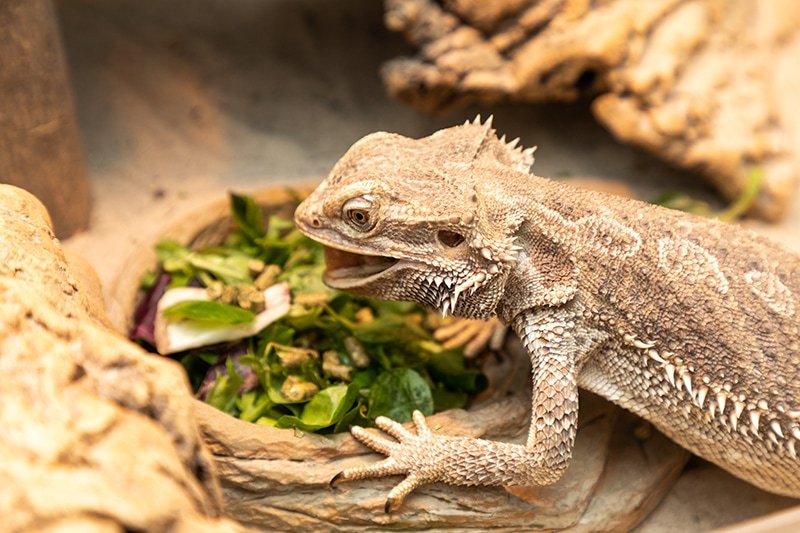
Introduction
If you’ve ever been chopping vegetables in the kitchen while your bearded dragon watches from across the room, you’ve probably wondered whether some of those veggies can be shared safely. Celery is one of those foods that often raises questions. It’s inexpensive, easy to find, and generally considered healthy for humans. But reptiles have very different nutritional needs.
Many new owners assume that if a vegetable is healthy for people, it must also be healthy for a pet lizard. That’s not always true. Some vegetables offer valuable nutrients, while others provide little benefit or can even create dietary imbalances when fed too often.
This guide takes a detailed look at celery, its nutritional value, potential benefits, drawbacks, and whether it deserves a place in your bearded dragon’s feeding routine.
Quick Answer
Yes, bearded dragons can eat celery in moderation. It is not toxic and can be offered as an occasional treat. However, celery contains a large amount of water and relatively little nutritional value compared to staple vegetables. It should not become a regular part of your dragon’s diet and is best served in small, finely chopped pieces alongside more nutritious greens.
Can Bearded Dragons Eat Celery?
The simple answer is yes.
Celery is considered safe for healthy adult bearded dragons when offered occasionally. It contains vitamins, minerals, fiber, and hydration that can contribute to a varied diet. However, it is not a nutritional powerhouse compared to vegetables such as collard greens, mustard greens, dandelion greens, or squash.
Most reptile nutrition experts classify celery as an “occasional vegetable” rather than a staple food. Think of it as a supplementary ingredient rather than a dietary foundation.
A bearded dragon’s long-term health depends on receiving a wide variety of nutrient-dense foods. Feeding celery every now and then is generally fine, but relying on it too heavily can crowd out more beneficial vegetables.
What Is Celery?
Celery is a crunchy vegetable belonging to the Apiaceae family, which also includes carrots, parsley, and fennel.
The plant consists of:
- Stalks
- Leaves
- Fibrous strings
- Water-rich tissues
For humans, celery is often praised as a low-calorie snack. It contains:
- Vitamin K
- Potassium
- Folate
- Small amounts of Vitamin C
- Antioxidants
- Dietary fiber
Because it is roughly 95% water, celery is frequently used for hydration rather than nutrition.
That same characteristic affects its usefulness for reptiles.
Keep Reading with: Sharemyideaz
Nutritional Profile of Celery
Here is a general nutritional overview of raw celery per 100 grams.
| Nutrient | Amount |
| Water | ~95% |
| Calories | 14 |
| Fiber | 1.6 g |
| Protein | 0.7 g |
| Calcium | 40 mg |
| Phosphorus | 24 mg |
| Potassium | 260 mg |
| Vitamin K | High |
| Vitamin C | Moderate |
While these numbers appear respectable at first glance, the calcium-to-phosphorus ratio is one of the most important factors when evaluating foods for reptiles.
Bearded dragons require foods that support strong bone development and proper calcium metabolism.
How Celery Fits Into a Bearded Dragon’s Diet
Understanding a bearded dragon’s nutritional needs helps explain why celery should only play a small role.
Juveniles
Young dragons require:
- Higher protein intake
- More insects
- Frequent feeding
- Strong calcium support
For babies and juveniles, celery provides limited benefits and should rarely be offered.
Adults
Adult dragons consume:
- More vegetables
- Fewer insects
- Greater dietary variety
An adult dragon can safely enjoy small amounts of celery mixed into a salad.
Potential Benefits
Although celery is not considered a superfood for reptiles, it does offer a few advantages.
Hydration Support
One of celery’s biggest strengths is its water content.
During warmer months, some dragons appreciate moisture-rich vegetables. While water dishes and proper hydration practices remain essential, celery can contribute additional moisture.
Added Dietary Variety
Reptiles benefit from dietary diversity.
Many experienced keepers rotate vegetables throughout the week to expose their pets to different nutrients and textures.
Celery can add:
- Crunchiness
- New smells
- Different flavors
- Feeding enrichment
Source of Fiber
Fiber supports digestive health and normal bowel movements.
A small amount of celery can contribute to digestive regularity when combined with a balanced vegetable mix.
Low Sugar Content
Unlike some fruits that should only be fed occasionally due to sugar content, celery contains very little natural sugar.
This makes it a better option than many sweet treats.
Possible Drawbacks
Despite being safe, celery has several limitations.
Very High Water Content
Foods with excessive water content can sometimes contribute to loose stools if fed too frequently.
Owners occasionally notice softer droppings after offering large amounts of watery vegetables.
Low Nutritional Density
Compared to staple greens, celery simply doesn’t deliver enough nutrients.
For example, collard greens provide substantially more:
- Calcium
- Vitamins
- Micronutrients
If a dragon fills up on celery, it may consume less of the foods that truly support health.
Fibrous Texture
Celery contains long stringy fibers.
These strings can be difficult for some dragons to chew and digest.
That’s why preparation matters.
Not Ideal as a Staple
A healthy bearded dragon diet requires a variety of nutrient-rich vegetables.
Celery alone cannot meet those requirements.
How to Prepare Celery Safely
Proper preparation reduces potential risks.
Step 1: Wash Thoroughly
Always rinse celery carefully under running water.
This helps remove:
- Dirt
- Residual pesticides
- Agricultural contaminants
Organic produce is helpful but should still be washed.
Step 2: Remove Tough Strings
The long fibrous strands running along celery stalks can be difficult to process.
Many owners peel away these strings before feeding.
Step 3: Chop Into Small Pieces
Large chunks create a choking hazard.
Cut celery into:
- Tiny bite-sized pieces
- Thin slices
- Finely diced portions
Smaller pieces are easier to chew and digest.
Step 4: Mix With Other Vegetables
Instead of serving celery alone, combine it with healthier staples.
Good combinations include:
- Collard greens
- Mustard greens
- Dandelion greens
- Turnip greens
- Butternut squash
- Bell peppers
This creates a more balanced salad.
How Often Should Bearded Dragons Eat Celery?
Most reptile nutrition resources recommend offering celery only occasionally.
A practical schedule might look like:
- Once every one to two weeks
- Small portions
- Mixed into salads
This frequency provides variety without allowing celery to dominate the diet.
Think of it as a supplemental vegetable rather than a dietary staple.
Can Bearded Dragons Eat Celery Leaves?
Yes, the leaves are generally safe.
In fact, some keepers prefer the leaves over the stalks because they contain slightly more nutrients.
However, moderation still applies.
The leaves should be:
- Fresh
- Clean
- Free from pesticides
- Finely chopped
They should not replace staple leafy greens.
Can Baby Bearded Dragons Eat Celery?
Technically yes, but it is usually not recommended.
Baby dragons have different nutritional requirements than adults.
Their diets should focus heavily on:
- Protein-rich insects
- Calcium supplementation
- Nutrient-dense vegetables
Because celery provides relatively little nutritional value, there are better vegetable choices for growing reptiles.
If offered at all, it should be:
- Very small amounts
- Finely chopped
- Rarely fed
Real-World Feeding Experience
Many long-time reptile owners report similar experiences.
A dragon that ignores some vegetables may suddenly become interested when a new texture is introduced. Celery’s crunchiness can encourage exploration and feeding behavior.
One common observation is that dragons often pick around celery pieces when given a mixed salad. Others seem to enjoy the texture and eat it eagerly.
The key takeaway from real-world feeding is consistency. Dragons that receive diverse salads generally perform better than those fed the same few vegetables repeatedly.
Safety Analysis
When evaluating any reptile food, safety comes first.
Is Celery Toxic?
No.
Celery is not toxic to bearded dragons.
Can It Cause Impaction?
Large fibrous pieces may increase digestive difficulty, especially if the dragon is dehydrated or the pieces are too large.
Proper chopping greatly reduces this risk.
Does It Contain Dangerous Chemicals?
Fresh celery itself is safe.
The greater concern is pesticide residue on conventionally grown produce.
Always wash vegetables thoroughly before feeding.
Is It Safe Long-Term?
Occasional feeding is generally considered safe.
Long-term problems usually arise only when owners rely too heavily on nutritionally weak vegetables.
Comparing Celery to Better Alternatives
Many vegetables offer stronger nutritional benefits.
| Vegetable | Rating |
| Collard Greens | Excellent |
| Mustard Greens | Excellent |
| Dandelion Greens | Excellent |
| Turnip Greens | Excellent |
| Butternut Squash | Very Good |
| Bell Pepper | Good |
| Celery | Occasional |
| Iceberg Lettuce | Poor |
This comparison highlights why celery should remain a secondary ingredient.
If your goal is maximizing nutrition, leafy greens consistently outperform celery.
Signs Your Dragon Enjoys Celery
Every reptile has preferences.
Some signs that your dragon enjoys celery include:
- Actively eating pieces first
- Returning to the food bowl quickly
- Showing interest in celery-containing salads
- Consistent appetite after feeding
If your dragon ignores celery entirely, there is no reason to force it.
Many healthier vegetables are available.
Common Feeding Mistakes
Feeding Large Chunks
Large pieces can create choking risks and make digestion harder.
Using Celery as a Main Vegetable
This is one of the most common mistakes among beginners.
Ignoring Calcium-Rich Foods
Celery should never replace calcium-rich greens.
Offering Too Much
Excessive amounts may contribute to loose stools and nutritional imbalance.
Skipping Variety
A healthy reptile diet relies on diversity rather than dependence on a single food source.
Expert-Style Practical Opinion
If I were building an ideal salad for a healthy adult bearded dragon, celery would not be one of the primary ingredients.
Instead, I would prioritize nutrient-rich greens and use celery only as a small supplemental addition for variety and texture.
The reality is that many owners spend time worrying about whether a particular vegetable is safe when the bigger question is whether it is worthwhile. Celery passes the safety test, but it doesn’t rank among the most valuable vegetables available.
Used occasionally, it can be part of a healthy feeding routine. Used frequently, it simply takes up space that could be filled by better options.
Final Verdict
So, can bearded dragons eat celery? Yes, they can.
Celery is non-toxic, easy to prepare, and can provide hydration, fiber, and dietary variety. However, it should never be considered a staple vegetable because its nutritional value is relatively limited compared to calcium-rich leafy greens.
For most adult dragons, a small amount every week or two is perfectly reasonable. Just make sure it is washed, finely chopped, and served alongside more nutritious vegetables.
When viewed as an occasional treat rather than a dietary foundation, celery can fit safely into a balanced bearded dragon feeding plan.
Keep Reading with: Sharemyideaz
FAQs
Q: Can bearded dragons eat celery every day?
A: Daily feeding is not recommended. Celery is low in nutritional density and should only be offered occasionally alongside healthier vegetables.
Q: Are celery leaves safe for bearded dragons?
A: Yes. Fresh celery leaves are generally safe when washed thoroughly and fed in moderation.
Q: Can baby bearded dragons have celery?
A: Small amounts are not usually dangerous, but babies benefit far more from protein-rich insects and nutrient-dense vegetables.
Q: Does celery provide calcium?
A: Celery contains some calcium, but not enough to make it a top calcium source for reptiles.
Q: Can celery cause diarrhea?
A: Feeding excessive amounts may contribute to loose stools because celery contains a very high percentage of water.
Q: Is cooked celery safe?
A: Raw celery is preferred. Cooking changes texture and can reduce some nutrients.
Q: Can bearded dragons eat celery and carrots together?
A: Yes. Both can be mixed into a vegetable salad, though neither should replace staple leafy greens.
Q: What vegetables are better than celery?
A: Collard greens, mustard greens, turnip greens, dandelion greens, and butternut squash generally provide superior nutritional value.
Q: How should celery be cut before feeding?
A: Remove tough strings and chop it into very small pieces to make chewing and digestion easier.
Q: What is the best staple vegetable for a bearded dragon?
A: Most reptile nutrition experts recommend calcium-rich leafy greens such as collard greens, mustard greens, dandelion greens, and turnip greens as core dietary staples.
