

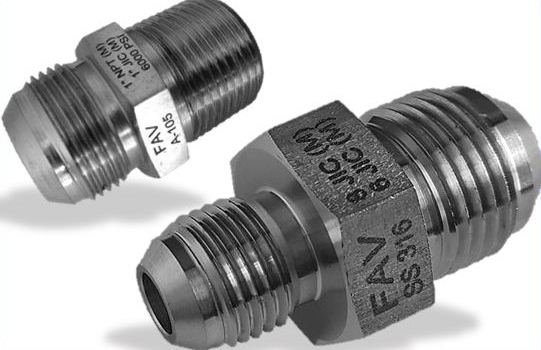
If you’ve ever had a hydraulic line weep fluid at 2 AM on a job site, you already know how much a fitting choice matters. I’ve been around enough hose benches and hydraulic shops to say this with confidence: the connector at the end of your hose is rarely the star of the story, until it fails. Then it’s the only thing anyone’s talking about.
That’s usually where people start googling “jic fittings” after a leak, during a repair, or while specifying parts for a new build. So let’s actually walk through what these fittings are, how they seal, where they shine, and where they don’t.
Quick Answer
A JIC fitting (Joint Industry Council fitting) is a threaded hydraulic connector that seals using a 37-degree flare against a matching flare on the mating fitting, rather than relying on a separate gasket or O-ring. They’re standard in hydraulic hose assemblies across construction, agriculture, and industrial equipment because they’re reusable, rated for high pressure, and easy to inspect for leaks in the field.
What Are JIC Fittings, Really?
JIC stands for Joint Industry Council, a standard developed decades ago by manufacturers who needed a common thread and seal design for hydraulic hose ends. The defining feature is the 37-degree flare seat. When you tighten a JIC fitting, the male flare presses directly against the female flare, and that metal-to-metal contact is what creates the seal. No rubber, no gasket, no separate sealing washer, just two precisely machined cones locking against each other.
This might sound like a small detail, but it’s the whole reason the design has survived this long. Metal-to-metal seals don’t degrade the way rubber does under heat cycling, and they don’t require you to keep a drawer full of replacement O-rings just to swap a hose.
You’ll see JIC fittings called by a few other names depending on who you’re talking to — some techs still say “37-flare” or reference the older AN (Army-Navy) fittings, which share a similar flare angle but differ slightly in thread pitch. It’s a common enough mix-up that I’ve seen two mechanics argue for ten minutes before realizing they were holding fittings from different families.
How JIC Fittings Actually Work
The mechanics are simpler than people expect. A male JIC fitting has a 37-degree conical flare machined onto the end, and the female side has a matching flare recessed into the fitting body with a swivel nut around it. When you thread the swivel nut down, it draws the two flares together until they seat firmly.
There’s no torque wrench voodoo required, but there is a right way to do it. Most techs hand-tighten until the flares meet resistance, then use a wrench for roughly a third to a full turn past that point, depending on the fitting size. Over-tighten and you can actually deform the flare, which ironically causes leaks instead of preventing them. I’ve seen this happen more than once — someone convinced that “tighter is safer” ends up cracking a flare face on a brand-new fitting.
The swivel nut design is also what makes these fittings genuinely convenient in the field. Because the nut rotates independently of the hose, you can align and tighten a connection without twisting the hose itself, which matters a lot when you’re working in tight equipment bays where hose routing is already awkward.
Main Features
A few characteristics define JIC fittings and explain why they’ve stuck around in hydraulic work for so long:
- 37-degree flare seal — metal-to-metal contact, no elastomer required for the seal itself
- Swivel nut design — allows rotation and alignment without twisting hoses
- Reusable connections — can be disassembled and reassembled multiple times without replacing seals
- High-pressure ratings — commonly used in systems running anywhere from a few hundred PSI up to several thousand, depending on size and material
- Standardized thread sizes — interoperable across manufacturers that follow the SAE J514 standard
- Available in steel, stainless steel, and brass — chosen based on the fluid, environment, and corrosion resistance needed
That standardization is genuinely underrated. Because JIC fittings follow SAE J514, a fitting from one manufacturer will generally mate correctly with another’s, which isn’t something you can always count on in the fastener world.
Pros and Cons
Pros
- Reliable metal-to-metal seal that holds up well under vibration and thermal cycling
- Reusable without needing new seals every time you disconnect a line
- Widely available, so replacements are rarely a supply headache
- Simple visual inspection — a damaged flare is usually obvious to the eye
- Works across a broad pressure range, suitable for most mobile hydraulic equipment
Cons
- The flare surfaces must be nearly perfect; even minor nicks or scratches can cause leaks
- Over-tightening is a common and easy mistake, especially for less experienced techs
- Not ideal for extremely high-pressure or high-vibration aerospace applications, where other standards (like ORFS) are often preferred
- Thread mix-ups with similar-looking fittings (like BSP or metric) can cause cross-threading if you’re not paying attention
- Requires a bit more care during assembly compared to O-ring style fittings, which forgive minor flare imperfections better
Real-World Use Cases
I’ll give you a scenario that’s pretty typical. A farm equipment operator has a hydraulic cylinder on a loader arm that starts weeping fluid at the hose connection. Nine times out of ten in my experience, it’s not the hose itself, it’s a scored or dinged flare face on the JIC fitting from a previous disassembly, or from grit getting between the flares during reassembly. The fix isn’t complicated, but it does require actually cleaning the flare surfaces and checking for damage rather than just cranking the nut tighter and hoping.
You’ll find JIC fittings all over:
- Construction equipment hydraulics excavators, skid steers, loaders
- Agricultural machinery tractors, balers, sprayers
- Industrial manufacturing hydraulics presses, injection molding equipment
- Mobile hydraulic power units and lift equipment
- Some fluid transfer systems outside pure hydraulics, though less commonly than in hydraulic-specific gear
They’re not usually the default choice in passenger vehicle brake or fuel lines, where you’ll more often see flare types like double-flare or bubble-flare fittings instead, so it’s worth checking your equipment’s spec sheet rather than assuming compatibility.
Safety and Legitimacy
There’s nothing shady or questionable about JIC fittings as a product category, they’re a long-established SAE standard used across heavy industry, not some niche or trending gadget. If you’re wondering whether “jic fittings” as a search term is pointing you toward something legitimate, yes, it is. The concern isn’t the standard itself, it’s whether the specific fitting you’re buying is manufactured to spec.
A few practical safety notes worth knowing:
- Always match the fitting’s pressure rating to your system’s actual operating pressure, not just its size
- Inspect flare surfaces for burrs, nicks, or corrosion before every reassembly
- Don’t mix JIC fittings with visually similar but incompatible thread standards (this is a real and common cause of blown connections)
- Buy from manufacturers who state compliance with SAE J514, especially for anything running above a couple thousand PSI
- Replace fittings that show any flare damage rather than trying to “seal it tighter”
Cheap, off-brand fittings do exist, and the risk isn’t that they’re fake JIC fittings exactly, it’s that tolerances can be looser, which shows up as intermittent leaks or premature wear under pressure cycling. For anything load-bearing or safety-relevant, sourcing from a known hydraulic supplier is worth the extra cost.
Common Problems and Limitations
Most complaints about JIC fittings trace back to installation error rather than the design itself. The recurring issues I’ve seen or heard about repeatedly:
- Leaking after reassembly — almost always a flare surface issue, contamination, or under-tightening
- Cross-threading — happens when someone forces a similar-but-wrong thread pitch onto a JIC fitting
- Vibration loosening — more common on equipment with high-frequency vibration where a lock nut or thread sealant designed for JIC use might be needed
- Flare deformation — from over-tightening, usually with a wrench and too much confidence
None of these are dealbreakers for the standard, they’re maintenance and installation habits that need attention, which is true of basically any threaded hydraulic connection.
JIC vs. Alternatives
| Fitting Type | Seal Method | Reusable | Common Use |
| JIC (37° flare) | Metal-to-metal flare | Yes | General hydraulics, mobile equipment |
| ORFS (O-ring face seal) | O-ring at flat face | Yes | High-pressure, leak-sensitive systems |
| NPT | Tapered thread + sealant | Limited | Low-pressure plumbing, not ideal for high-vibration hydraulics |
| BSP | Parallel or tapered thread, often with bonded seal | Yes | Common in European equipment |
ORFS fittings tend to win out where zero-leak tolerance matters, aerospace and some high-end industrial systems, because the O-ring forgives minor face imperfections that would leak on a JIC flare. NPT, on the other hand, is cheaper and fine for static, lower-pressure applications, but it’s not something I’d want holding a high-pressure hydraulic line on moving equipment.
An Honest, Practical Take
If I’m being straight with you: JIC fittings aren’t glamorous, and there’s no reason they should be. They’re a mature, well-understood standard that does exactly what it’s supposed to do when installed correctly. The failures I’ve seen attributed to “bad JIC fittings” were, almost without exception, actually installation mistakes or damaged flares from previous use, not a flaw in the design itself.
Where I’d push back on marketing claims is anywhere that promises a JIC fitting is “leak-proof” or “guaranteed for life.” No mechanical seal is immune to wear, contamination, or misuse. What you’re actually buying is a reliable, well-proven method of sealing, not a magic fix that removes the need for basic maintenance discipline.
Final Verdict
JIC fittings are a legitimate, widely trusted standard for hydraulic connections, not a trend, not a gimmick, just solid engineering that’s been refined since it was first standardized. They’re a strong choice for most mobile and industrial hydraulic applications, provided you respect the installation process: clean flares, correct torque, and matching thread standards. For extreme-pressure or zero-leak-tolerance systems, it’s worth comparing against ORFS fittings, but for the vast majority of hydraulic setups, JIC remains a dependable default.
Discover More Helpful Resources on: Sharemyideaz
FAQs
Q: What does JIC stand for in fittings?
A: JIC stands for Joint Industry Council, the group that established the 37-degree flare standard now widely used in hydraulic hose connections.
Q: Are JIC fittings the same as AN fittings?
A: They’re similar in flare angle but not identical. AN fittings originated from military aerospace standards and can differ slightly in thread pitch, so they shouldn’t be assumed interchangeable without checking specs.
Q: Can JIC fittings be reused?
A: Yes, that’s one of their main advantages. As long as the flare surfaces aren’t damaged, they can be disconnected and reconnected repeatedly without needing new seals.
Q: Why is my JIC fitting leaking even after tightening?
A: The most common causes are a scratched or nicked flare surface, contamination between the flares, cross-threading, or under-tightening. Check the flare faces first before assuming the fitting itself is defective.
Q: What pressure can JIC fittings handle?
A: It depends on the size and material, but many JIC fittings are rated from a few hundred PSI up into the several-thousand-PSI range. Always check the manufacturer’s rating against your system’s actual operating pressure rather than assuming based on size alone.
Q: Do I need thread sealant on JIC fittings?
A: No, the seal happens at the flare face, not the threads. Adding sealant to the threads doesn’t improve the seal and can sometimes interfere with proper tightening.
Q: Are cheap JIC fittings safe to use?
A: They can work, but tolerances matter a lot with a flare seal design. For anything running higher pressure or safety-critical equipment, sourcing from a reputable hydraulic supplier is worth the extra cost over unbranded options.
