

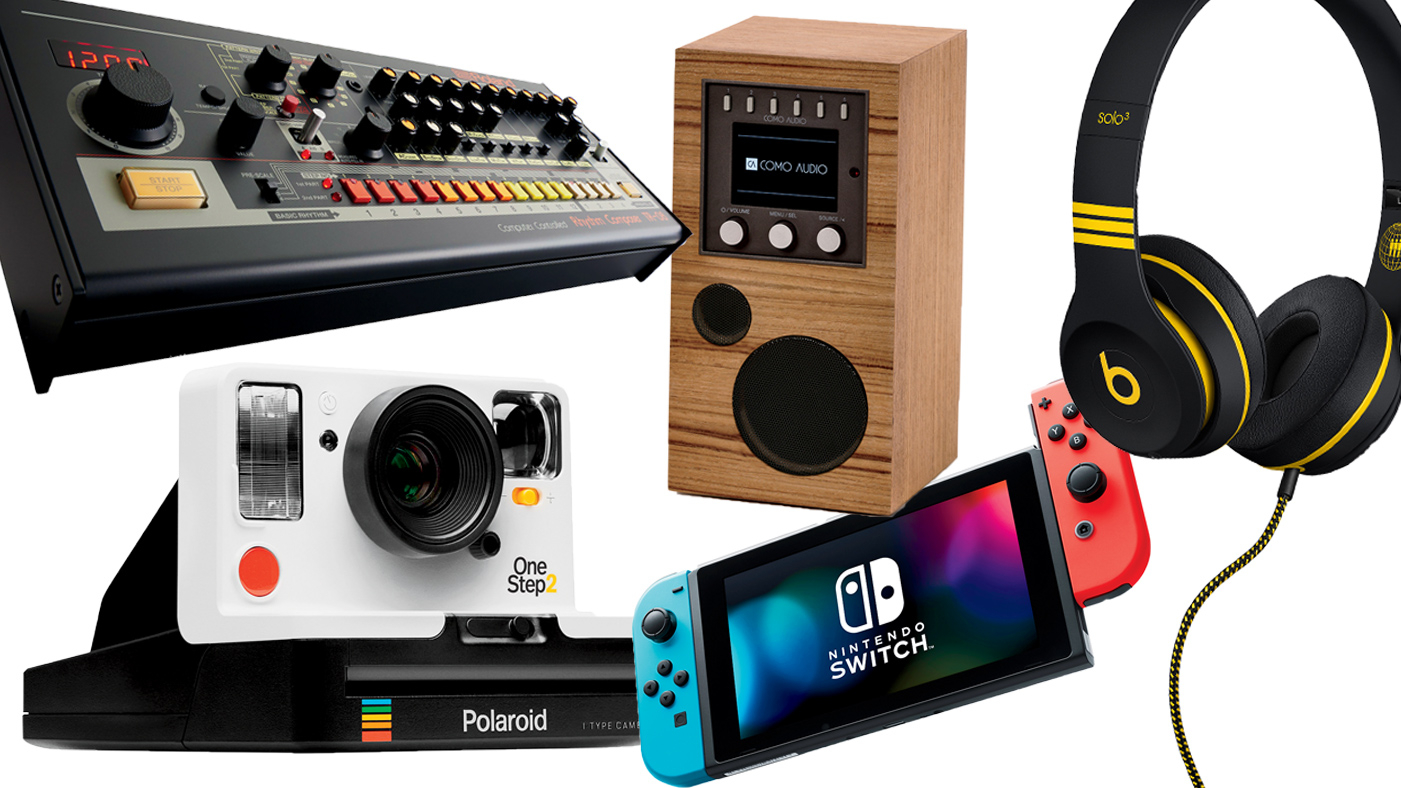
Picture this: you’re on a long train ride, headphones in, trying to recreate a beat you heard in your head that morning. You don’t have a studio. You don’t have a laptop open. You just have your phone and, if you’re lucky, some small device clipped to your bag or sitting on your desk at home that lets you sketch out music wherever you are. That little device is what most people now mean when they type “music gadget” into Google.
It’s a broad term, and that’s kind of the point of this article — to actually untangle what falls under it, what doesn’t, and whether any of it is worth your money.
Quick Answer (For Anyone in a Hurry)
A music gadget is any compact electronic device — hardware, not software — built to help someone create, control, practice, or listen to music more easily. This covers things like portable MIDI controllers, Bluetooth speakers with music-specific features, wearable rhythm trackers, tap-to-play rings, mini synthesizers, and smart tuning or practice tools. They’re generally legitimate and safe, but quality varies enormously by brand, and the cheapest options on marketplace sites are often where people run into trouble.
That’s the one-paragraph version. Now let’s get into the parts that actually matter if you’re trying to decide whether to buy one.
What Is a “Music Gadget,” Really?
Here’s the thing — “music gadget” isn’t a single product category the way “smartphone” or “electric guitar” is. It’s more of an umbrella term that content sites, gift guides, and Amazon search bars use to group together small, often novelty-adjacent electronic tools related to music.
Under that umbrella you’ll typically find:
- Portable MIDI controllers — small pad or key-based devices for triggering sounds in a digital audio workstation (DAW)
- Gesture and wearable controllers — rings or straps that turn hand movement into sound
- Tap-to-play devices — gadgets that let you play music by tapping objects, surfaces, or colors
- Practice aids — metronomes, tuners, and rhythm trainers with a digital twist
- Compact synths and loopers — pocket-sized instruments for sketching musical ideas
- Smart listening accessories — Bluetooth speakers, EQ-adjustable earbuds, and similar audio gear marketed under the same “gadget” label
I’ll be honest, some of what gets marketed as a “music gadget” is genuinely useful gear that professional musicians use daily. Some of it is closer to a novelty toy that happens to make noise. Knowing which one you’re looking at before you buy is really the whole game here.
How Does a Music Gadget Actually Work?
Most of these devices follow a similar underlying pattern, even though the form factor changes a lot.
- Input detection — a sensor, touch pad, button, or motion tracker picks up your action (a tap, a hand gesture, a key press).
- Signal conversion — the device translates that action into a digital signal, usually MIDI data or a simple audio trigger.
- Sound generation or transmission — either the gadget has a built-in sound engine that produces the note or effect directly, or it sends the signal via Bluetooth/USB to a paired app or DAW on your phone or computer, which then generates the sound.
- Output — sound comes out through a built-in speaker, headphone jack, or connected speaker system.
The devices that rely on computer vision or motion sensing (tracking your hand in the air, for instance) are a step up in complexity — they’re using small cameras or accelerometers to map physical movement onto musical parameters like pitch, volume, or filter cutoff. It sounds fancier than it is, honestly. The core idea is still: detect a motion, convert it to a number, use that number to shape a sound.
Main Features to Look For
If you’re comparing options, these are the features that tend to separate a genuinely useful music gadget from one that’ll sit in a drawer after two weeks:
- Standalone sound capability — can it make noise on its own, or does it need an app running at all times?
- DAW compatibility — does it work with Ableton, Logic, FL Studio, or GarageBand, or is it locked to a proprietary app?
- Battery life — anything under 4-5 hours of use gets annoying fast if you’re using it regularly
- Build quality — plastic housing versus reinforced casing matters if it’s traveling in a bag
- Latency — the delay between your action and the sound; anything noticeable ruins the experience for rhythm-sensitive playing
- Connectivity — Bluetooth MIDI, USB-C, or both
- Companion app quality — a laggy or ad-heavy app can make an otherwise solid gadget frustrating to use
Pros and Cons
Pros
- Lowers the barrier to entry for making music — no studio or years of training required
- Genuinely portable; several fit in a jacket pocket
- Can spark creativity in ways a keyboard or laptop sometimes doesn’t, just because the interaction feels more physical
- Many work as practice tools for people already playing an instrument (tuners, metronomes, rhythm trainers)
- Fun factor is real — I’ve watched a non-musician friend get hooked on a tap-to-play ring within about ten minutes of unboxing it
Cons
- Sound quality is often limited compared to full-size instruments or dedicated production hardware
- Cheaper models can have real latency issues, which is a dealbreaker for anything rhythm-based
- App dependency means some gadgets become useless if the company stops supporting the software
- Bluetooth connectivity can be finicky, especially in rooms with a lot of wireless interference
- A handful of “gadgets” sold on marketplace sites are low-effort knockoffs riding the popularity of a real product
Real-World Use Cases
A few scenarios where these actually earn their keep:
- The commuter producer — someone sketching a beat idea on a train or bus using a pocket controller, then finishing it properly later on a full setup at home
- The parent looking for a gift — a tap-to-play device or beginner synth that gets a kid curious about music without the commitment of instrument lessons
- The gigging musician backstage — a compact tuner or metronome gadget that’s faster to grab than opening an app
- The hobbyist without a home studio — someone who wants to make music but doesn’t have room (literally or in the budget) for a full production setup
Where they tend to fall flat: serious studio production, live performance in front of large audiences, or any situation demanding studio-grade sound quality. These gadgets are supplements, not replacements, for proper instruments or full production rigs.
Safety, Privacy, and Legitimacy
This is where I’d slow down if you’re shopping.
Physical safety is rarely a concern — most music gadgets are low-voltage, battery-powered devices, similar in risk profile to a wireless mouse or a fitness tracker. The exception is cheap, uncertified charging cables or batteries bundled with off-brand units, which is a broader electronics-safety issue rather than something specific to music gadgets.
Privacy is the part people overlook. A lot of these gadgets pair with a companion app, and that app may request access to your microphone, contacts, or location — permissions that have nothing to do with playing a synthesizer. Before installing any companion app, it’s worth checking what it actually asks for and whether that matches what the device needs to function.
Legitimacy comes down mostly to where you buy. Established brands — the kind that show up in music production forums and get reviewed by outlets that actually test gear — are a safer bet than an unfamiliar listing with stock photos and no verifiable brand behind it. If a listing has no company website, no support contact, and reviews that all read suspiciously similar, that’s worth pausing on.
Common Problems and Limitations
- Bluetooth pairing drops during use, especially with cheaper Bluetooth chipsets
- App updates breaking compatibility with older phone or computer operating systems
- Overstated marketing — descriptions that make a $30 gadget sound like it replaces a $1,000 synthesizer
- Limited sound libraries on entry-level models, leading to repetitive-sounding output
- Durability issues with buttons or touch surfaces after a few months of regular use
None of this means the category is a scam — it just means expectations need to match the price point.
Music Gadgets vs. Alternatives
If your goal is actually making music seriously, here’s how gadgets stack up against other routes:
| Option | Best for | Trade-off |
| Music gadget | Portability, casual creativity, quick sketches | Limited sound depth, app dependency |
| Full-size MIDI keyboard | Serious production at a desk | Not portable, needs a computer |
| Traditional instrument | Long-term skill building, live performance | Steeper learning curve, less “instant” |
| DAW software alone | Full creative control, no extra hardware cost | No tactile input, slower for beginners |
The honest takeaway: gadgets fill a specific gap — quick, physical, portable interaction with sound — rather than competing directly with serious production tools.
An Honest, Practical Take
If you’re a musician already, a music gadget is best treated as a sketchpad, not a finished canvas. I’ve seen people get frustrated buying one expecting studio-level output, when the actual value is in speed and spontaneity — capturing an idea before it disappears.
If you’re buying one as a gift for someone with zero musical background, manage expectations a little. The fun factor is usually there in the first week. Whether it sticks around depends more on the person’s actual interest in music than on the gadget itself. That’s just how these things go with any low-commitment hobby tool.
One more practical note: check return policies before buying anything unfamiliar. A short return window is a decent signal of how confident a seller actually is in their product.
There’s also a middle-ground crowd worth mentioning — people who already play an instrument but want something low-stakes to mess around with when they don’t feel like “practicing” in the formal sense. This is honestly where a lot of these gadgets shine the most. Nobody feels pressure to be good at a tap-to-play ring or a pocket looper. That lack of pressure is often exactly what gets someone back into making music after a long break, which isn’t nothing.
It’s also worth thinking about longevity before spending real money. A gadget that depends on a subscription-based app or a small startup’s servers carries a different kind of risk than one with an offline-first design. If the company folds, does the device still function at a basic level, or does it turn into an expensive paperweight? That’s a fair question to ask in reviews or forums before committing to a pricier option.
Final Verdict
A music gadget can be genuinely worth buying if you go in with realistic expectations — think “creative accessory,” not “instrument replacement.” For casual music-making, travel-friendly production, or gifting to a curious beginner, they hold up well. For serious studio work, they’re a supplement at best, not a foundation. Stick to recognizable brands with real support behind them, check what permissions the companion app wants, and you’ll avoid most of the pitfalls people run into with this category.
Explore More Insights: Sharemyideaz
Frequently Asked Questions
Q: Is a music gadget the same as a musical instrument?
A: Not exactly. Traditional instruments require developed technique and produce sound acoustically or through amplification of that technique. A music gadget is an electronic device that often simplifies or automates parts of that process, making it more accessible but generally less nuanced in output.
Q: Do music gadgets work without a smartphone or computer?
A: Some do, especially ones with a built-in speaker and sound engine. Others rely entirely on a paired app, so it’s worth checking this specifically before buying if you want something fully standalone.
Q: Are cheap music gadgets from marketplace sites safe to buy?
A: Physically, most low-voltage electronics carry minimal risk. The bigger concerns are unreliable performance, poor after-sales support, and companion apps requesting unnecessary permissions. Buying from an established brand reduces these risks significantly.
Q: Can a music gadget help someone learn an instrument?
A: It can help with fundamentals like rhythm and basic music theory, and it can build enthusiasm. It’s not a substitute for structured instrument lessons if the goal is genuine technical skill.
Q: What’s the biggest downside of music gadgets?
A: App dependency and limited sound depth tend to be the two most common complaints. If the manufacturer stops supporting the app, or the device relies heavily on cloud features, its usefulness can decline over time.
Q: Are music gadgets good gifts?
A: Generally yes, particularly for curious beginners or kids, as long as expectations are set around “fun and exploratory” rather than “professional-grade.” Checking reviews from an established retailer helps confirm quality before gifting.
