

If you’ve spent any time searching for healthcare options in Fairbanks, Alaska, you’ve probably run into the name “Chief Andrew Isaac Health Center” more than once. Maybe a family member mentioned it. Maybe you saw it on a referral letter. Or maybe you’re just trying to figure out what this place actually does before you drive across town for an appointment.
I get why the confusion happens. A lot of tribal health facilities don’t show up clearly on Google Maps reviews or mainstream healthcare directories, and when they do, the information is often outdated or incomplete. So let’s actually dig into what this facility is, how it operates day to day, and whether it holds up as a real, functioning healthcare option — not just a name on a building.
Quick Answer
The Chief Andrew Isaac Health Center (CAIHC) is a large, accredited outpatient medical facility in Fairbanks, Alaska, operated by the Tanana Chiefs Conference (TCC). It provides primary care, dental, vision, pharmacy, radiology, behavioral health, and specialty services primarily to Alaska Native and American Indian people living across Interior Alaska. It is not a walk-in clinic open to the general public — eligibility is tied to tribal affiliation and Indian Health Service (IHS) beneficiary status. It’s a legitimate, well-established facility, not a scam or a fly-by-night operation, and it’s been serving the region since 2012.
That’s the short version. Now let’s get into the details that actually matter if you’re trying to use this place or understand it better.
What Is Chief Andrew Isaac Health Center, Really?
The chief andrew isaac health center is located at 1717 West Cowles Street in Fairbanks, and it functions as the main outpatient medical hub for the Tanana Chiefs Conference, a tribal consortium representing 42 villages across Interior Alaska. Think of it less like a small-town clinic and more like a mid-sized hospital campus — because that’s essentially what it’s grown into.
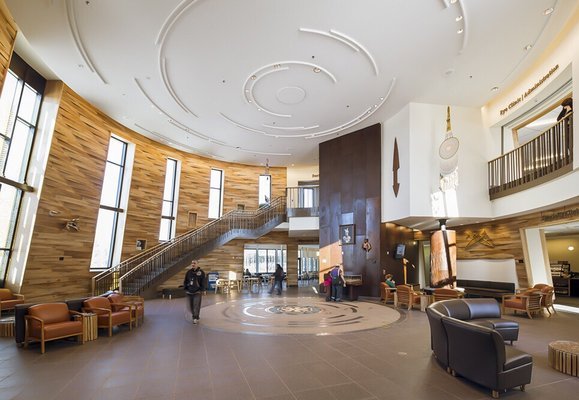
The original building opened its doors in 2012 after a $44 million construction project. It wasn’t just slapped together as a generic medical office; the design intentionally reflects Athabascan cultural elements — flowing curved walls meant to evoke Interior Alaska’s braided rivers, seasonal motifs worked into the flooring, and beadwork-inspired patterns throughout. If you walk in expecting sterile fluorescent-lit hallways, you might be surprised. It’s meant to feel less clinical and more like a space the community actually wants to be in.
In 2022, the center went through a major expansion in partnership with architecture firm HOK, growing to roughly 108,000 square feet across two connected buildings. That expansion added an Ambulatory Surgery Center, a Cancer Care and Infusion Center, expanded audiology, and additional specialty clinics — services that previously required patients to travel to Anchorage or beyond.
That expansion detail matters more than it might seem. For a family in a remote village along the Yukon River, “travel to Anchorage for cancer treatment” isn’t a minor inconvenience — it can mean days away from home, lost wages, and logistical nightmares involving small planes and unpredictable weather. Bringing more of that care into Fairbanks is a genuinely big deal for the population it serves.
How It Works
Here’s where a lot of the confusion online comes from. Some third-party directories list this facility as a “free clinic” open to anyone — that’s not accurate, and it’s worth clearing up before you plan a visit.
Eligibility is tied to tribal health system rules. Chief Andrew Isaac Health Center operates under the Indian Health Service structure, meaning care is generally available to enrolled tribal members and other IHS-eligible beneficiaries — primarily Alaska Native and American Indian individuals connected to the Tanana Chiefs Conference service area. If you’re not affiliated with a federally recognized tribe, you likely won’t be able to walk in and register as a new patient the way you would at a standard urgent care.
Registration happens on-site or in advance. New patients typically go through the Registration department on the first floor, where staff collect demographic information, verify eligibility, and set up alternate resource enrollment (private insurance, Medicare, Medicaid, Denali KidCare, or VA benefits, if applicable). For patients in rural villages, applications can often be handled through the local clinic or tribal office rather than requiring an in-person trip to Fairbanks.
Appointments run through a central scheduling line. Patients call 907-451-6682 (or the toll-free 1-800-478-6682) to book visits. There’s also an after-hours triage nurse line for urgent questions when the clinic itself is closed.
Care is organized into primary care teams. Rather than being assigned to one random provider, patients are placed with a care team — internally named things like Team Deneege, Team Teekona, and Team Tudi — which is meant to build continuity so you’re not explaining your medical history from scratch at every visit.
Main Features and Services
This isn’t a single-purpose clinic. It’s genuinely a multi-department campus, and that’s one of its biggest strengths. Services include:
- Primary care — family medicine, internal medicine, and general checkups
- Pediatrics and obstetrics/gynecology — including women’s health services
- Dental clinic — a fully equipped in-house dental department
- Eye clinic — vision exams, glasses, and contact lens services
- Pharmacy — on-site prescription fulfillment
- Radiology and lab services — diagnostic imaging and bloodwork, open daily
- Urgent Care Clinic — for same-day, non-emergency issues
- Behavioral health support — Behavioral Health Consultants embedded directly within primary care teams, handling stress, grief, anxiety, and similar concerns through brief interventions rather than long-term traditional therapy
- Cancer Care and Infusion Center — added in the 2022 expansion
- Ambulatory Surgery Center — for procedures that previously required travel
- Audiology, orthopedics, and other specialty clinics
- Patient support services — including a free shuttle for patients traveling in from villages, an airport transportation service, and a patient travel team that helps coordinate logistics for people coming from out of town
There’s also a patient portal that gives people 24/7 access to their own health records online — a small feature, but one that matters a lot for patients who live hours away and can’t just swing by the front desk to ask a question.
Honestly, the shuttle and travel support pieces are underrated. A lot of healthcare reviews focus purely on “did the doctor listen to me,” but for a tribal health system covering a region roughly the size of Montana, transportation logistics are just as much a part of “quality of care” as the actual medical treatment.
Pros and Cons
No healthcare facility is perfect, and it’s worth being honest about both sides here.
What works well:
- AAAHC accreditation, which means the facility undergoes independent, external evaluation — this isn’t a self-certified operation
- A wide range of services under one roof, reducing the need for outside referrals
- Cultural design and community-oriented approach that seems to genuinely reflect the population it serves
- Transportation and travel support built directly into the patient experience
- Continuity of care through assigned primary care teams
- Recent expansion added meaningful capacity for specialty and cancer care
Where it falls short or where people run into friction:
- Eligibility restrictions mean it’s not an option for the general Fairbanks population, which causes confusion for people who find it through a general web search
- As with many IHS-affiliated facilities, appointment wait times can stretch out, especially for specialty referrals
- Patients from remote villages still sometimes need to travel for highly specialized care (certain cancer types, for instance, still require referral to the Alaska Native Medical Center in Anchorage)
- Directory sites occasionally list inaccurate information, including outdated claims about it being a “free clinic” open to anyone with no registration — which isn’t how it actually functions
- Like many tribal health systems, funding and staffing can fluctuate, which sometimes affects scheduling availability
Real-World Example: What a Visit Might Actually Look Like
Say a patient from a village along the Tanana River needs a specialist appointment that isn’t available locally. They’d typically be referred into the CAIHC system, and the Patient Travel team can help arrange transportation into Fairbanks. Once there, the TCC shuttle picks patients up from designated lodging — the Bertha Moses patient hostel, or partner hotels like Best Western or Sophie Station — and drops them at the clinic on a scheduled route.
During the visit, if the primary concern turns out to have a behavioral health component too — say, a patient dealing with grief alongside a physical health issue — the Behavioral Health Consultant embedded in that care team can step in the same day rather than requiring a separate referral process weeks later. That kind of same-visit integration is something a lot of larger hospital systems still haven’t figured out.
That’s the kind of coordinated, multi-service visit this center is actually built for. It’s less “single doctor’s office” and more “regional healthcare hub.”
Safety, Privacy, and Legitimacy
This is a legitimate question people search for, and it deserves a direct answer: yes, this is a real, accredited, government-affiliated tribal health facility — not a scam, not a data-harvesting operation, and not some obscure private clinic with questionable credentials.
A few points that back this up:
- It’s accredited by the Accreditation Association for Ambulatory Health Care (AAAHC), an independent body that evaluates outpatient facilities against national quality standards
- It’s operated by the Tanana Chiefs Conference, a long-established tribal consortium, and functions within the federal Indian Health Service framework
- The facility has received visibility from federal officials, including site visits referenced by U.S. senators and HHS
- Patient privacy is handled through standard healthcare compliance frameworks, similar to any accredited medical facility, with formal processes for authorizing release of health information
If you’re seeing this name pop up on a third-party “discount card” or “benefits explorer” style website promising things like guaranteed 80% discounts with no registration required, treat that with some skepticism — those are often lead-generation sites, not official information from the health center itself. Always verify details directly through tananachiefs.org or by calling the clinic.
Common Problems or Limitations
A few recurring themes show up when people talk about their experience here:
- Confusion over who can actually use it. This is the single biggest source of frustrated searches. It is not a general public clinic.
- Scheduling gaps for specialty care. As demand grows and the service area is enormous, some specialty appointments require patience.
- Rural-to-urban travel burden, even with shuttle support, remains a real logistical challenge for elders and families with limited flexibility.
- Outdated third-party listings, which can mislead people about hours, services, or eligibility.
None of these are unique to this facility — they’re common across rural and tribal health systems nationwide — but they’re worth knowing about going in rather than discovering mid-appointment.
How It Compares to Alternatives
For eligible patients, the main alternative is traveling to the Alaska Native Medical Center (ANMC) in Anchorage, which offers a broader range of highly specialized services (certain cancer treatments, for example) but requires significantly more travel for Interior Alaska residents. CAIHC exists specifically to reduce how often that trip is necessary.
For non-eligible residents of Fairbanks, the practical alternatives are Fairbanks Memorial Hospital, private practice clinics, or community health centers that operate on a sliding-fee scale open to the general public. Those options don’t carry the same tribal-specific cultural integration or transportation support, but they don’t have the eligibility restrictions either.
Practical Opinion
From everything the facility’s own documentation, patient handbooks, and independent accreditation records show, this isn’t a place coasting on its mission statement — it’s clearly been reinvested over time, from the original 2012 build to the 2022 expansion adding cancer and surgical capacity. That kind of sustained investment is a decent signal that the organization behind it is stable and taking long-term patient needs seriously, rather than running a bare-bones operation.
That said, if you’re not part of the eligible population, none of this matters much to you personally — and it’s worth saying clearly so people don’t waste time trying to book an appointment they don’t qualify for. The value here is concentrated and specific: it’s built for Alaska Native and American Indian communities across Interior Alaska, and within that group, it appears to function as a genuinely comprehensive, culturally grounded healthcare resource.
Final Verdict
Chief Andrew Isaac Health Center is a real, accredited, well-funded outpatient healthcare campus — not a scam, not a vague listing, and not a place you should be wary of using if you’re eligible. It’s a legitimate anchor of the Tanana Chiefs Conference health system, offering an unusually wide range of services under one roof for a rural-serving facility, backed by transportation support that acknowledges the actual geography its patients live in.
If you qualify for care through the tribal health system, it’s worth engaging with directly — call the main line, ask about registration, and don’t rely on random discount-card websites for accurate information. If you don’t qualify, it’s still a useful example of what regionally-adapted, culturally-informed healthcare infrastructure can look like when it’s properly funded.
Read More Expert Articles on: Sharemyideaz
FAQs
Q: Is Chief Andrew Isaac Health Center open to the general public?
A: No. It primarily serves Alaska Native and American Indian individuals who are eligible through the Indian Health Service and the Tanana Chiefs Conference. It’s not a walk-in clinic for the broader Fairbanks community.
Q: Where is Chief Andrew Isaac Health Center located?
A: 1717 West Cowles St., Fairbanks, AK 99701.
Q: What are the hours of operation?
A: The main facility is generally open 8:00 a.m. to 6:00 p.m., Monday through Friday, though individual departments like the pharmacy, dental clinic, and lab have their own specific hours, and holiday hours vary.
Q: How do I schedule an appointment?
A: Call 907-451-6682 or the toll-free number 1-800-478-6682. There’s also an after-hours triage nurse line for urgent concerns outside business hours.
Q: Does the center offer mental health or behavioral health services?
A: Yes. Behavioral Health Consultants are embedded directly within primary care teams, offering brief interventions for stress, anxiety, grief, and related concerns, with referrals available for more specialized care.
Q: Is Chief Andrew Isaac Health Center accredited?
A: Yes, it’s accredited by the Accreditation Association for Ambulatory Health Care (AAAHC), which involves independent, external evaluation of care quality.
Q: What should I do if I live in a remote village and need to travel to the clinic?
A: Contact the Patient Travel team, which coordinates transportation logistics, and ask about shuttle services available for patients staying in Fairbanks for care, including pickup from partner lodging locations.
Q: Is this the same as Alaska Native Medical Center?
A: No. Chief Andrew Isaac Health Center is a separate facility in Fairbanks operated by the Tanana Chiefs Conference, while the Alaska Native Medical Center is located in Anchorage. The two coordinate closely, especially for specialized services like certain cancer treatments, but they’re distinct facilities.
