

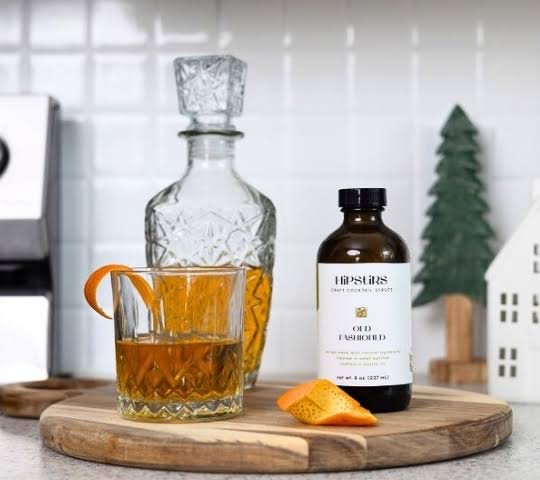
You’ve probably seen it sitting on a bar cart or tucked next to the whiskey at a cocktail enthusiast’s home. Maybe a friend swore by it. Or maybe you Googled it after tasting the best Old Fashioned of your life and wondered, what exactly made that different? That little bottle of syrup might have been the answer.
Old Fashioned syrup has quietly become a staple in both professional and home bartending — and for good reason. But there’s also a fair bit of confusion around what it actually contains, whether it’s better than making your own, and if it genuinely changes the quality of the drink. Let’s get into all of that.
Quick Answer (For Those in a Hurry)
Old Fashioned syrup is a pre-mixed, sweetened syrup specifically designed to simplify and standardize the cocktail-making process for the classic Old Fashioned drink. It typically combines a sugar base (simple syrup or demerara) with aromatic bitters, sometimes orange essence or other botanicals, so you can skip measuring multiple ingredients and still get a balanced, consistent cocktail. It’s especially useful for home bartenders who don’t want to stock a full bitters collection.
What Is Old Fashioned Syrup, Exactly?
The Old Fashioned cocktail itself dates back to the early 1800s — it’s one of the oldest recognized cocktail recipes still being ordered at bars today. The traditional recipe calls for whiskey (bourbon or rye), a sugar cube or simple syrup, Angostura bitters, a splash of water, and an orange or cherry garnish.
Old Fashioned syrup essentially pre-combines the non-spirit elements into a single, shelf-stable product. Rather than reaching for your bitters bottle, your sugar, and your muddler, you add a measured pour of syrup directly to your glass with the whiskey and ice. Done.
Most formulations include:
- Sugar base — Usually simple syrup, demerara syrup, or a blend. Demerara gives a slightly richer, molasses-adjacent depth that plain white sugar can’t quite replicate.
- Bitters — Aromatic bitters (often Angostura-style) are incorporated into the syrup itself, which is the real convenience factor here.
- Botanicals or orange essence — Higher-end products add citrus peel oils or spice blends like clove and cardamom for complexity.
- Preservatives or natural stabilizers — Needed for shelf life, especially in commercial products.
Some syrups lean sweeter and more dessert-like; others are drier and more complex. The variance between brands is genuinely significant, which matters if you’re trying to replicate a specific flavor profile.
How Does It Work in an Actual Drink?
Here’s what happens when you use one of these syrups in practice. You pour about half an ounce (sometimes slightly more depending on the brand’s sweetness level) into a rocks glass or mixing glass, add 2 ounces of bourbon or rye, then stir with ice until well-chilled. Strain over a large ice cube, express an orange peel if you have one, and you’re done.
What the syrup does is twofold: it adds sweetness to balance the spirit’s proof and raw edge, and the integrated bitters add herbal complexity that makes an Old Fashioned taste like a cocktail rather than just whiskey on the rocks. That interplay of sweet and bitter is the whole point of the drink — it’s what makes it feel sophisticated without being complicated.
The practical benefit is that the bitters and sugar are already in balance within the syrup itself. So even if you’ve never made an Old Fashioned before, you’re less likely to over-bitter or over-sweeten the drink. There’s a guardrail built in.
Who Is Old Fashioned Syrup Actually For?
Honestly? More people than you’d think.
Home bartenders who entertain occasionally are probably the core audience. If you’re making cocktails for guests a few times a month, you don’t necessarily want to maintain a full bar cart with four different bitters bottles, multiple syrups, and measuring jiggers for everything. A good Old Fashioned syrup collapses several steps into one.
Whiskey fans who don’t identify as “cocktail people” also gravitate toward these syrups. Someone who loves bourbon and wants to make a proper drink without studying cocktail technique will find these genuinely useful.
Event caterers and batch cocktail setups use them for consistency — when you’re making 40 drinks over a 3-hour period, pre-measuring your components in advance matters.
That said, purists and serious home bartenders often pass on these syrups in favor of controlling each element individually. There’s a real satisfaction to building a cocktail from scratch, and experienced mixologists will want to dial in their own bitters ratios, experiment with different sugar types, and generally have full control. Both approaches are valid.
Main Features to Look For
If you’re shopping for one, here’s what actually distinguishes products from each other:
Sugar Type This is more important than most people realize. Simple syrup (white sugar) gives a clean, neutral sweetness. Demerara syrup — made from raw cane sugar — adds a subtle caramel, almost toffee-like undertone that genuinely complements aged spirits. A few premium syrups use turbinado or even honey as part of the base.
Bitters Inclusion Most Old Fashioned syrups include aromatic bitters. Some don’t — they’re purely a sweetener and expect you to add your own bitters. Make sure you know which type you’re buying, because an Old Fashioned made with a no-bitters syrup and no additional bitters will taste flat and overly sweet.
Additional Botanicals The difference between a good and a great product often comes down to this. Orange peel oils, cherry, vanilla, clove, or barrel-aged notes can add dimension. Conversely, artificial flavorings or synthetic sweeteners can make a syrup taste cloying or fake — something you’ll immediately notice in a simple drink with so few ingredients.
Sweetness Level Some are very sweet, designed for strong bourbon pours. Others are more restrained and work better with lower-proof or lighter-bodied spirits. If you’re using a high-rye bourbon, a drier syrup will let the spice come through better.
Pros and Cons
What works well:
- Significantly speeds up cocktail prep
- Reduces the number of ingredients you need to stock
- Creates more consistent results, especially for beginner bartenders
- Shelf-stable and easy to use
- A good syrup can actually elevate a basic setup — decent bourbon + good syrup often beats a mediocre spirit + excellent technique
What doesn’t work as well:
- You lose individual control over bitters and sugar ratios
- Some commercial syrups are too sweet for certain whiskeys
- Quality varies wildly — a bad syrup can genuinely ruin a drink
- If you already have bitters and simple syrup, the syrup doesn’t offer much cost savings
- Doesn’t work well for experimentation if you like adjusting recipes
Real-World Use Cases
Weekend hosting scenario: You’re having six people over for a whiskey tasting night. You’ve got two or three bottles to sample. Making individual tailored Old Fashioneds for everyone between pours would take forever. A quality Old Fashioned syrup lets you hand someone their glass in under two minutes while keeping the conversation going.
Gift pairing: A bottle of good bourbon paired with an Old Fashioned syrup makes a genuinely useful gift for someone who appreciates whiskey but isn’t deep into cocktail making. It lowers the barrier to entry without dumbing anything down.
Travel or vacation cabin: You’re somewhere without a full bar setup. You’ve packed one bottle of whiskey. A small bottle of Old Fashioned syrup means you can still make a respectable cocktail without hauling bitters and simple syrup across state lines.
Safety and Legitimacy
Nothing particularly complicated here — Old Fashioned syrup is a food product, and reputable brands follow standard food safety practices. A few things worth knowing:
Sugar content is high. This is a sweetener-based product. If you’re watching sugar intake or mixing for someone with dietary considerations, the syrup adds meaningful sugar to the drink on top of the alcohol.
Alcohol content is typically very low or zero. Most syrups are non-alcoholic, even those that contain bitters (bitters in syrup form are diluted well below spirits-level ABV). Some specialty products are alcohol-based, so check the label if that matters.
Shelf life varies. Unopened, most commercial syrups last 12–18 months. After opening, refrigeration extends shelf life significantly. Natural products without preservatives may go bad faster — usually around 4–6 weeks in the fridge. If it smells off or grows anything visible, don’t use it.
Artificial sweeteners in some budget options. Worth checking the ingredient list if you’re particular about what you’re consuming. Stevia or sucralose-based syrups exist and taste noticeably different.
Common Problems and Limitations
The most frequent complaint is that a given syrup is too sweet for someone’s taste. This is actually easy to fix — use a bit less than recommended and adjust from there. Start with a quarter ounce, taste, and add more if needed.
Another issue: some syrups with bitters pre-included can develop a slightly muddled flavor over time after opening, especially if the bitters weren’t well-integrated. Sticking with reputable brands with good turnover helps.
The other limitation is just the nature of a combined product — if you want an extremely bitter Old Fashioned, or one made with very specific bitters (like Peychaud’s instead of Angostura), you can’t really adjust that with a pre-made syrup. It bakes in certain assumptions about flavor balance.
How It Compares to Making It from Scratch
Making an Old Fashioned from scratch isn’t hard. You need:
- A sugar cube or ½ oz of simple syrup
- 2–3 dashes of Angostura bitters
- A few drops of water (or a splash to dissolve the sugar)
- 2 oz bourbon or rye
The total cost per drink when made from scratch is lower if you already have those ingredients. And scratch-made gives you complete control.
The syrup wins on: Speed, consistency, convenience, and lower ingredient overhead. Scratch wins on: Customization, cost per drink (if you already have everything), and the satisfaction of building something yourself.
A middle-ground approach that many home bartenders land on: keep a good Old Fashioned syrup around for weeknight drinks or when hosting casually, but build from scratch when you’re experimenting or making cocktails for someone you really want to impress.
A Practical Opinion
For most people — especially those who aren’t professional bartenders or cocktail obsessives — a quality old fashioned syrup is a genuinely useful product. It solves a real problem: the gap between “I have a nice bottle of bourbon” and “I know how to make a good cocktail with it.”
The key word is quality. There’s enough variance in the market that a cheap or poorly-formulated syrup can give you a cloyingly sweet, one-dimensional drink that makes you wonder what the fuss is about. A well-made syrup — one with good sugar balance, real bitters, and some botanical complexity — will reliably produce a cocktail that’s better than what most people make at home from scratch on their first try.
It’s not a replacement for learning technique if you’re serious about cocktails. But as a convenient, consistent tool for everyday use? Yes. Worth it.
Final Verdict
Old Fashioned syrup earns its place on the shelf, particularly for home entertainers, occasional cocktail makers, and anyone who wants a reliable method for a classic drink without the full bartending setup. Buy from a reputable brand, don’t over-pour, and pair it with a whiskey you actually enjoy. The syrup enhances what’s there — it doesn’t fix a spirit you don’t like.
If you’re a purist who already has your bitters collection dialed in, you probably don’t need it. But for everyone else, it’s a small investment that genuinely pays off in glass.
Learn More About Blogs On Sharemyideaz
Frequently Asked Questions
Q: What’s the difference between Old Fashioned syrup and simple syrup?
A: Simple syrup is just sugar dissolved in water — neutral sweetener, nothing more. Old Fashioned syrup is a flavored product that typically combines a sugar base with bitters and sometimes other botanicals like orange essence or spices. Simple syrup requires you to add bitters separately; the specialty syrup has them integrated.
Q: Can I use Old Fashioned syrup with any whiskey?
A: Yes, though the results vary. Bourbon tends to work best because its natural vanilla and caramel notes complement most syrup formulations. Rye works well with drier syrups. Scotch is a less traditional pairing but can work with lighter, less sweet syrups. Avoid pairing heavily peated Scotch with overly sweet syrups — the flavors compete unpleasantly.
Q: How much syrup should I use per drink?
A: Typically ¼ to ½ ounce per 2-ounce spirit pour. Start on the lower end and adjust to taste. Sweetness preferences vary significantly between people, so the “correct” amount is ultimately personal.
Q: Does Old Fashioned syrup go bad?
A: It can. Unopened commercial products usually last over a year. After opening, refrigerate and use within 4–8 weeks for best quality. Natural, preservative-free products may have a shorter window. Signs of spoilage include off smells, cloudiness beyond the norm, or visible mold.
Q: Is Old Fashioned syrup the same as cocktail bitters?
A: No. Bitters are concentrated flavor extracts made with high-proof alcohol and botanical ingredients — they’re used in tiny amounts (dashes, not ounces). Old Fashioned syrup is a sweetener-forward product that may contain bitters as an ingredient but is used in much larger quantities. They serve different functions.
Q: Can I make Old Fashioned syrup at home?
A: Absolutely. A simple DIY version: combine 1 cup demerara sugar with 1 cup water, heat until dissolved, cool, then add 2–3 teaspoons of Angostura bitters. Some people add a few strips of orange peel while heating for additional flavor. Refrigerate and use within 3–4 weeks.
Q: Is Old Fashioned syrup non-alcoholic?
A: Most commercial versions are non-alcoholic or have negligible alcohol content from the bitters. However, some specialty products are made with alcohol-based infusions. Always check the label if this matters to your situation.
Q: What’s the best whiskey to use with Old Fashioned syrup?
A: Mid-range to premium bourbon tends to produce the best results — something in the 90–100 proof range with good baseline complexity. Knob Creek, Buffalo Trace, and Four Roses are frequently recommended for Old Fashioned cocktails. Avoid very low-proof expressions, as the syrup can overwhelm them.
