

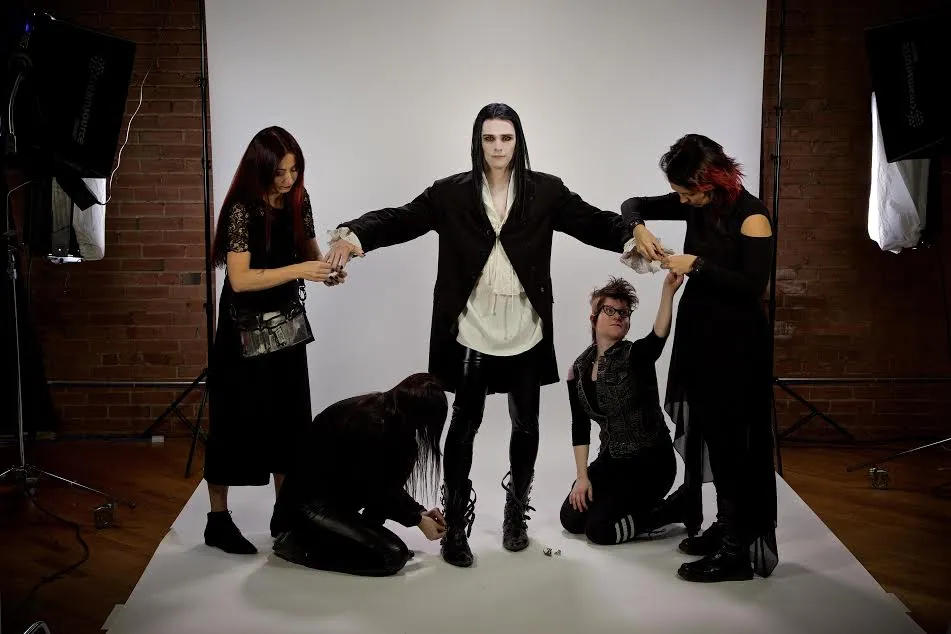
I remember the first time a guy walked into a coffee shop near my old apartment wearing a floor-length black coat, combat boots, and silver rings stacked on nearly every finger. Half the room stared. He didn’t seem to notice, or maybe he just didn’t care. That moment stuck with me because it captured something important about this style: it’s not really about shock value anymore. It’s about a specific aesthetic language that’s been quietly evolving for over four decades.
If you’ve landed here because you’re curious, confused, or maybe even a little intimidated by goth fashion for men, you’re not alone. It’s one of those styles that looks intense from the outside but turns out to be far more flexible — and approachable — once you understand the logic behind it.
Quick Answer
Goth fashion for men is a style rooted in dark, dramatic aesthetics — think black clothing, Victorian and punk influences, leather, lace, and metal accessories. It’s not tied to a single subculture rule book anymore. Modern goth menswear blends elements from streetwear, formalwear, and alt-fashion, making it wearable for everyday life, not just clubs or concerts. There’s no single “correct” way to do it, which is honestly part of the appeal.
What Is Goth Fashion for Men, Really?
Goth fashion grew out of the post-punk music scene in the late 1970s and early 1980s in the UK. Bands like Bauhaus, Siouxsie and the Banshees, and The Cure inspired fans to dress in ways that matched the mood of the music — moody, theatrical, romantic in a darker sense of the word.
For men specifically, this meant moving away from the loud colors of mainstream fashion at the time and leaning into black-on-black outfits, often paired with elements borrowed from Victorian mourning attire, military uniforms, or punk DIY culture.
Today, goth fashion men’s style isn’t one fixed look. It’s more like an umbrella that covers several sub-styles:
- Traditional goth — Victorian-inspired coats, lace, velvet, and a generally romantic-but-dark vibe
- Punk goth — leather jackets, studs, ripped fabric, combat boots
- Cybergoth — futuristic materials, neon accents against black, goggles, platform boots
- Minimalist/modern goth — clean black silhouettes, oversized layers, streetwear-adjacent cuts
Honestly, most men who dress goth today borrow bits from two or three of these categories rather than sticking rigidly to one.
How It Works (The Logic Behind the Look)
People sometimes assume goth fashion is just “wear black and look sad,” but there’s actually a structure to it once you start paying attention.
It usually works through layering, contrast, and texture rather than color variety. Since the palette is mostly black (with occasional deep purple, blood red, or grey), the visual interest has to come from somewhere else — fabric choice, silhouette, accessories, or hardware like buckles and chains.
A typical outfit might combine:
- A structured base layer (fitted black shirt or turtleneck)
- A statement outer layer (long coat, trench, or leather jacket)
- Functional bottoms (black jeans, tapered trousers, or leather pants)
- Heavy footwear (Doc Martens, platform boots, combat-style boots)
- Metal or symbolic accessories (rings, chokers, pendants)
The trick — and this took me a while to actually notice when comparing different outfits — is that goth menswear relies heavily on proportion. A long coat needs slimmer trousers underneath, or the silhouette collapses into a shapeless blob. That’s the kind of detail a lot of beginners miss.
Main Features of Goth Fashion for Men
- Monochrome base — black dominates, occasionally accented with white, deep red, or purple
- Mixed textures — leather, velvet, lace, mesh, and denim often appear in the same outfit
- Dramatic outerwear — long coats, capes, oversized hoodies
- Hardware details — studs, buckles, chains, zippers as design elements, not just function
- Symbolic accessories — crosses, pentagrams, occult-inspired jewelry (though this is optional, not mandatory)
- Footwear with presence — platform boots, Demonia-style shoes, military boots
None of these features are required in isolation. A guy can wear a plain black turtleneck with black trousers and still read as “goth-adjacent” simply through the silhouette and color discipline.
Pros and Cons
Pros
- Highly adaptable — works for casual, semi-formal, and even professional settings if toned down
- Builds a strong, consistent personal style identity
- Black clothing genuinely is easier to mix and match (less guesswork than colorful wardrobes)
- Long-lasting pieces — leather jackets and boots often outlive trend cycles
- Can be expressed subtly or dramatically depending on comfort level
Cons
- Can be hot in summer climates due to dark colors and heavier fabrics
- Quality leather, boots, and outerwear pieces aren’t cheap
- Some workplaces still carry bias against visibly “alternative” dress
- Easy to overdo it as a beginner and end up looking costume-y instead of stylish
- Requires some trial and error to get proportions right
Real-World Scenarios
A friend of mine works in graphic design and wears what he calls “office goth” — black slim trousers, a fitted black button-up, and a longer black blazer instead of a typical suit jacket. No studs, no chains, nothing dramatic. It reads as sharp and modern, not subculture-specific. Nobody at his job has ever questioned it.
Compare that to a college student I knew who went full cybergoth for a music festival — platform boots, mesh top, goggles, the works. Completely different context, completely different execution, both legitimately “goth fashion.”
This is the part people miss: goth fashion for men isn’t locked into one social setting. It scales.
Is It Safe, Legitimate, and Actually Useful?
There’s nothing inherently risky about dressing goth — no safety concern beyond normal clothing common sense (heavy boots take getting used to, leather doesn’t breathe in heat, that sort of thing).
As for legitimacy, goth fashion has been around since the late ’70s and has influenced mainstream designers for decades — Alexander McQueen, Rick Owens, and even certain Yohji Yamamoto collections pull direct inspiration from goth aesthetics. It’s not a passing internet trend; it’s a recognized subculture with real fashion-industry crossover.
Is it “useful” in a practical sense? That depends on what you’re optimizing for. If you want a wardrobe that’s easy to coordinate, mostly weather-neutral (aside from heat), and visually consistent, then yes — it’s genuinely practical. If you’re hoping it’ll make you blend in everywhere, it won’t, and that’s sort of the point.
Common Problems Beginners Run Into
- Buying too many “statement” pieces at once and ending up with an outfit that fights itself
- Ignoring fit — oversized everything without contrast looks sloppy, not stylish
- Overloading on accessories before mastering the base silhouette
- Assuming goth fashion requires occult or band-related symbolism (it doesn’t)
- Not testing footwear comfort before committing to a full day in platform boots
How It Compares to Other Alternative Styles
| Style | Color Palette | Vibe | Overlap with Goth |
| Grunge | Muted, earthy | Relaxed, undone | Layering, boots |
| Punk | Black, red, plaid | Aggressive, DIY | Leather, studs |
| Streetwear | Varied | Bold, casual | Oversized silhouettes |
| Goth | Black-dominant | Dramatic, refined | — |
Goth tends to be more deliberate and structured than grunge, less chaotic than punk, and more theatrical than typical streetwear.
A Practical Opinion
If you’re considering trying goth fashion men’s style for the first time, start small. One black coat, one pair of solid boots, and a couple of fitted black basics will teach you more about proportion than buying ten accessories ever will. The accessories come later, once the silhouette actually works.
I’d also say this: don’t let the subculture history intimidate you into thinking you need to “earn” the look through music taste or lifestyle. Fashion and identity can overlap, but they don’t have to.
Final Verdict
Goth fashion for men is a legitimate, flexible, and visually distinct style with real staying power — not a costume, not a phase confined to teenagers, and not something that requires extreme commitment to wear well. It works best when approached gradually, with attention to fit and proportion rather than just piling on dark accessories. For men who want a wardrobe that’s cohesive, low-maintenance in terms of color matching, and quietly striking, it’s worth genuinely considering.
Learn More About Blogs On Sharemyideaz
FAQs
Q: Is goth fashion only for people into goth music or culture?
A: No. While the style originated from that subculture, plenty of men wear goth-inspired pieces purely for the aesthetic, without any connection to the music scene.
Q: What’s the easiest way to start dressing goth as a man?
A: Begin with basics — a black coat, fitted black trousers, and one pair of solid boots. Add accessories gradually once the core silhouette feels right.
Q: Is goth fashion appropriate for work?
A: Often yes, in a toned-down form. Structured black blazers, slim trousers, and minimal accessories can pass as professional in many workplaces.
Q: Does goth fashion only work in black?
A: Mostly, but deep purple, oxblood red, and grey are common accent colors within the style.
Q: Is it expensive to build a goth wardrobe?
A: It can be, especially for leather jackets and quality boots, but many pieces (plain black basics) are inexpensive and easy to find anywhere.
Q: Is goth fashion still relevant today, or is it outdated?
A: It’s still relevant. Major designers continue referencing goth aesthetics, and the style maintains a consistent, dedicated following rather than fading like typical trends.
