

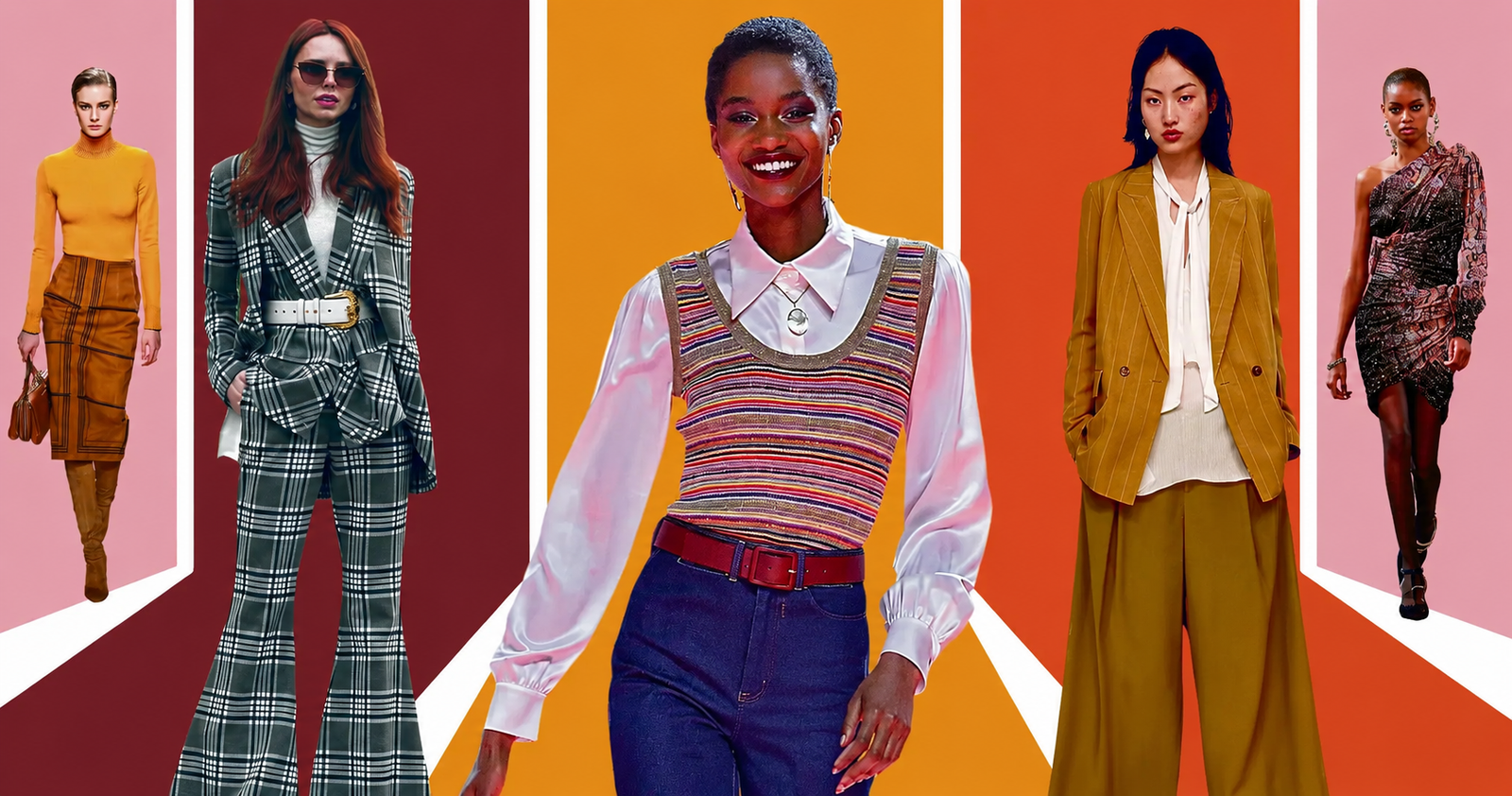
There’s something almost magnetic about the way a well-cut 1970s dress moves. It isn’t just nostalgia — though there’s plenty of that. It’s the cut. The fabric. The fact that these silhouettes were genuinely built for a body that moves, eats, and lives. If you’ve found yourself falling down a rabbit hole of vintage clothing, or noticed that every other fashion brand seems to be “inspired by the decade of disco,” you’re not imagining things.
Seventies dress style is having a genuine cultural moment — not for the first time — and there are real reasons why. This guide breaks down exactly what that means, what makes it work, who it suits best, and where the hype is actually justified versus where it gets a little overblown.
Quick Answer (Featured Snippet)
What is fashion 70s dresses? Fashion 70s dresses refers to the dress styles popularized during the 1970s, characterized by flowing maxi lengths, wrap silhouettes, earthy tones, boho prints, halter necks, and disco-era metallics. These styles are widely reproduced today because of their flattering, versatile cuts and the ongoing influence of 1970s culture on contemporary fashion.
What Exactly Are 70s Dresses? (And Why Do People Keep Bringing Them Back?)
The 1970s was arguably one of the most design-rich decades in fashion history. It wasn’t one aesthetic — it was about five of them running simultaneously. You had the tail end of hippie boho culture bleeding from the late 60s, a rising disco scene that wanted shimmer and movement, the feminist consciousness bringing practical but stylish tailoring, and a general rejection of the rigid, structured looks of the 1960s.
Dresses from this period reflect all of that tension beautifully.
The most iconic silhouettes include:
- Wrap dresses — Diane von Fürstenberg essentially defined this era with her jersey wrap, a style that remains in continuous production to this day
- Maxi dresses — floor-length, often in chiffon or cotton, with prairie or boho influences
- Halter neck dresses — open backs, fitted bodices, a staple of the summer and party circuit
- Shirt dresses with wide pointed collars — casual, slightly oversized, deeply retro in the best way
- Peasant dresses — lace trim, puffed sleeves, earthy linen-like fabrics
- Disco-era mini and midi dresses — sequined, metallic, form-fitting
The fabrics ranged from flowy polyester jerseys (unfairly maligned — they drape beautifully) to cotton voile, linen blends, and synthetic satins for eveningwear. Prints were bold: paisley, geometric, floral, abstract, and graphic color-blocking were everywhere.
How Does 70s Dress Style Actually Work in a Modern Wardrobe?
This is where things get practical. Owning one feels completely different from knowing how to wear one.
The good news is that 70s silhouettes are genuinely one of the more wearable vintage aesthetics because they were designed around comfort and movement rather than structure and control. A wrap dress, for instance, adjusts to the body rather than demanding the body adjust to it. A maxi dress in a breathable fabric is objectively more comfortable than most contemporary fast-fashion alternatives.
Styling it today:
The key with 70s dress style is knowing when to lean in and when to hold back. Full vintage commitment — platform shoes, a wide-brim hat, a macramé bag — works brilliantly for festivals, themed events, or if that’s just your personal aesthetic. But you can also integrate these pieces into a contemporary wardrobe with minimal effort:
- A peasant maxi with modern white sneakers and a simple tote bag reads as current rather than costume
- A wrap dress in a muted earth tone styled with block-heeled sandals works as office or dinner wear
- A halter neck dress with straight-leg trousers worn underneath works as a layered contemporary look
The silhouettes are doing the era-specific work. The rest of your styling choices determine how vintage or how modern the overall effect feels.
Main Features of 70s Dress Styles
Let’s break down what you’re actually getting when you shop for pieces inspired by or authentic to this era.
Silhouette and Cut
The wrap: Surplice neckline, crossover front, ties at the waist. Inherently adjustable. Flatters because it creates a defined waist without being tight anywhere else.
The maxi: Floor-length or near floor-length. Often has a relaxed fit through the hips, sometimes with a flared or tiered skirt. Very practical for tall women and those who prefer coverage.
The halter: Often backless or low-back, with ties at the neck and sometimes the waist. Associated with warm weather and eveningwear. Requires either a strapless bra, fashion tape, or enough self-confidence to go without.
The shirt dress: Buttoned front, collar, sometimes belted. Casual. The collar details in 70s versions are characteristically exaggerated — wide, pointed, and often contrasting.
Fabrics
Authentic 1970s pieces are often in polyester-blend jersey, which has an unfairly bad reputation. It drapes well, holds color, and doesn’t wrinkle. Contemporary reproductions use similar fabrics, plus rayon, viscose, and occasionally natural-fiber blends for the boho styles.
Prints and Colors
- Earth tones: Burnt orange, mustard yellow, avocado green, deep rust, chocolate brown
- Psychedelic prints: Swirling abstracts, Op Art-inspired patterns
- Florals: Large-scale, often with contrast backgrounds
- Geometric patterns: Bold color-blocked shapes
- Metallic and sequined fabrics: For the disco-influenced styles
Pros and Cons — Honestly
No piece of clothing is for everyone, and that applies here too.
The Genuine Advantages
Flattering for a wide range of body types. The wrap dress in particular is the kind of style that genuinely works across sizes in a way that most trends don’t. It was designed by someone (DVF) who wanted women to feel good in their clothes, and that shows.
Comfortable. The relaxed, unstructured silhouettes are easier to wear all day than most structured contemporary options. Maxi lengths give coverage without restriction.
Versatile seasonality. Layer a wrap dress over a turtleneck in winter. Wear it solo in summer. The long silhouettes work in a way that most mini-length options don’t once temperatures drop.
Built for curves and movement. Unlike some rigid contemporary trends (bodycon bandage dresses, structured mini skirts), 70s-influenced dresses move with you.
Strong resale value. Quality vintage pieces from this era hold or increase in value, and quality contemporary reproductions from known brands retain more value than fast fashion equivalents.
The Real Drawbacks
Maxi lengths require height considerations. If you’re petite, a true floor-length dress can overwhelm your frame or require significant alterations. Midi-length versions are more forgiving.
The boho aesthetic can veer into costume territory quickly. There’s a fine line between “vintage-influenced” and “looked like I raided a theater wardrobe.” This is mostly a styling issue, but it’s worth being aware of.
Sizing inconsistency in vintage. Authentic 1970s pieces were sized using different conventions than today. Size 14 in 1972 is not a size 14 now. If you’re buying true vintage, expect to try things on or know your exact measurements.
Fabric care. Some vintage fabrics are delicate. Hand wash or dry clean only labels are common, and that adds to the ongoing cost and effort of owning these pieces.
Print fatigue. Bold 70s prints can dominate an outfit. If you’re someone who prefers to accessorize heavily, you may find that a strong paisley maxi doesn’t leave much room for the rest of what you want to wear.
Who Is This Actually For?
Fashion 70s dresses are genuinely a good fit for:
- Women who prioritize comfort and movement in their dressing
- Anyone who has struggled with trend-driven fashion that doesn’t flatter their specific body type
- People who care about building a wardrobe of pieces that feel personal and a little specific, rather than disposable
- Those with a natural affinity for earthy colors, natural textures, or bohemian aesthetics
- Festival-goers, travelers, warm-climate dressers
- Anyone building a vintage or secondhand-first wardrobe
Less ideal for:
- People who prefer highly structured, tailored aesthetics
- Those who find pattern and color overwhelming or difficult to style
- Anyone whose wardrobe is predominantly monochrome or minimal — not impossible to integrate, but requires more thought
Real-World Scenarios Where These Dresses Work Well
Summer travel. A maxi dress in breathable fabric packs well, requires minimal accessories, works for both sightseeing and dinner, and reads appropriately across most casual-to-smart-casual dress codes.
Wedding guests. A wrap dress in a jewel-toned print hits the “festive but not trying too hard” note that wedding guest dressing often requires.
Creative workplaces. A shirt dress with 70s collar details works in most non-corporate office environments without feeling like you’re making a statement.
Festivals and outdoor events. The full boho maxi with sandals is practically the uniform here, for good reason — it’s comfortable, stylish, and handles warm weather better than most alternatives.
Casual dates and socializing. Halter dresses and midi wrap dresses are consistently among the highest-rated “go-to” choices precisely because they look put-together without requiring much effort.
Where to Find Them: Authentic Vintage vs. Contemporary Reproductions
Authentic vintage (pre-1980):
- Estate sales, thrift stores, dedicated vintage boutiques
- Online platforms: Etsy vintage sellers, Depop, The RealReal, eBay vintage categories
- Expect to spend more time searching, and expect sizing inconsistency
- The reward is genuine uniqueness and often better fabric quality
Contemporary reproductions and 70s-inspired lines:
- Diane von Fürstenberg’s ongoing wrap dress collection (arguably the most direct line to the original)
- Free People for the boho-influenced styles
- & Other Stories, Reformation, and Sezane for updated, quality-made 70s silhouettes
- ASOS and similar mass-market retailers for affordable entry points (quality varies significantly)
- Anthropologie consistently offers prairie and boho-adjacent 70s-inspired styles
Legitimacy and Quality Concerns
This is a real consideration. The 70s aesthetic has become so commercially popular that the market is flooded with low-quality reproductions that capture the visual aesthetic without the wearability that made the originals worth reviving.
A few things worth knowing:
Cheap polyester is not the same as vintage polyester. The jersey used in 1970s garments was often heavier and better constructed than the thin, pilling-prone polyester used in fast fashion 70s reproductions today.
Print quality matters enormously. A good 70s print on a quality fabric looks expensive. The same print on a thin, sheer, low-weight fabric looks cheap regardless of how accurate the pattern is.
Construction shortcuts show. French seams, clean linings, and properly finished edges are signs of quality. Exposed overlocked seams on the inside of a “vintage-inspired” dress at a certain price point tell you something about what you’re getting.
This doesn’t mean you can’t find affordable options that work well — it just means it’s worth handling fabric and inspecting construction before you commit, especially for anything above a casual wear price point.
Comparison: 70s Dresses vs. Other Vintage-Inspired Trends
| Style Era | Key Silhouette | Versatility | Comfort | Current Trend Status |
| 1950s | Full skirt, nipped waist | Moderate | Moderate | Steady, vintage circles |
| 1960s | Shift, mod mini | Moderate | High | Cyclical |
| 1970s | Wrap, maxi, halter | High | High | Very active |
| 1980s | Power shoulders, structured | Low-moderate | Low | Rising |
| 1990s | Slip dress, mini | High | High | Currently peaked |
The 70s scores particularly well on versatility and comfort compared to other vintage-inspired aesthetics, which is a meaningful part of why it keeps returning.
Expert-Style Practical Opinion
The honest read here is that 70s dress style earns its ongoing popularity because the silhouettes are genuinely good, not just nostalgic. The wrap dress is one of the most technically successful dress designs in modern fashion history — it works for a huge range of body types, it’s comfortable, it transitions across occasions, and it photographs well. That’s not a small thing.
The boho maxi has the same practical logic behind it. Long, unstructured, in a natural fabric — it’s a dress that actually works for the life most women are living, which is more than can be said for plenty of trend-driven options.
Where the aesthetic falls down is in cheap reproduction and overcrowding. When every fast-fashion retailer produces a version of the same paisley wrap dress at the same time, the aesthetic loses the quality signal that made it appealing. The answer to that isn’t to abandon it — it’s to be selective, buy less, and invest in pieces that are actually well-made.
Final Verdict
If you’ve been considering adding 70s-inspired dresses to your wardrobe and wondered whether the hype is real: yes, mostly. The silhouettes are genuinely flattering, the comfort level is high, and the aesthetic has enough range within it that it doesn’t have to feel like a costume.
The caveats are practical ones: be selective about quality, know your measurements if you’re shopping for a true vintage, and think about whether your existing wardrobe will actually work with bold prints and earthy tones before committing heavily.
For most people, one or two well-chosen pieces — a quality wrap dress, a well-cut maxi — will outperform a closet full of trend-driven fast fashion. That’s not an aesthetic argument, it’s just a practical one.
Learn More About Blogs On Sharemyideaz
Frequently Asked Questions
Q: What makes a dress “70s style” versus just “vintage”?
A: The 70s has specific signature elements: wrap and maxi silhouettes, earthy color palettes, bold geometric or floral prints, halter necklines, wide pointed collars, and the combination of boho and disco influences. Not all vintage is 70s-inspired — the decade has a distinct visual language that separates it from 60s mod or 80s power dressing.
Q: Are 70s dresses flattering for petite women?
A: Full-length maxis can be challenging for petite frames because they can make you appear shorter. Midi-length versions of the same silhouettes (wrap, halter, boho-inspired) work much better. High-waisted styles with vertical prints also help elongate the figure.
Q: Where can I find authentic 1970s dresses that fit modern sizing?
A: Vintage stores and online platforms like Depop, Etsy vintage sellers, and The RealReal are the best places to start. Expect to search by measurements rather than size labels, as vintage sizing conventions differ significantly from today’s.
Q: What shoes work best with 70s dresses?
A: Platform sandals and block-heeled mules are the most era-appropriate choices. For a more contemporary look, white sneakers or simple strappy flats work well with boho maxi styles. Ankle boots give the look a slightly tougher, more modern edge.
Q: Is the wrap dress actually as universally flattering as people say?
A: For most body types, yes — the adjustable tie and crossover front create a defined waist without rigid structure. However, it works best when the fabric has some weight and drape. Very thin or stiff fabrics undermine the silhouette. The neckline also tends to be fairly low, which is worth knowing in advance.
Q: Can I wear 70s dresses to a formal event?
A: Absolutely. A floor-length halter dress in a rich jewel tone or a well-cut wrap in a sophisticated print is a strong choice for weddings, gallery openings, cocktail parties, and similar events. The key is fabric and styling — chiffon or silk-blend feels formal; cotton print feels casual.
Q: How do I style a bold 70s print without looking dated?
A: Keep everything else simple. One bold print dress with minimal accessories, neutral shoes, and no additional patterns. Let the dress be the statement rather than trying to layer it into something more complex. Simple gold jewelry works particularly well with earthy 70s palettes.
Q: Are 70s-style dresses appropriate for the workplace?
A: It depends entirely on your workplace dress code. A wrap dress in a solid or subtle print is appropriate in most casual to business-casual environments. Maxi dresses with boho prints are better suited to creative or informal workplaces. A fitted halter dress would typically be too casual or revealing for most office settings.
Q: What’s the difference between a boho 70s dress and a disco 70s dress?
A: Boho 70s dresses take inspiration from the hippie and folk revival movements — flowing fabrics, floral or paisley prints, peasant sleeves, earthy tones, and a relaxed silhouette. Disco 70s dresses are the opposite in many ways: fitted, often metallic or sequined, with bolder geometric patterns, shorter hemlines, and a high-energy glamour aesthetic. Both existed simultaneously in the decade.
Q: How do I care for authentic vintage 70s dresses?
A: Check the label first, but many authentic pieces require hand washing or dry cleaning. Polyester jerseys from this era are generally more durable than its reputation suggests, but avoid high heat when drying or ironing. For delicate chiffon or printed voile pieces, hand washing in cool water and flat drying is the safest approach.
