

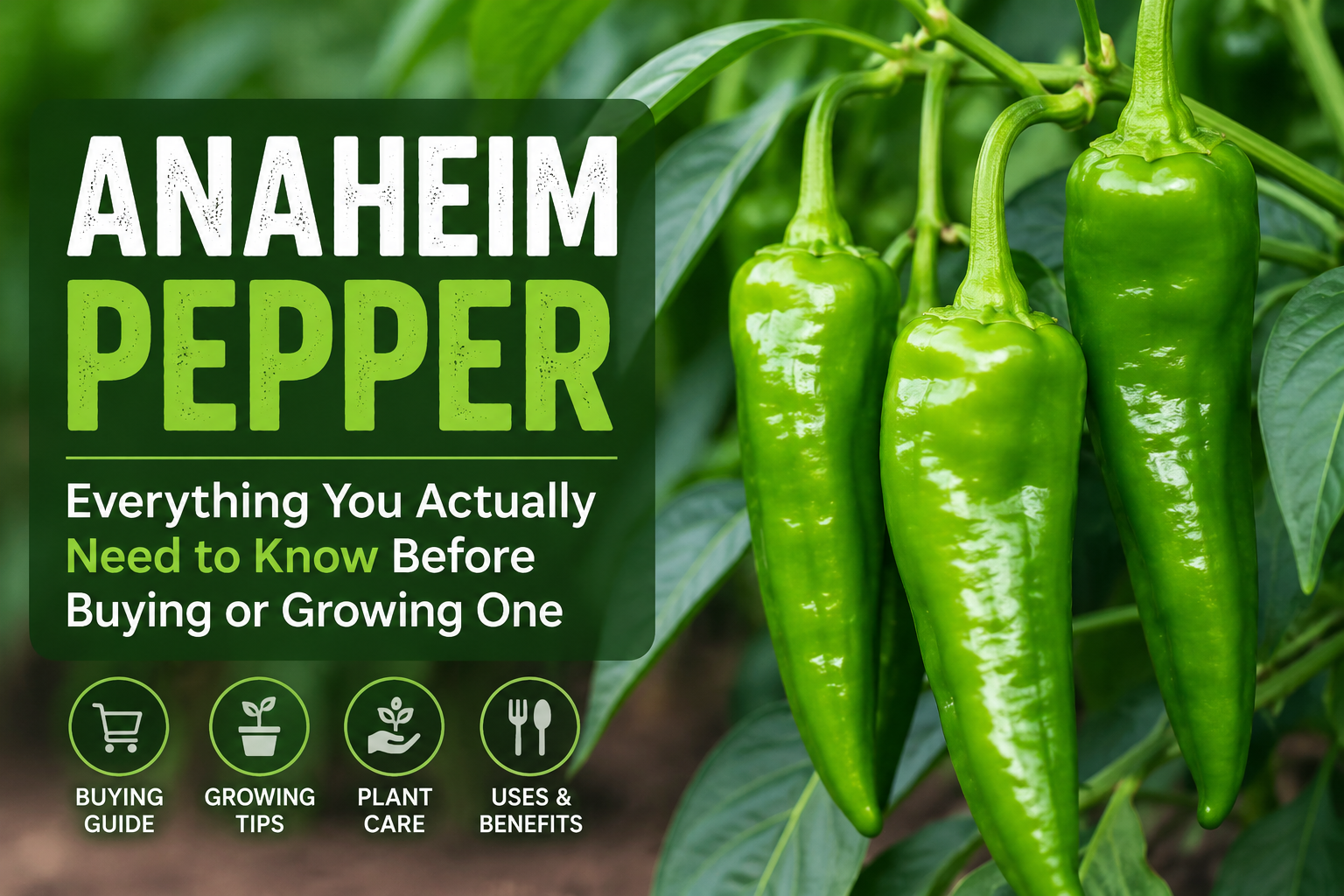
There’s a pepper sitting quietly in the produce section of almost every major grocery store in the United States — long, pale green, and mild enough that most people walk right past it without a second thought. If you’ve ever made green chile sauce, stuffed peppers, or roasted a batch of chiles for enchiladas, there’s a solid chance you’ve already cooked with one and just didn’t know it by name.
The Anaheim pepper doesn’t have the fame of a jalapeño or the cult following of a ghost pepper. It’s not trending on food TikTok. But for home cooks, gardeners, and anyone building out a real understanding of chile peppers, it’s genuinely one of the most useful, versatile, and underappreciated varieties out there. This guide covers everything — what it actually is, how it tastes, how to grow and use it, its nutritional profile, and whether the hype (modest as it is) is actually deserved.
Quick Answer: What Is an Anaheim Pepper?
The Anaheim pepper is a mild to medium-heat chile pepper with a Scoville rating of roughly 500 to 2,500 SHU (Scoville Heat Units). It’s long, thin-walled, and typically harvested green, though it ripens to red. It’s widely used in Southwestern and Mexican-American cuisine for roasting, stuffing, and making sauces. Compared to a jalapeño (2,500–8,000 SHU), it’s noticeably milder — accessible even for people who don’t typically handle spicy food.
What Exactly Is This Pepper, and Where Does It Come From?
The story here is more interesting than you’d expect. The pepper itself is a cultivar of Capsicum annuum — the same species that includes bell peppers, jalapeños, and cayenne. Its roots trace back to New Mexico, where a strain called the New Mexico chile (specifically the Hatch chile) was cultivated for generations by indigenous and Spanish farming communities.
In the early 1900s, a farmer named Emilio Ortega brought seeds from New Mexico to the Anaheim, California area. The peppers grew well in the Southern California climate, and the local name stuck. The Ortega brand — yes, that Ortega, the one in the taco shells aisle — is named after him, which is a fun piece of food history most people don’t know.
What makes this variety distinct from its New Mexico relatives is primarily the growing environment. Soil composition, climate, and altitude all affect capsaicin levels and flavor development. Peppers grown in New Mexico (especially around Hatch) tend to run hotter and more complex in flavor. The California-grown version is milder and a bit more consistent in heat.
So when a recipe calls for “green chiles” and you’re in the U.S., there’s a good chance it means either this pepper or a Hatch chile. They’re close enough to substitute in most situations, but not identical.
How Heat and Flavor Actually Work in This Pepper
Capsaicin is the compound responsible for chile heat, and it’s concentrated mostly in the pith (the white membrane inside) rather than the seeds — a common misconception. When you remove that membrane, you dramatically reduce the heat, which is part of why Anaheim-style chiles work so well for stuffed pepper dishes. You can hollow them out, remove the membrane, and end up with something mild enough for kids.
The Scoville range of 500–2,500 SHU is wide, and that variance is real. A single pepper from the same plant can hit the low or high end depending on how much heat stress the plant experienced during growth. Peppers grown in hotter, drier conditions tend to be spicier. This is actually documented in chile pepper research — water stress activates capsaicin production as a plant defense mechanism.
Flavor-wise, the raw pepper is grassy and fresh with a subtle sweetness. Roasting changes everything. When you char the skin over an open flame or under a broiler, the sugars caramelize, the flesh softens, and you get this smoky, slightly sweet, deeply savory flavor that’s hard to replicate with any other vegetable. That roasted quality is exactly why green chile sauce has the character it does.
Main Features at a Glance
- Size: 6–10 inches long, 1.5–2 inches wide — one of the larger fresh chile varieties
- Wall thickness: Medium-thin, which makes roasting and peeling straightforward
- Heat level: 500–2,500 SHU (mild to low-medium)
- Color progression: Bright green when immature → deep red when fully ripe
- Flavor profile: Fresh and grassy raw; smoky and sweet when roasted
- Availability: Year-round in most U.S. supermarkets; peak season July through October
- Shelf life: 1–2 weeks refrigerated, raw; several months frozen after roasting
- Growability: Beginner-friendly; thrives in warm climates with full sun
Nutritional Profile: More Going On Than You’d Think
One medium pepper (about 45g) contains roughly:
- Calories: 18–20
- Vitamin C: Around 60–70% of daily recommended intake
- Vitamin A: Modest but present, especially in red-ripe peppers
- Capsaicin: Low to moderate — enough to offer some metabolic benefits without being punishing
- Fiber: About 1g
- Potassium: Small but meaningful contribution
The vitamin C content is legitimately impressive for such a low-calorie food. Red-ripe peppers contain significantly more vitamin C and beta-carotene than green ones — the same is true across most chile varieties. If you’re eating them for nutrition, letting them ripen to red before harvesting or buying is worth considering.
Capsaicin, even at lower levels, has been studied for its effects on metabolism, inflammation, and pain signaling. The evidence is real but modest — don’t expect miracles from adding mild chiles to your diet, but there’s no reason to think it hurts.
Pros: Why People Actually Like This Pepper
It’s genuinely accessible. This is probably the most important thing. A lot of people want to cook with chiles but find jalapeños or serranos too unpredictable in heat. This variety is mild enough that you can eat it raw in slices without discomfort, which makes it a legitimate entry point into chile cooking.
Roasting it is almost foolproof. Hold it over a gas burner, rotate it with tongs, and in about 5–7 minutes you have beautifully charred, peelable flesh. No special equipment required. The technique is forgiving in a way that cooking with thinner-walled peppers isn’t.
It’s a workhorse in actual cooking. Chiles rellenos, green chile stew, breakfast burritos, enchilada sauce, chile verde, roasted pepper salsa — the list of things you can make with this pepper is genuinely long. It’s not a specialty ingredient that sits in your fridge for a week because you only needed it for one dish.
It grows well in home gardens. The plants are vigorous, produce heavily, and don’t demand intensive care. If you’ve had luck with tomatoes, you’ll probably have luck with this pepper. And growing your own means you can let some ripen fully to red, which most stores don’t carry.
Freezing roasted peppers works beautifully. Roast a big batch in late summer, peel and freeze them in portions, and you’ve got a winter’s worth of green chile ready to go. The texture holds surprisingly well after freezing — better than most vegetables.
Cons and Honest Limitations
The heat is unpredictable. Even within the same batch from a store, individual peppers can vary quite a bit. You might grab five that are all mild as bell peppers, and then one that has a legitimate kick. If you’re cooking for someone with a very low heat tolerance, taste as you go.
It’s not Hatch chile. This matters to some people more than others, but if a recipe specifically calls for Hatch green chiles — the variety grown in New Mexico’s Hatch Valley — you’ll get a different result using California-grown peppers. The flavor is less complex, and the heat tends to be lower. Fine for most applications, but if you’re a purist about green chile stew, it’s worth noting.
The thin walls mean they can collapse when stuffed. For chiles rellenos specifically, over-roasting the pepper makes the flesh too soft to stuff cleanly. There’s a technique to it — you want the skin charred but the flesh still holding some structure. It takes a couple of tries to get right.
Finding red-ripe ones is hard. Most commercial growing prioritizes the green stage for shelf life reasons. If you want the sweeter, more nutritious red version, you’re usually growing your own or shopping at a specialty market or farmers market.
Real-World Use Cases: How People Actually Cook with It
Green chile sauce (New Mexican style): Roast, peel, and blend with garlic, broth, and spices. This is the foundational sauce for smothered burritos, huevos rancheros, and green chile cheeseburgers. Make a large batch and freeze it.
Chiles rellenos: The classic stuffed-and-battered pepper dish. Use whole roasted peppers, stuff with cheese or meat, dip in egg batter, and fry. Time-intensive but genuinely delicious.
Breakfast burritos: Dice roasted pepper and fold into scrambled eggs with cheese. This is probably the most common everyday use — it’s fast, satisfying, and the smokiness works perfectly with eggs.
Green chile stew (Pozole verde adjacent): Pork shoulder, green chiles, potatoes, garlic, and broth. Slow-cooked until everything falls apart. Extremely simple and deeply comforting on a cold night.
Roasted pepper salsa: Blend charred chiles with tomatillos, onion, cilantro, and lime. Fresher and less sharp than tomato salsa — good as a sauce for grilled chicken or fish.
Pizza and flatbreads: Thinly sliced roasted peppers as a topping add a dimension that bell peppers don’t quite achieve. The mild heat and smokiness pair well with cheese and cured meats.
Safety, Dietary Concerns, and Who Should Be Careful
This is a straightforward food with a clean safety profile, but a few things are worth mentioning.
Nightshade sensitivity: Capsicum peppers are nightshades, and some people with inflammatory conditions (certain autoimmune issues, for example) find that nightshades aggravate their symptoms. The evidence is mixed, but if you’ve been advised to limit nightshades, these peppers fall into that category.
GERD and acid reflux: Capsaicin, even in mild amounts, can trigger acid reflux in sensitive individuals. If you regularly experience heartburn, large quantities of any chile pepper may be a problem.
Cross-contamination with hotter peppers: If you’re growing multiple chile varieties, be aware that peppers can cross-pollinate. Seeds saved from a mild plant might produce hotter offspring the following year if it was near a spicier variety during flowering.
Eye and skin contact: Even a mild pepper can cause irritation if you touch your eyes after handling one. This is basic chile pepper safety but worth repeating — wash your hands after cutting, especially before touching your face.
There are no significant food safety, contamination, or legitimacy concerns here. This is a well-established, commercially cultivated vegetable with a long culinary history.
How It Compares to Other Popular Chiles
| Pepper | Scoville Range | Wall Thickness | Best Use |
| Bell pepper | 0 SHU | Thick | Stuffing, raw |
| Anaheim | 500–2,500 SHU | Medium | Roasting, sauces, stuffing |
| Poblano | 1,000–2,000 SHU | Medium-thick | Mole, rellenos |
| Jalapeño | 2,500–8,000 SHU | Thin | Pickling, fresh salsa |
| Hatch chile | 1,000–8,000 SHU | Medium | Green chile sauce |
| Serrano | 10,000–23,000 SHU | Very thin | Fresh salsas, heat |
The closest comparison is the poblano, which has a similar heat level and wall thickness. Poblanos tend to have a slightly earthier, more complex flavor and a wider shape that makes them easier to stuff. For chiles rellenos specifically, many cooks prefer poblanos. For green chile sauce, this pepper (or a Hatch variant) is the traditional choice.
If you can find Hatch chiles in season (August through September, with some availability through winter in frozen form), they’re worth trying as a comparison. The flavor difference is real and noticeable — richer, more complex, often hotter. But outside of that narrow window, this pepper is a perfectly solid substitute.
Practical Opinion: Is This Pepper Worth Your Time?
Honestly, yes — and not just as a culinary novelty. This is one of those ingredients that quietly makes a lot of dishes better without demanding much technique or tolerance for heat.
The thing that doesn’t get said enough is how well roasting scales. You can throw a dozen peppers under the broiler on a sheet pan in 15 minutes, peel them once they’ve steamed in a covered bowl, and freeze them in small bags. That’s a summer afternoon’s work that pays off in soups, eggs, and sauces for months. It’s the kind of low-effort, high-return kitchen move that experienced home cooks swear by but rarely explain in detail.
For gardeners, it’s also one of the more rewarding chile varieties to grow. The plants are productive, the harvest window is long, and watching green peppers slowly blush to red on the vine has a quiet satisfaction to it. Seed-saving is easy too, as long as you keep it isolated from hotter varieties.
The one honest caveat: if you’re expecting Hatch-level complexity or jalapeño-level heat, you’ll be underwhelmed. This pepper occupies a specific culinary role — mild heat carrier and roasting vehicle — and it excels in that role. It’s not trying to be the most exciting thing on the plate.
Final Verdict
The Anaheim pepper earns its place in the produce aisle. It’s mild enough for broad audiences, flavorful enough to make dishes genuinely better, and practical enough to buy in bulk and freeze. It’s not a flashy ingredient, but it’s a reliable one — and in actual cooking, reliability matters more than drama.
If you’ve been cooking with bell peppers and want to introduce a little warmth and complexity without committing to anything intense, this is a sensible starting point. If you’re already comfortable with jalapeños and exploring the wider world of chiles, it fits naturally into your rotation for specific applications like green chile sauce or stuffed peppers.
Worth trying? Without question. Worth making a staple? For a certain kind of home cook — absolutely.
Explore more websites like Sharemyideaz
FAQs
Q: What does an Anaheim pepper taste like?
A: Raw, it’s fresh and grassy with mild heat and a subtle sweetness — similar to a bell pepper but with a little warmth behind it. Roasted, the flavor shifts significantly: smoky, caramelized, and slightly sweet, with the heat becoming more rounded. Most people find the roasted version far more interesting than the raw.
Q: Are Anaheim peppers the same as green chiles?
A: Often, yes — in U.S. grocery stores, canned “green chiles” almost always use this variety or a closely related New Mexico cultivar. In New Mexican cuisine specifically, “green chile” usually refers to the Hatch variety, which runs hotter and more complex. They’re related and largely interchangeable in recipes, but not identical.
Q: Can you eat Anaheim peppers raw?
A: Yes. They’re mild enough to slice into salads, eat with dips, or use fresh in salsas. The flavor raw is less developed than roasted, but there’s no safety concern with eating them uncooked.
Q: How do you roast and peel an Anaheim pepper?
A: Place directly over a gas burner flame or under a broiler set to high. Turn every couple of minutes until the skin is charred on all sides — about 5–8 minutes total. Transfer to a bowl, cover tightly with plastic wrap or a lid, and let steam for 10 minutes. The skin will slip off easily with your fingers or a paper towel. Don’t rinse under water — it washes away flavor.
Q: How hot is an Anaheim pepper compared to a jalapeño?
A: Significantly milder. Jalapeños range from 2,500 to 8,000 SHU; this variety tops out around 2,500 at its hottest and averages much lower. Most people who find jalapeños uncomfortably hot will handle this pepper without issue.
Q: Can you substitute a poblano for an Anaheim pepper?
A: In most recipes, yes. Poblanos are similar in heat level and are often interchangeable. Poblanos have slightly thicker walls and a somewhat earthier flavor, which works particularly well for stuffed preparations. For green chile sauce, the California-grown variety or a Hatch chile is more traditional.
Q: Do Anaheim peppers get hotter as they ripen to red?
A: Interestingly, no — capsaicin levels don’t necessarily increase as the pepper ripens. Red peppers are sweeter and more nutritious (higher in vitamin C and beta-carotene) but not reliably hotter than their green counterparts. The heat is mostly determined by growing conditions, not ripeness stage.
Q: Can you grow Anaheim peppers in containers?
A: Yes. They do well in large pots (at least 5-gallon capacity) with full sun and consistent watering. Container-grown plants tend to stay slightly smaller than in-ground ones, but production is still good. They’re a solid choice for balcony or patio gardens in warm climates.
Q: Are they good for people who don’t like spicy food?
A: Generally yes. At the low end of the heat spectrum, these peppers are barely hotter than a bell pepper. There’s always some variability, but they’re considered one of the beginner-friendly chile varieties for exactly this reason. Removing the inner white membrane before cooking reduces heat further.
Q: Where can I buy Anaheim peppers fresh?
A: Most major grocery chains in the U.S. carry them year-round in the produce section, often simply labeled “green chiles” or “long green chiles.” Farmers markets carry them in late summer through fall, which is peak season. Some specialty Latin grocery stores carry them alongside a wider selection of fresh chiles.
