

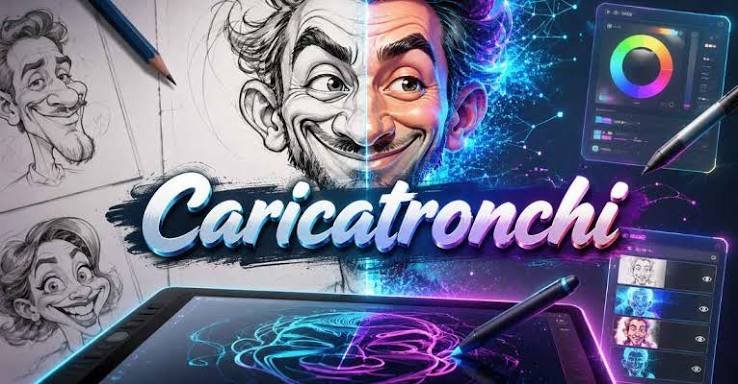
I’ll be honest about how I got here. I saw “caricatronchi” pop up in a search suggestion, assumed it was some niche app or AI art tool I’d missed, and went down a research rabbit hole trying to pin down a clean definition. What I found instead was a mess of blog posts, forum threads, and “explainer” articles that all describe it slightly differently — some call it an art style, some call it a digital identity concept, and one obscure thread mentions it’s actually rooted in Italian machinery terminology. That contradiction is the real story here, and it’s worth unpacking properly instead of pretending there’s one tidy answer.
Quick Answer
Caricatronchi isn’t a single, established product, app, or art movement with a fixed definition. The term shows up across recent blog content describing it as a digital caricature art style that blends exaggerated facial features with AI-assisted design — but the underlying word actually traces back to Italian, where “carica” (load) and “tronchi” (logs or trunks) combine to describe log-loading machinery used in forestry. Online content using “caricatronchi” as a creative or artistic term appears to be a recently coined or SEO-driven usage rather than a recognized industry term, so treat definitions you find with some skepticism and cross-check before citing it as fact.
What Is Caricatronchi, Really?
Here’s where things get genuinely confusing, and I think it’s better to say that plainly than to fake confidence I don’t have.
If you search “caricatronchi” today, you’ll land on a stack of articles — many published within the last year describing it as a “digital art style” mixing caricature with surreal distortion, AI-generated portraiture, or character design for social media avatars. They read smoothly, they use confident language, and they reference real things like Midjourney and DALL·E. But when you compare them side by side, no two articles agree on an origin story, a creator, or a concrete example you can actually point to. That’s a pattern I’ve seen before with terms that get picked up by content mills: a vague or invented word gets repeated across dozens of sites until it starts looking established, even though nothing concrete backs it up.
Separately, there’s a more grounded explanation. In Italian, the word breaks down into “carica” (to load or charge) and “tronchi” (tree trunks or logs). Put together, it describes forestry equipment — specifically log loaders or forwarders, machines used to lift and stack felled timber. This is a real, functional term in agricultural and forestry contexts in Italy, completely unrelated to art or digital design.
So depending on where you encountered the word, you might be dealing with two entirely different things: a piece of heavy machinery vocabulary, or a loosely defined internet art trend that doesn’t have a verified source. I’d lean toward treating the “art style” framing with caution until it’s backed by a named artist, platform, or company you can verify independently.
How It Works (Depending on Which Definition You Mean)
Because there isn’t one settled meaning, “how it works” splits into two tracks.
If you mean the forestry/machinery sense: A caricatronchi (log loader) typically works through a hydraulic arm mounted on a tractor, trailer, or forestry vehicle. The operator uses a grapple or claw attachment to lift logs, rotate them, and stack them onto a transport bed. These machines are common in timber harvesting operations across Europe, and you’ll find them listed on agricultural machinery marketplaces under similar Italian terminology.
If you mean the “art style” sense being promoted online: The articles describe a process where someone uploads a photo, an AI tool (commonly cited examples include Midjourney-style generators) exaggerates facial features — bigger eyes, stretched expressions, fragmented or surreal shapes — and a human artist refines the output. The claimed appeal is that it’s faster than hand-drawn caricature and produces shareable, social-media-friendly images. I want to be direct here: I couldn’t find a specific app, platform, or artist credited as the originator of this process under the caricatronchi name. That’s a red flag for legitimacy, not necessarily for the underlying idea (AI-assisted caricature is a real and growing category), but for this specific branded term.
Who Is This For?
Splitting by definition again:
- Forestry equipment buyers, farm operators, and machinery resellers searching in Italian-language markets are the realistic audience for the literal meaning.
- Curious internet users, content creators, and people trying to figure out a trending word are the audience for the “art style” content — and most of them are probably landing on these pages without getting a satisfying answer, which is part of why I wanted to write this honestly rather than pad out a definition that doesn’t hold up.
If you’re a digital artist or hobbyist looking for actual AI caricature tools, you’re better served searching for specific, named tools (Midjourney, Artbreeder, Lensa, or dedicated caricature apps) rather than chasing a term that doesn’t point to a concrete product.
Main Features (As Described Across Sources)
To be fair to the content that does exist, here’s what gets repeated most often when caricatronchi is used in the art context:
- Exaggerated facial proportions — oversized eyes, stretched smiles, elongated features
- Bold, saturated color palettes meant to stand out on social feeds
- A blend of human artistic judgment with AI-generated suggestions
- Emphasis on conveying emotion or personality rather than pure humor
- Use across avatars, branding mascots, and personalized digital gifts
None of these features are unique to a term called “caricatronchi” specifically — they describe AI-assisted caricature generally, a category that already has established names and tools.
Pros and Cons
Potential upsides (if you’re exploring AI-assisted caricature broadly):
- Faster turnaround than traditional hand-drawn caricature
- Lower cost for casual or personal projects
- Easy to personalize for gifts, avatars, or branding
- Encourages creative experimentation without needing advanced drawing skills
Drawbacks and real concerns:
- The term itself lacks a verifiable origin, creator, or platform — that’s a legitimacy issue, not a style critique
- Search results are dominated by what looks like recycled or auto-generated SEO content, making it hard to find a trustworthy primary source
- If you’re trying to use a specific “caricatronchi tool,” you may not find one that actually exists under that name
- Confusion with the unrelated forestry meaning can lead to irrelevant search results if you’re not specific about context
Real-World Examples and Use Cases
This is the part where I have to be transparent: I could not locate a single concrete, named example — no specific artist portfolio, no app store listing, no verified social media account — using “caricatronchi” as a recognized brand or style label. The use cases mentioned across articles (social avatars, branding mascots, personalized gifts, gaming skins) are plausible applications for AI caricature in general, but they’re described in hypothetical terms (“imagine,” “you might”) rather than documented case studies.
If you’ve actually used a tool or seen artwork specifically labeled “caricatronchi,” that would be useful firsthand evidence — but based on available information, this looks more like an emerging or speculative term than an established practice with a track record.
Safety, Privacy, and Legitimacy Analysis
This is the section I’d push back hardest on if you’re considering uploading a photo to anything calling itself a “caricatronchi” generator or service.
- No verified platform exists under this name as far as I could confirm, so be wary of any site or app suddenly claiming to be “the official caricatronchi tool.” That pattern — a vague term gaining SEO traction, followed by opportunistic apps cashing in on the search volume — is a known tactic, and it sometimes leads to data-harvesting apps or low-quality “AI filter” services that store your photos without clear consent.
- If you do try AI caricature tools generally, check their privacy policy for how uploaded images are stored, whether they’re used for model training, and whether you can request deletion.
- For the forestry equipment meaning, legitimacy concerns shift entirely — you’d want to verify the seller, check the machine’s maintenance history, and confirm it meets safety certifications for hydraulic forestry equipment in your region, the same way you’d vet any used heavy machinery purchase.
Common Problems and Limitations
- Search confusion between the two meanings wastes time for both audiences
- Lack of a single authoritative source makes it hard to fact-check claims
- Content describing it as an “art movement” reads as speculative rather than documented
- No pricing, no named creator, no app store presence — all things you’d expect from a real, adopted tool or trend
Comparison With Alternatives
If your interest is AI-assisted caricature art, these have actual track records and verifiable platforms:
- Lensa AI — established mobile app for AI-generated stylized portraits
- Artbreeder — long-running platform for blending and exaggerating facial features
- Midjourney / DALL·E with manual prompting — flexible but requires more skill to direct toward caricature-style output
- Traditional freelance caricature artists (via Fiverr or Etsy) — slower, but you get a verified human artist and a portfolio you can review beforehand
If your interest is forestry log-loading equipment, search using the more standard Italian terms used in agricultural machinery listings, or specify “caricatore forestale” or “gru per tronchi” for clearer, less ambiguous results.
My Honest Take
I don’t think caricatronchi, in the art-trend sense, is something you should treat as an established category yet. It reads like a term that started circulating through SEO-driven content — possibly AI-generated articles riffing on each other — without ever being grounded in a real product, artist, or community. That doesn’t make AI caricature itself fake or useless; it’s a genuinely fun and growing space. It just means this particular label hasn’t earned the credibility the surrounding content implies.
On the flip side, if you encountered the word in an Italian agricultural or machinery context, it’s referring to something completely real and functional — just not glamorous or trend-worthy, which is probably why it never shows up next to the art-style content despite sharing the same name.
Final Verdict
Caricatronchi isn’t a scam exactly, but it’s also not a verified, single thing you can trust at face value. Treat art-related claims about it as unconfirmed internet content rather than an established trend, and don’t hand over photos or personal data to any service branding itself with this name without checking its legitimacy first. If you want real AI caricature tools, go with named, reviewable platforms instead. If you’re dealing with the machinery meaning, you’re on safer, more concrete ground — just use clearer search terms to avoid the noise.
Learn More About Blogs On Sharemyideaz
FAQs
Q: Is caricatronchi a real app or website?
A: No verified app or website using this name as an official product could be confirmed. Be cautious of any service that suddenly claims this branding, since it may be capitalizing on search interest rather than offering a genuine, established tool.
Q: What does the word caricatronchi actually mean?
A: In Italian, it likely derives from “carica” (load) and “tronchi” (logs/trunks), referring to log-loading forestry machinery. Separately, recent online content uses it loosely to describe AI-assisted caricature art, though this usage isn’t tied to a verified source.
Q: Is caricatronchi the same as regular caricature?
A: Based on available descriptions, it’s framed as a more AI-assisted, exaggerated, and sometimes surreal take on traditional caricature, but since there’s no confirmed originator, it’s safer to think of it as a description rather than a distinct, established technique.
Q: Why do so many articles about caricatronchi sound similar but vague?
A: This pattern often happens when a term gains search volume before it has a clear, documented origin. Content sites end up writing speculative or rephrased explanations of each other’s articles, which can make a vague term look more established than it actually is.
Q: Should I use a tool that calls itself a “caricatronchi generator”?
A: Proceed carefully. Check who built it, read the privacy policy regarding photo storage, and look for independent reviews before uploading personal images. If none of that information is available, it’s reasonable to skip it in favor of a more established AI caricature platform.
Q: Is caricatronchi dangerous or a privacy risk?
A: The term itself isn’t inherently dangerous, but any unverified app or site using trending, ambiguous branding to attract uploads deserves the same scrutiny you’d apply to any unfamiliar photo-editing service check permissions, data handling, and reviews first.
