

You get a call from a number you don’t recognize. You let it go to voicemail. No message. Twenty minutes later, same number. At that point, most people do exactly what you’re probably thinking they type those digits into Google and hope something useful comes back.
That’s the exact situation where a tool like USPhoneLookup gets discovered. And once you land on it, the obvious question isn’t just “what is this?” — it’s “can I actually trust it, and is the information worth anything?”
This review tries to answer that honestly.
Quick Answer (For Featured Snippets)
USPhoneLookup is a free reverse phone lookup service that lets users search any U.S. phone number to find associated owner information, including names, addresses, and carrier data. It pulls from publicly available records and aggregated data sources. It’s best used for identifying unknown callers, checking if a number is linked to spam, or doing basic background research on a contact. It’s not a substitute for professional background checks and has real limitations around data accuracy.
What Is USPhoneLookup?
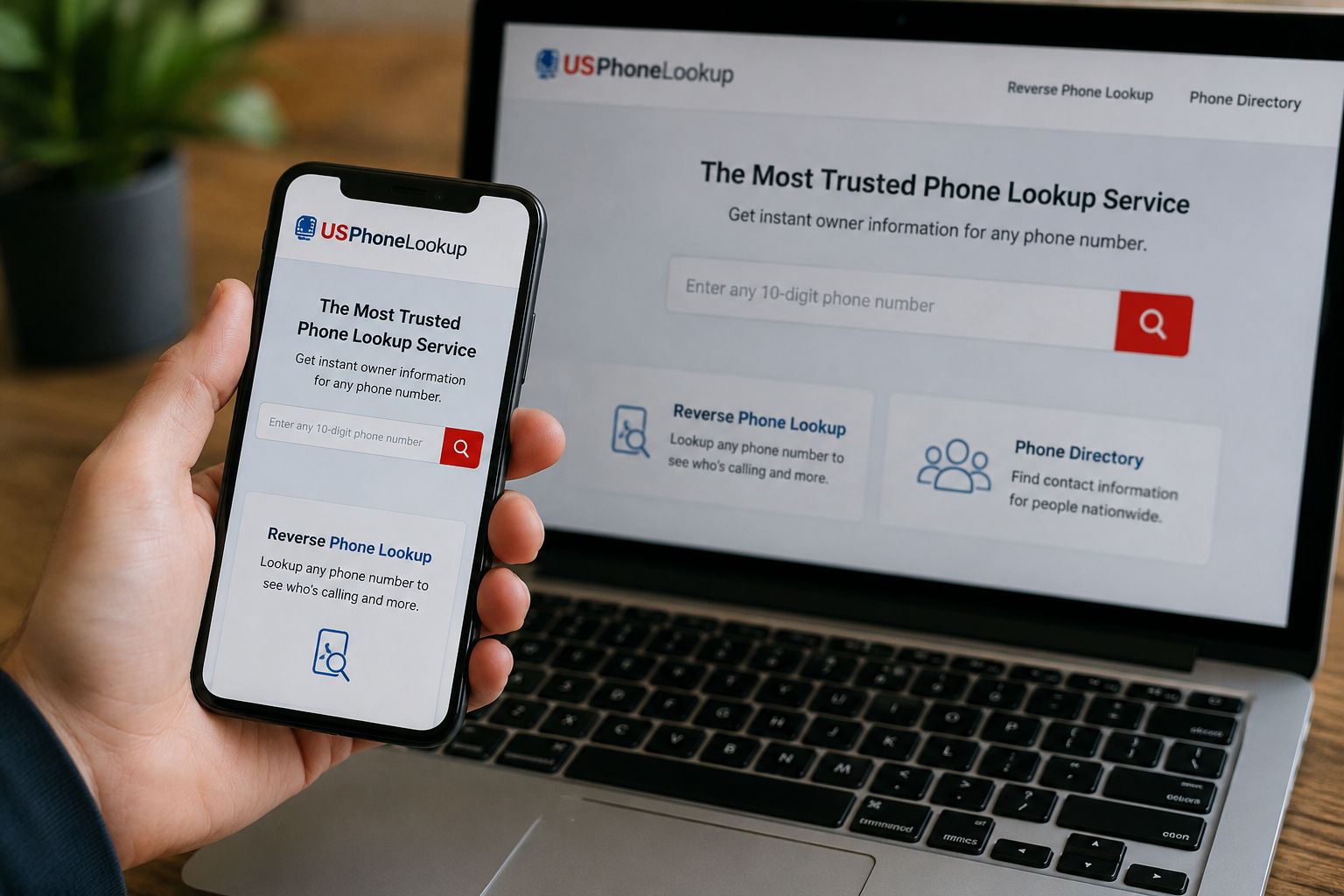
USPhoneLookup is a web-based reverse phone lookup tool focused specifically on U.S. phone numbers. You enter a number, and it attempts to surface publicly available data connected to that number — things like the registered owner’s name, current or past addresses, and sometimes social media profiles or email addresses.
It sits in the broader category of people-search engines, which are essentially data aggregators. Sites in this space — including Spokeo, Whitepages, BeenVerified, and others — pull from public records, data brokers, and sometimes social platforms to compile profiles on individuals.
USPhoneLookup’s angle is that the basic search is free. You don’t need an account. You don’t need a credit card to run an initial lookup. What you get for free versus what sits behind a paywall is where things get more nuanced — and we’ll get into that.
How Does It Work?
The mechanics are straightforward. You type a phone number into the search bar on the site, hit search, and within seconds you’ll see some preliminary results. These might include the phone carrier, the general region the number is registered to, and sometimes a name.
For the full report — detailed address history, family members, associated emails, social accounts — the site typically redirects you toward a paid subscription or a one-time report fee.
Under the hood, services like this aggregate data from:
- Public records (property records, court filings, voter registration)
- Data brokers who compile consumer data from various online and offline sources
- Social media and web scraping (where permitted)
- CLIA and carrier databases for basic line information
One thing worth understanding: none of this is real-time. The data is only as current as the last time it was updated in whatever source database is being queried. If someone moved six months ago, their old address might still show up.
Main Features
Here’s what you can reasonably expect from a USPhoneLookup search:
Free tier typically includes:
- Carrier identification (Verizon, AT&T, T-Mobile, etc.)
- Line type (mobile, landline, VoIP)
- General geographic region
- Whether the number has been flagged for spam by other users
Paid report may include:
- Full name of the registered owner
- Current and historical addresses
- Associated email addresses
- Relatives and household members
- Possible social media accounts
- Criminal record indicators (varies)
The spam-check functionality is one of the more immediately useful free features. It aggregates user reports and known spam databases, which is genuinely helpful when you’re trying to decide whether to answer a repeat caller.
Who Is It For?
Realistically, the people getting the most use out of a service like this fall into a few buckets:
- People who get frequent unknown calls and want to know before calling back
- Small business owners doing light due diligence on new contacts or clients
- Parents keeping an eye on who their kids are communicating with
- Individuals reconnecting with someone and only having a phone number to go on
- Renters or landlords doing informal background checks before meeting a stranger
It’s not a tool for investigators, legal professionals, or anyone who needs verified, certified records. For that kind of use case, you’re looking at licensed background check services with formal data compliance.
Pros and Cons
What works:
- No account required for basic searches — genuinely low friction
- Spam detection is useful and often accurate for flagged numbers
- Carrier and line type information is usually reliable
- Interface is clean and not overloaded with ads (compared to some competitors)
- Can be a fast first-pass check before calling an unknown number back
What doesn’t:
- Free results are deliberately thin — the useful stuff costs money
- Data can be outdated, especially for people who’ve moved or changed numbers
- No guarantee of accuracy on names or addresses
- Not useful for VoIP numbers that aren’t tied to a real person
- Privacy concerns exist for the people being looked up, not just the searcher
Real-World Use Cases
Scenario 1: The persistent unknown caller You’ve received four calls from the same number in two days. No voicemail. Running it through a reverse phone lookup takes about 10 seconds and tells you it’s a number associated with a collections agency based in Ohio. You now have enough context to decide whether to answer or block.
Scenario 2: Reconnecting with an old contact You’re a freelancer and you’ve got a number in your phone from a client three years ago. You’ve lost the email thread. A quick lookup might surface the person’s name and give you enough to find them on LinkedIn and re-establish contact.
Scenario 3: Dating app safety check You’ve been chatting with someone for a couple weeks and they’ve given you their number before meeting in person. A phone lookup is one of several informal steps someone might take to verify that the person is who they say they are. It’s not foolproof — it can’t verify identity — but it adds a data point.
Safety and Privacy Analysis
This is where the conversation gets a bit more complicated.
From the searcher’s perspective, using a phone lookup site carries minimal personal risk. You’re not sharing sensitive information. You’re not logging in. A basic search is relatively anonymous.
From the searched person’s perspective, it’s a different story. The existence of data aggregators means personal information — home address, family connections, age — is often accessible to anyone willing to spend a few minutes looking. This is a real privacy concern that has led to opt-out mechanisms on most of these platforms. USPhoneLookup, like its competitors, is legally required to provide an opt-out option under various state privacy laws, particularly for California residents under CCPA.
Is the site legitimate? Yes, in the sense that it’s a real service and not a scam in the traditional sense. It’s operating within the gray but legal space that data aggregators occupy in the U.S. The business model — offer free basic results, charge for full reports — is standard in this industry.
What you should watch for:
- Avoid sites that ask for payment upfront before showing any results
- Be cautious of sites that require you to create an account with your own personal details just to search
- Read the terms of service before subscribing to anything — auto-renewals are common in this space
Common Problems and Limitations
People run into a few recurring frustrations with reverse phone lookup services generally:
Inaccurate or stale data. Phone numbers get recycled. Someone might have had a number two years ago that now belongs to someone else entirely. The lookup doesn’t always reflect this.
VoIP and temporary numbers. Burner apps and virtual number services (Google Voice, TextNow, Hushed) often return little to no useful information. If someone is using a VoIP number specifically to stay anonymous, a lookup like this won’t help much.
Thin free results. The business model creates a structural tension: if the free results were good enough, there’d be no reason to pay. So the free tier is almost always a teaser. That’s not deceptive exactly — it’s just how the model works — but it can feel frustrating when you’re just trying to find out if a number is spam.
No verification of accuracy. There’s no way to know whether the name or address returned is current and correct. It’s a data aggregation, not a verified record.
How It Compares to Alternatives
| Service | Free Info | Paid Reports | Spam Detection | Best For |
| USPhoneLookup | Carrier, region | Full profile | Yes | Quick free checks |
| Whitepages | Name (partial) | Full profile | Yes | General searches |
| Spokeo | Very limited | Full profile | Yes | Social media links |
| BeenVerified | Very limited | Full profile | Yes | Background checks |
| Truecaller | Name, spam tag | Premium features | Excellent | Mobile apps |
Truecaller is worth mentioning separately. It’s app-based and crowdsourced, which makes its spam detection often more current and accurate than static database services. If spam identification is your main use case, Truecaller’s app is probably more useful in daily life.
For fuller background research, BeenVerified and Intelius tend to have deeper record databases, though they’re also paid-first services.
USPhoneLookup holds its own mainly on accessibility — no account, no immediate paywall for basic results.
Practical Opinion
Here’s the honest take after spending time with these types of services: they’re useful for exactly one thing really well, and that’s spam identification. The carrier lookup is reliable. The flagged-number data is often accurate and community-sourced. For that 10-second check before returning a call from an unknown number, they earn their place.
For anything deeper — verifying identity, finding someone’s current address, doing real due diligence — the free tier is not going to cut it, and even the paid reports come with a significant caveat: accuracy isn’t guaranteed. The data is only as good as its sources, and those sources are often outdated or incomplete.
If you’re considering a paid subscription specifically for usphonelookup or any similar service, think carefully about how frequently you’d actually use it. A one-time report purchase often makes more financial sense than a monthly subscription unless you’re doing this kind of research regularly.
The site is legitimate. It’s not going to steal your information or scam you. It’s just a tool with real limitations, and understanding those limitations upfront saves a lot of frustration.
Final Verdict
USPhoneLookup is a decent starting point for reverse phone lookups, especially if you just need a quick free check. Its spam detection is genuinely useful, the carrier data is reliable, and the barrier to entry is essentially zero. Where it falls short is in the depth and accuracy of paid data, which is a limitation it shares with the entire industry.
Use it as a first-pass tool. Don’t rely on it for anything where accuracy really matters. And if you’re serious about background research, invest in a more specialized service with verified records.
Learn More About Blogs On Sharemyideaz
Frequently Asked Questions
Q: Is USPhoneLookup completely free to use?
A: Basic searches — carrier information, line type, spam flags — are free. Detailed results including full name, address history, and associated records typically require payment either through a one-time report purchase or a subscription.
Q: How accurate is the information returned by phone lookup services?
A: Accuracy varies. Carrier and line type data is generally reliable. Name and address data can be outdated, especially for numbers that have been reassigned or for people who have moved recently. Treat results as a starting point, not a verified fact.
Q: Can someone find out if I looked up their number?
A: No. Reverse phone lookup searches are anonymous. The person associated with a phone number has no way of knowing their number was searched.
Q: What should I do if my information appears incorrectly on a site like this?
A: Most data aggregator sites are required to offer an opt-out process. Look for a “Do Not Sell My Information” or “Opt Out” link, usually in the footer. Under CCPA, California residents have additional rights to request data removal.
Q: Can I look up international numbers on USPhoneLookup?
A: The service is focused on U.S. numbers. Results for international numbers will typically be limited or unavailable.
Q: Is it legal to look up someone’s phone number like this?
A: Yes, for personal use and informational purposes. Using reverse phone lookup data for harassment, stalking, or discriminatory purposes is illegal. The Telephone Consumer Protection Act (TCPA) and other laws govern how this data can be used commercially.
Q: Why do some numbers return no results at all?
A: Numbers registered through VoIP services, prepaid burner apps, or recent reassignments often don’t have enough data in the system to return useful results. Unlisted numbers and certain business lines may also return limited information.
Q: Are there privacy risks to using phone lookup sites?
A: For the searcher, minimal risk if you’re using the free tier without creating an account. The bigger concern is for individuals whose data is publicly accessible through these platforms — which is a broader data privacy issue beyond any single service.
